Every car's MOT history is stored by the DVSA and accessible to anyone who knows the registration number. Most buyers glance at it and check the current MOT expiry date. That is not enough.
A detailed read of the car's MOT history can reveal clocking, neglect, and problems a quick look will completely miss.
What an MOT History Shows
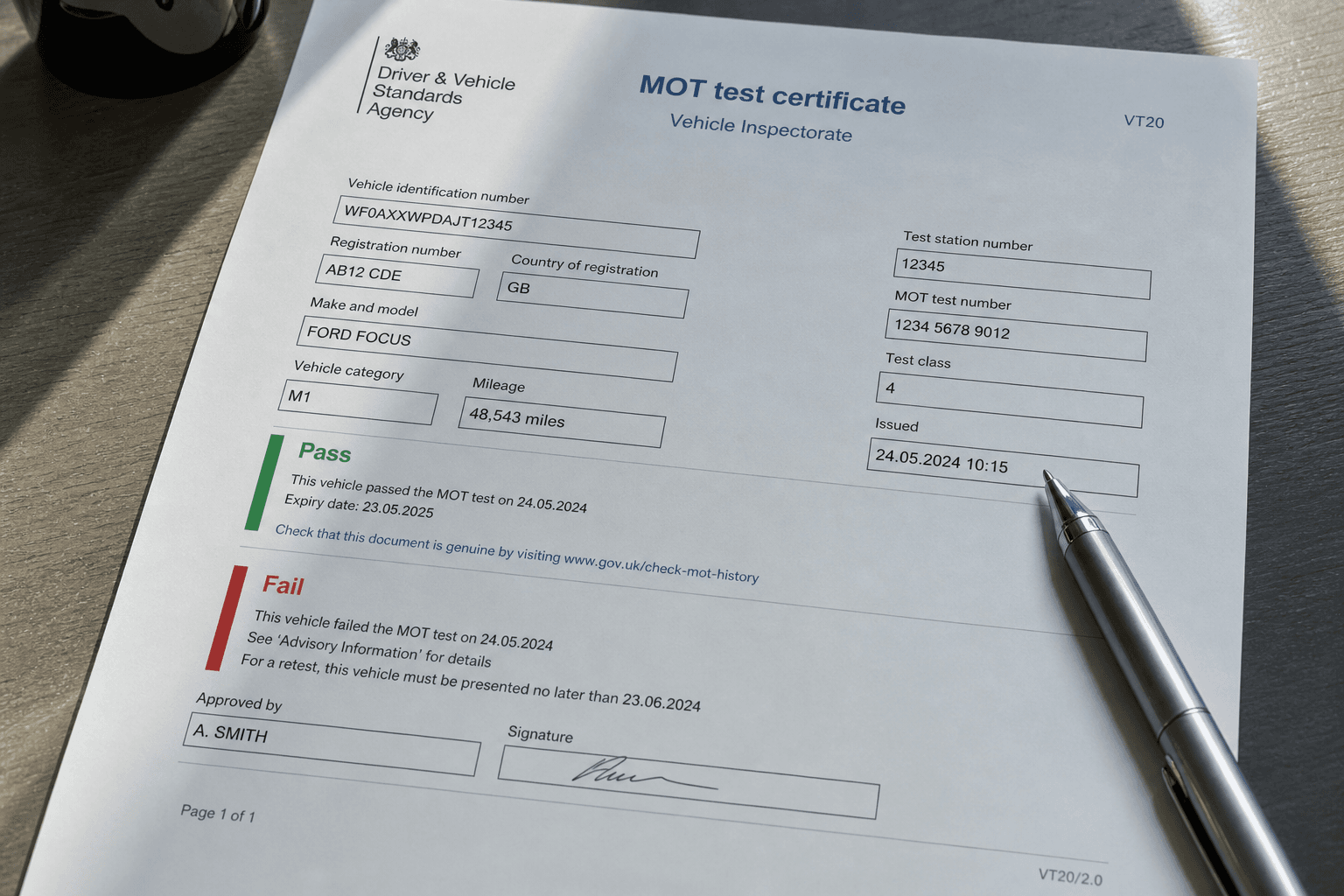
Each entry in the MOT history includes:
- Date of test
- Pass or fail result
- Mileage recorded at the test
- Failure reasons (if failed)
- Advisory items (issues noted but not bad enough to fail)
- Test location
You can access this data free at the DVSA website - but a good vehicle history check will pull it into a readable format alongside other checks. Run a check at Bad Drivers UK to see the full MOT history alongside finance and stolen records.
Reading the Mileage Records
This is the most important thing to check. Look at the mileage recorded at each test and confirm it follows a logical progression.
A car that recorded 40,000 miles in 2020, 50,000 in 2021, then shows 35,000 in 2022 has been clocked. The odometer has been wound back.
Even without a dramatic drop, low annual mileage increases deserve scrutiny. A car that adds only 500 miles between tests but is advertised as regularly driven does not add up.
Also check for gaps in testing. Cars must be tested annually once they turn three years old. A two-year gap in MOT records means the car was either SORN'd, not being used legally on the road, or someone is hiding something.
Reading the Failure Reasons
Failures tell you what was wrong with the car at the time of testing. Look for patterns.
Repeated failures on the same items suggest a recurring problem or a car that only gets the minimum work done to pass. Repeated brake failures, for example, suggest someone who skimps on maintenance.
Check whether high-cost items have failed. Structural corrosion failures are significant. Suspension failures on multiple consecutive tests suggest the car lives a hard life or is never properly sorted.
Reading the Advisories
Advisories are the items that were not bad enough to fail but were noted as concerns. They are early warnings.
Look for advisories that appear year after year. If the same suspension bush is noted as worn across three consecutive tests without being replaced, you are looking at a car whose owner ignores maintenance.
Advisories also tell you what the car's weak points are. Rust advisories on the sills, for example, could indicate a car that is deteriorating. Check whether those advisories were followed up.
Mileage Gaps and SORN
If the history shows a gap with no MOT, cross-reference with SORN data. A SORN means the car was declared off the road.
Long SORN periods can mean storage, which is not necessarily bad. But they can also mean accident damage, unroadworthy condition, or a car being used illegally. Worth asking the seller about.
Warning Signs in the MOT History
- Mileage drops between tests - almost certainly clocked
- Wildly variable mileage additions - could be genuine, could be suspicious
- Repeated fails on the same component - chronic issue
- Multiple annual fails followed by a quick retest pass - minimum spend buyer
- Structural rust advisories progressing to failure - deteriorating car
- Long gaps with no tests - investigate what happened during that period
What the MOT Does Not Cover
The MOT checks a specific list of safety items. It does not check:
- Engine condition
- Gearbox health
- Clutch wear
- Fluid levels or quality
- Air conditioning function
- Infotainment systems
A car can pass its MOT and still need significant mechanical work. The MOT history tells you about safety items only.
FAQ
How far back does MOT history go?
The DVSA holds digital MOT records from approximately 2005 onwards. Tests before that date were recorded on paper certificates only. For older cars, you need to check physical documents as part of the service history.
What does a mileage drop in MOT history mean?
A mileage drop between consecutive MOT tests almost always indicates the odometer has been wound back - known as clocking. This is fraud under the Fraud Act 2006. Do not buy a car with any mileage discrepancy in its MOT history.
Can a car pass its MOT and still need expensive repairs?
Yes. The MOT only tests specific safety items. It does not assess the engine, gearbox, clutch, or fluid condition. A car can have a current MOT and still require significant mechanical work.