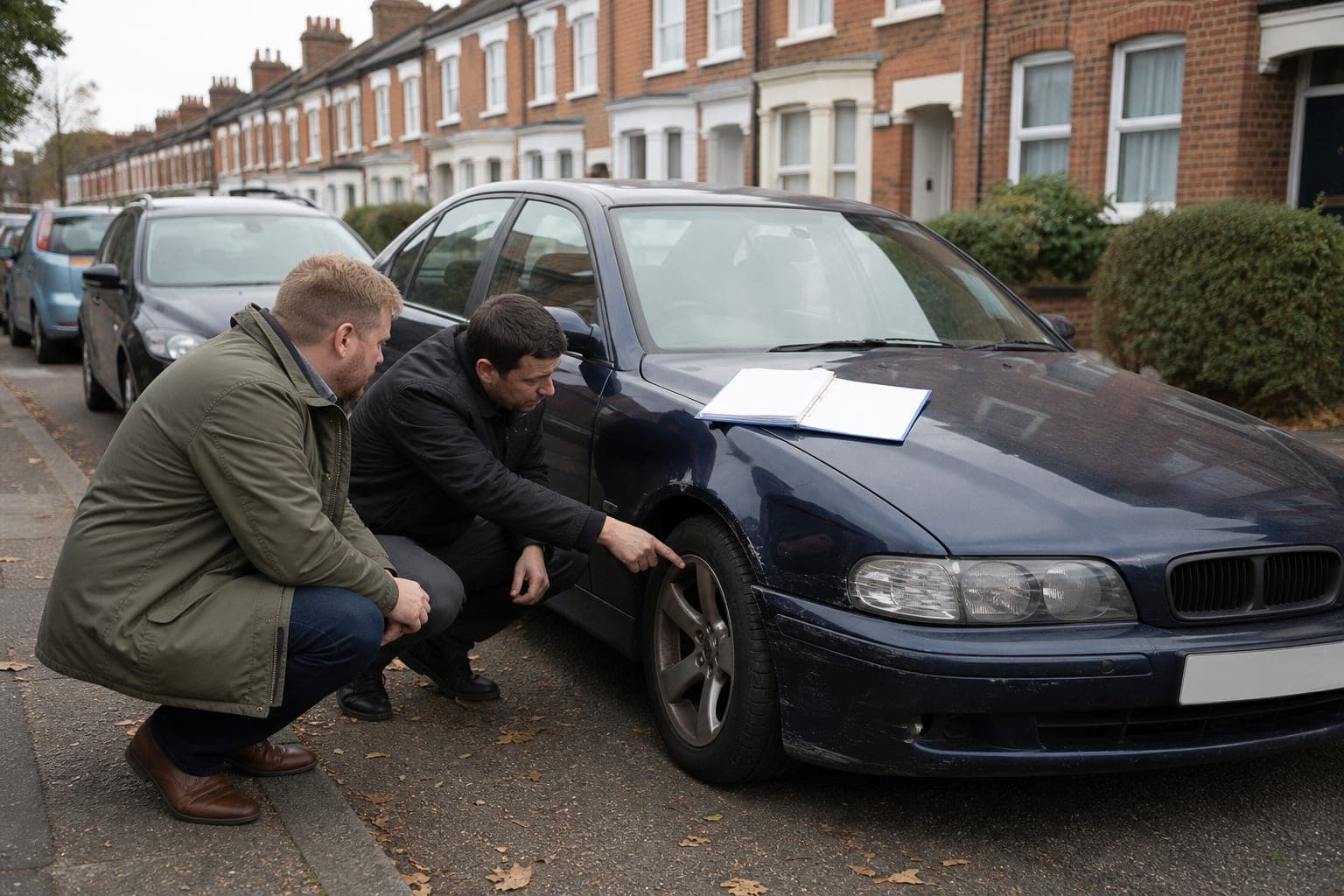
A vehicle identity check confirms that a car is what it claims to be - that the registration number, VIN, and V5C all belong to the same vehicle and have not been substituted or altered.
Every car has several ways it identifies itself, and all of them should match. If they do not, the car may have a false identity.
What Vehicle Identity Means
Every car has:
- Registration number (number plate)
- VIN - Vehicle Identification Number, a 17-character code unique to each vehicle
- Chassis number - often the same as the VIN on modern cars
- Engine number - stamped on the engine block on some vehicles
- V5C logbook - the DVLA's record of the vehicle
All of these should match each other and the DVLA's records.
Why Identity Fraud Happens
The most common reason is to hide a stolen vehicle. A thief takes the identity of a legitimate car - usually by finding a similar written-off or scrapped vehicle - and applies that identity to the stolen car. This creates a "ringer".
The result is a stolen car wearing the identity of a legitimate vehicle. History checks on the legitimate vehicle's identity show nothing wrong, because the legitimate vehicle's history is clean.
Run a vehicle history check at Bad Drivers UK to flag any identity-related issues in the database before you view the car.
How to Check a Vehicle's Identity
Check the VIN in multiple locations.
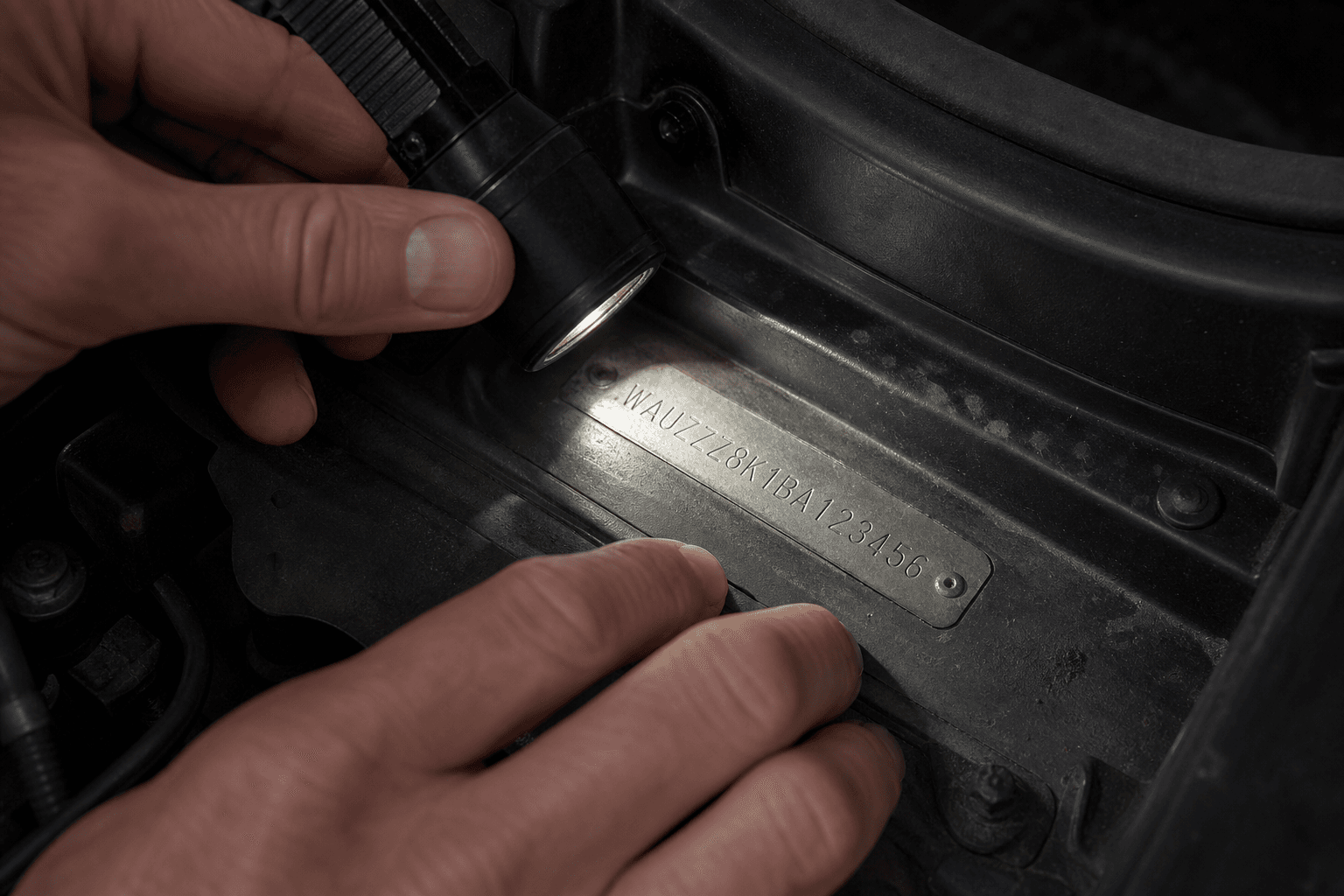
The VIN appears in several places on a vehicle:
- On a plate visible through the windscreen (driver's side, at the base)
- Stamped into the chassis (location varies by manufacturer)
- On the door pillar plate
All of these should match exactly. Any discrepancy - different number, signs of grinding or welding, a plate that has been re-riveted - is a serious red flag.
Verify the VIN against the V5C.
The VIN on the car should match the V5C exactly. Check every character.
Check for VIN plate tampering.
VIN plates are attached at the factory. Look for signs that the plate has been removed and reattached: scratched rivets, marks around the mounting points, trim that does not sit flush.
When to Be Most Vigilant
High-value vehicles are the main targets for identity fraud. Thieves target desirable models because the margin on selling them with a false identity is highest.
Also be vigilant on:
- Cars priced significantly below market value
- Sellers who are reluctant to let you check the VIN
- Cars where the V5C address does not match where you are viewing
- Cars where you cannot see the windscreen VIN plate clearly
FAQ
Where can I find a car's VIN number?
The VIN appears in several places: on a plate visible through the windscreen on the driver's side, stamped into the chassis (location varies by make - check the handbook), on the door pillar plate, and sometimes on the engine block. All locations should show the same 17-character number.
What is a ringer car?
A ringer is a stolen car that has been given the identity of a legitimate similar vehicle. The thief finds a scrapped or written-off car of the same make, model, and colour, takes its plates and V5C, and applies them to the stolen vehicle. The result is a stolen car that passes initial checks.
What should I do if the VIN does not match the V5C?
Do not buy the car. Walk away immediately. A VIN mismatch is a serious red flag indicating identity fraud. Report it to the police if you believe the car is stolen.