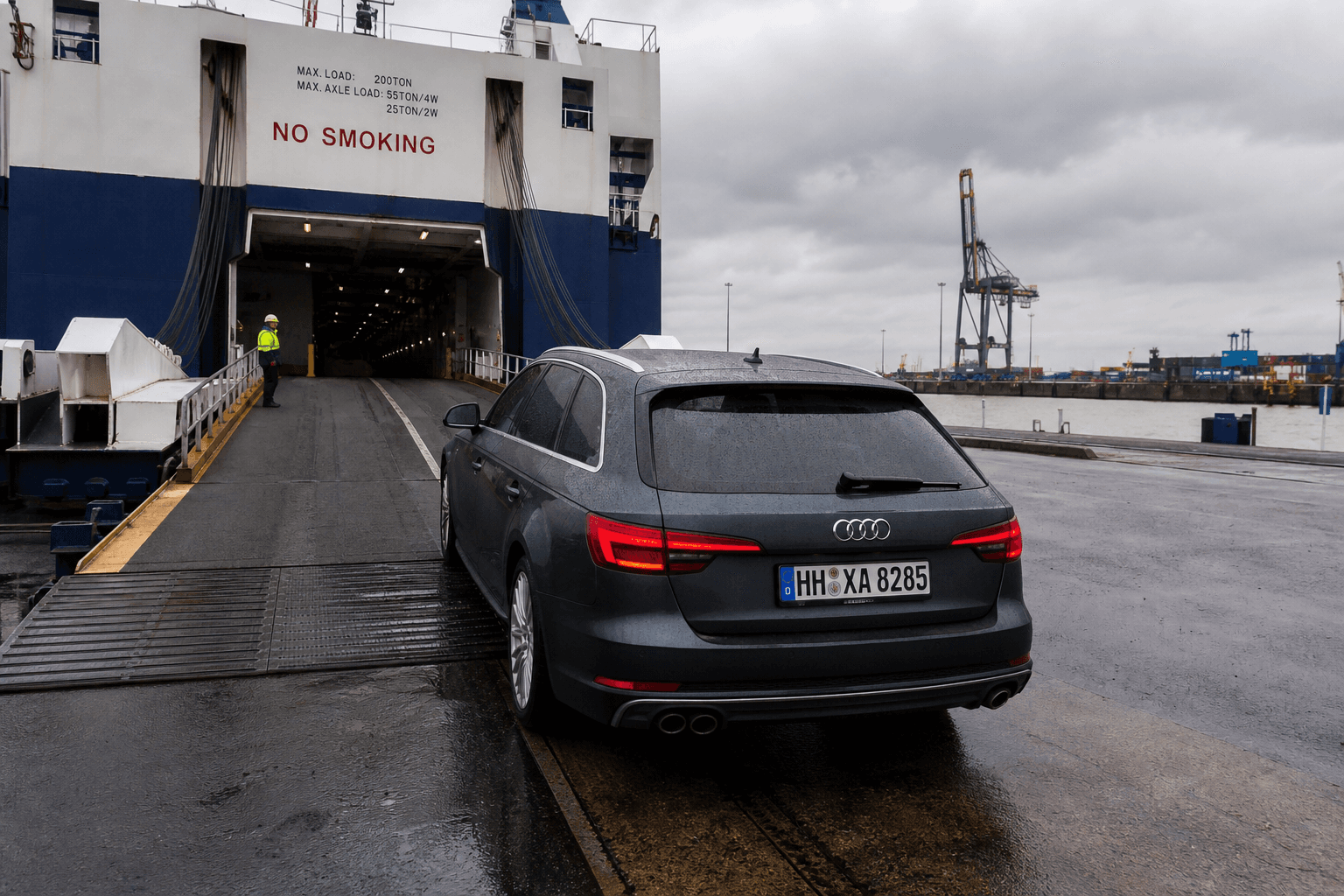
A grey import is a car that was built for a market outside the UK and brought in privately, rather than supplied new through a UK franchised dealer. Most of the grey imports you will see for sale came from Japan, with a smaller number from the United States, the Middle East and the rest of Europe. Some are desirable cars you cannot easily buy here. Others are ordinary cars that happen to be cheaper because of where they came from.
There is nothing wrong with a grey import in principle. Plenty of them are honest, well looked after cars. The problem is what you can and cannot find out about one before you hand over your money. A UK car leaves a long paper trail. A freshly imported car does not, and that gap is where buyers get caught out.
What Counts as a Grey Import
The term covers two slightly different things.
A genuine grey import is a model that was never officially sold in the UK, so there is no UK dealer network behind it. Think Japanese domestic market cars like a Nissan Figaro, a Toyota Estima or an imported Skyline.
A parallel import is a car that is sold here, but was bought abroad and brought in to save money. Mechanically it might be almost identical to a UK car, but it can still carry foreign specification quirks and a foreign history.
Both share the same core issue. The car had a whole life before it arrived, and that life happened on databases you cannot see.
Why Grey Imports Are Cheaper
The lower price is real, and it usually comes from three things.
Some Japanese imports are cheap because Japan taxes and tests older cars heavily through its shaken inspection system, so owners move them on while they still have plenty of life left. A car that is expensive to keep in Japan can be a bargain here.
Others are cheaper because the market is nervous about them. Fewer buyers want a car they cannot get serviced easily, so prices stay soft.
And some are cheaper simply because the seller is pricing in the hassle you are about to inherit. That is the part to pay attention to.
The UK History Black Hole
This is the single biggest reason to treat an import with caution.
When you run a check on a normal UK car, you are reading years of recorded events. MOT tests, recorded mileages, keeper changes, tax history, finance and write-off markers. An imported car only starts building that record from the day it was registered in the UK. Everything before that, often the majority of the car's life, is a blank.
That means you cannot confirm how the car was used abroad, whether it was crashed and repaired, or what its real mileage history looks like. A car could have been written off in its home country, repaired to a poor standard, and shipped here with a clean looking UK record simply because the damage happened before it landed.
The DVSA MOT record only shows tests carried out in this country. The DVLA keeper record starts at UK registration. None of that is a fault in the data. It is just that the data does not exist for the years the car spent overseas.
Mileage Is Easy to Hide on an Import
Mileage fraud is a risk on any used car, but imports make it easier.
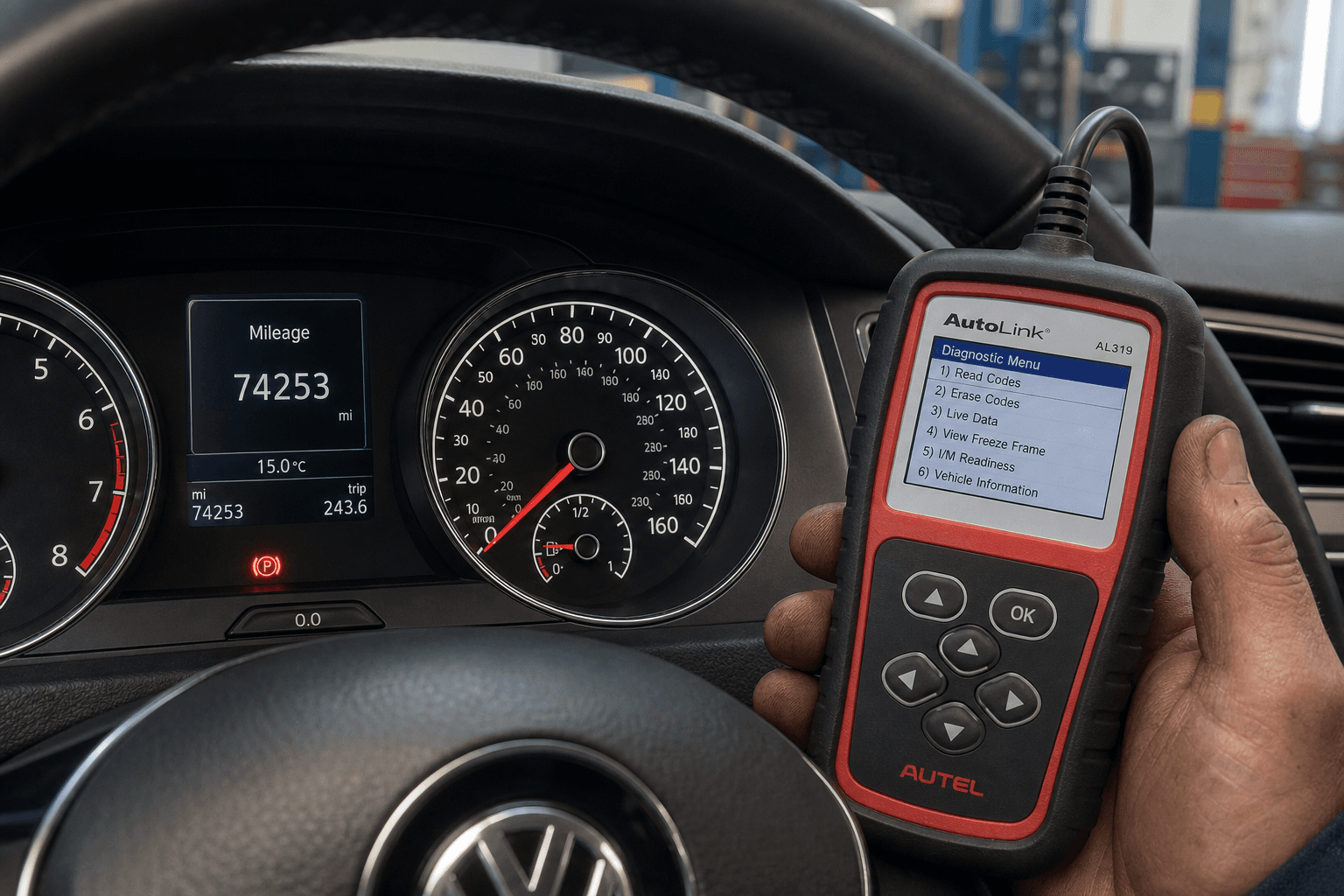
Many Japanese and American cars record distance on a speedo that was never built for the UK. When a car is converted, or its reading is transferred onto UK paperwork, there is room for honest error and room for deliberate fraud. A figure in kilometres quietly written down as miles makes a car look far less travelled than it really is.
There is also no early UK MOT history to cross check the reading against. On a UK car you can line up the recorded mileages from each MOT and spot a reading that drops or jumps. On a fresh import you have nothing to compare the first UK figure to, so you are trusting the importer's word.
Japanese auction sheets sometimes survive the journey and are worth having, because the auction grades the car and notes the mileage at the point of export. If a seller still has the original auction sheet, that is a good sign. If the mileage history is just a number with no backup, treat it as unverified.
Specification and Compliance Differences
A car built for another market is set up for that market, not for ours.
Common differences include headlights aimed for driving on the other side of the road, a speedo reading mainly in kilometres, no rear fog light, and a radio tuned to a frequency band that does not fully match UK stations. Some of these have to be corrected for the car to pass an MOT and be road legal here, and a cheap conversion can be a messy bodge.
Safety recalls are another weak spot. A UK supplied car is mapped to the manufacturer recall system through its VIN. An import can fall through that gap, so an outstanding recall may never have been actioned and can be awkward to get done at a UK dealer. Ask whether recall work has been carried out, and do not assume it has.
Servicing and Parts Can Be Slow and Costly
Running an import is where the saving on the sticker price can quietly disappear.
A model that was never sold here may not have parts sitting on the shelf at your local motor factor. Everyday service items like filters and brake pads are usually fine, but anything model specific can mean ordering from abroad and waiting. A simple repair that would take a day on a UK car can stretch into a week while a part is shipped halfway across the world.
Independent garages can handle most imports, but some will not touch them, and a main dealer may struggle to pull the right technical data from a foreign VIN. Before you buy, phone a local garage and ask whether they will work on the model. If nobody nearby wants the job, factor that into your offer or walk away.
Q Plates and Age Confusion
If the DVLA cannot confirm exactly when a car was built, or its identity is unclear, it can be registered on a Q plate. A Q plate marks a vehicle whose age or origin could not be properly established. It is not automatically a disaster, but it dents resale value and it is a flag that the paperwork needed special treatment. Find out why a Q plate was issued before you go any further.
Even without a Q plate, an import's UK registration date is the date it arrived, not the date it was built. A car first registered here in 2020 might actually be a 2014 car. Do not read the UK registration year as the car's true age.
What to Check Before You Buy
Treat an import as guilty until proven innocent on history.
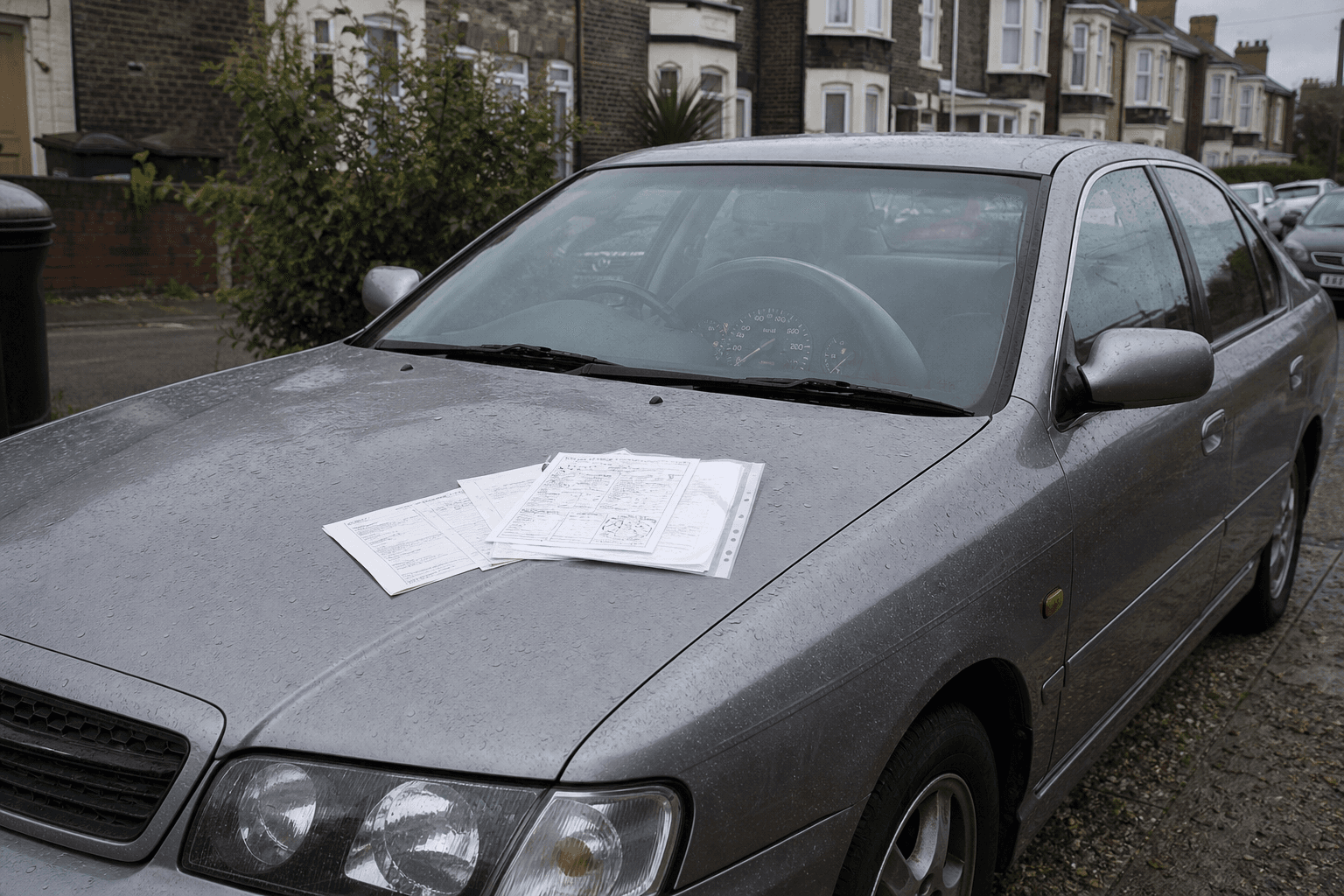
Find out the date it was imported and registered in the UK, and accept that everything before that is unverified unless the seller can prove otherwise. Ask for the original export paperwork or the Japanese auction sheet. Check the VIN on the car matches every document, letter for letter. Confirm any market conversion work was done properly, especially the lights and the speedo. Ask directly about outstanding recalls. Get a real insurance quote and a price for a couple of common service parts before you commit, because both can cost more than you expect on an import.
A grey import can be a smart buy and a lot of car for the money. Just go in knowing that the usual safety net of a long UK history is not there, and price the risk accordingly.
Useful Links
- Importing vehicles into the UK - GOV.UK - Official guidance on bringing a vehicle into the country
- Getting vehicle approval - GOV.UK - How imported vehicles are approved as road legal
- Buying a used car - Citizens Advice - Your consumer rights when buying used