You come back to your car and the wing is caved in. Or you are hit at a junction and the other driver accelerates away. Knowing what to do after a hit and run in the UK matters, because the steps you take in the next hour decide whether anyone ends up paying for the damage.
The First Ten Minutes
Make sure everyone is safe
If anyone is hurt, call 999. Get out of live traffic if you can do so safely. Damage can wait. Injuries cannot.
Write down everything about the other vehicle
Memory fades fast and shock makes it worse. Before you do anything else, note:
- the registration, even if you only caught part of it
- make, model and colour
- any visible damage on their car
- the direction they drove off in
- the time, to the minute if you can
Use your phone's notes or record a voice memo.
Photograph the scene
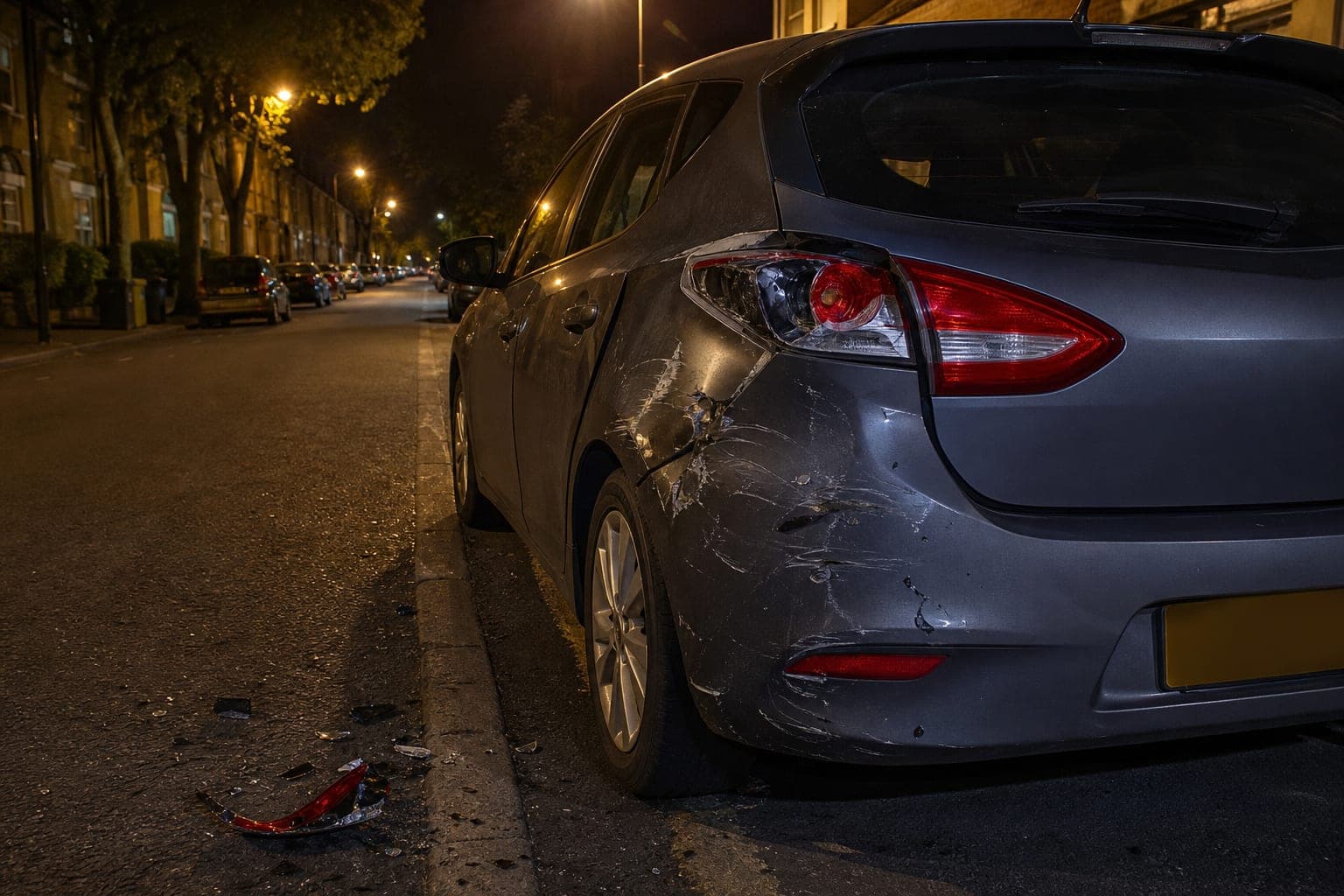
Take wide shots showing the location, then close ups of the damage, paint transfer, debris and skid marks. Paint transfer on your car can identify the colour of theirs even if you never saw it.
Look for witnesses and cameras
Ask anyone nearby what they saw and take their number. Look up for CCTV on shops, houses and car parks. Ask other drivers if they have dash cams. Footage overwrites itself within hours or days, so ask now. Our guide to dash cam footage as evidence explains how to keep clips usable.
Report the Hit and Run to the Police
A driver involved in a collision that damages another vehicle must stop and give their details. If they cannot give them to the owner, they must report it to the police within 24 hours. Failing to stop is a criminal offence that carries penalty points and possible disqualification.
Report it yourself on 101 or online through your force's website. Ask for a crime or incident reference number. Your insurer will ask for it, and any claim against an untraced driver depends on prompt police reporting.
Making a Claim After a Hit and Run
If the driver is found
Police can trace the registered keeper. Once the driver is identified, your insurer claims against their insurer. If you have a full plate, the claim is in a much stronger position.
If the driver is never found
You have two routes:
- Your own comprehensive policy. Your insurer pays for the repairs, minus your excess. Because nobody else can be made to pay, this may affect your no claims bonus.
- The Motor Insurers' Bureau. The MIB handles claims caused by uninsured and untraced drivers. Its untraced driver scheme has strict conditions, including reporting to the police within set time limits. Read the conditions before you rely on it.
If the driver turns out to be uninsured
The MIB also covers claims against drivers who had no insurance. These drivers are more likely to drive off, which is one reason hit and runs are common.
Can You Find the Driver Yourself?
You cannot get a registered keeper's name and address just by asking. The DVLA releases keeper details only in specific circumstances, and an accident is one of them, but the request goes through a formal process. Our guide on finding out who owns a car by its number plate explains how it works. Leave tracing the driver to the police and the insurers.
After the Claim
Get the repair done properly and keep the paperwork. If the damage was serious, your insurer may treat the car as a write-off, which will show on any future history check when you sell it.
FAQ
What should I do straight after a hit and run?
Check for injuries and call 999 if anyone is hurt. Note the registration, make, model, colour and direction of travel while it is fresh. Photograph the damage and the scene, look for witnesses and cameras, then report it to the police.
Do I have to report a hit and run to the police?
You should, and quickly. The driver who failed to stop has broken the law. For your own claim, insurers and the Motor Insurers' Bureau will expect a police report, and late reporting can weaken or end a claim.
Can I claim if I do not know who hit me?
Yes. If you have comprehensive cover your own insurer can pay for the repairs, though it may count against your no claims bonus. If the driver is never traced, the Motor Insurers' Bureau runs a scheme for claims against untraced drivers, with strict reporting conditions.
What if I only got part of the number plate?
Report it anyway. Police can combine a partial plate with the make, model and colour, and nearby cameras or dash cam footage from other drivers may fill the gap.
Is it a crime to drive off after hitting a parked car?
Yes. A driver who damages another vehicle must stop, and if they cannot give their details to the owner they must report it to the police as soon as reasonably practicable and within 24 hours. Failing to do either is an offence.
Useful Links
- The Highway Code - GOV.UK - What drivers must do if they are involved in a collision.
- Vehicle insurance - GOV.UK - The legal minimum cover and the Motor Insurers' Bureau.
- Penalty points (endorsements) - GOV.UK - Penalties for failing to stop after an accident.