A cut and shut is one of the most dangerous vehicles you can unknowingly buy. In a serious crash, the welded join point can collapse in ways a standard car body never would.
What a Cut and Shut Is
Two written-off cars - typically one with a damaged front and one with a damaged rear - are cut apart and welded together to create one vehicle with a single registration number.
The result looks like a normal car. The VIN on the front half matches the V5C. But the rear half belongs to a completely different vehicle, with a different crash history.
Where to Look for Signs
The Roofline and Door Pillars
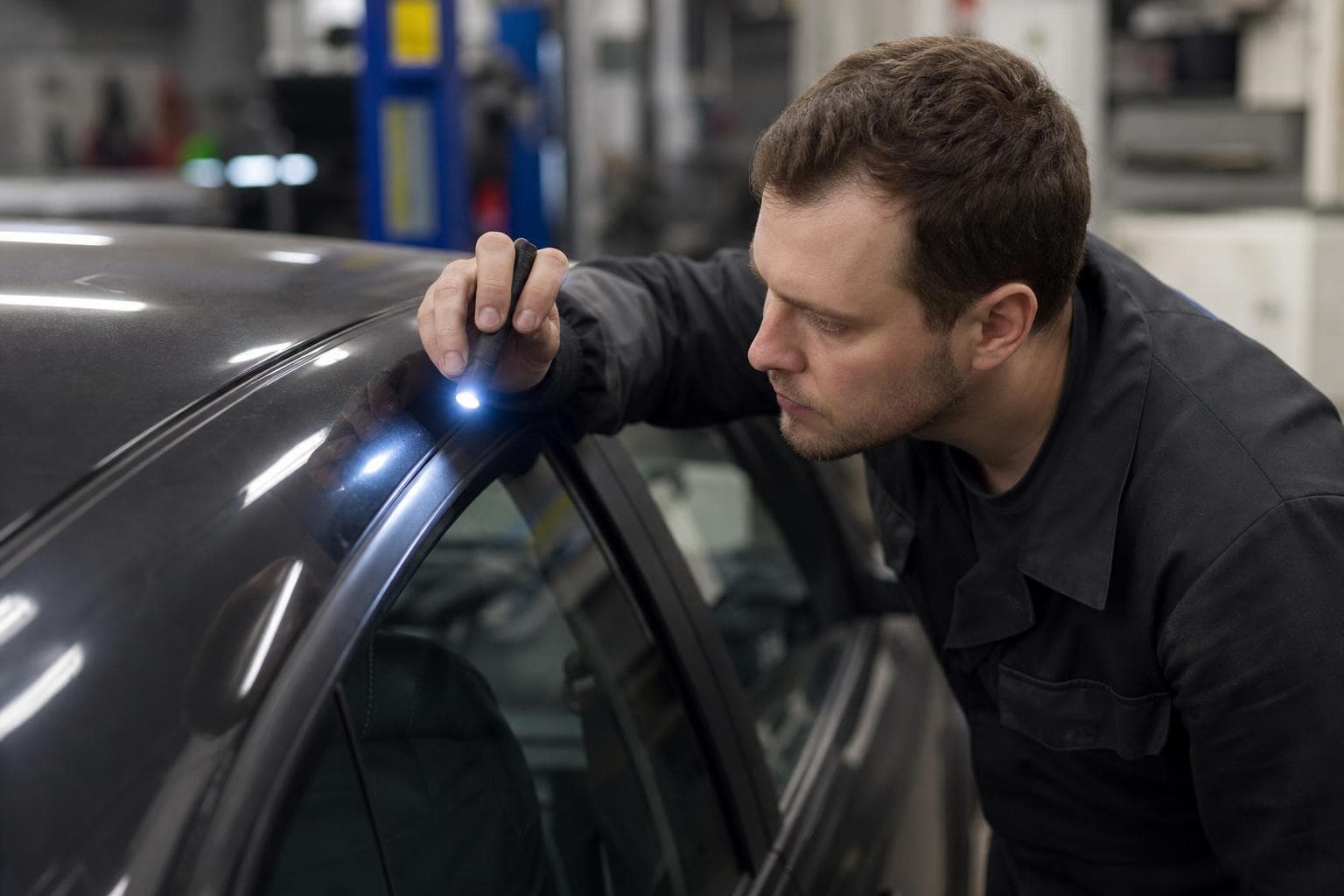
Run your hand slowly along the roofline from front to rear. Feel for ridges, filled areas, or texture differences. Look for overspray on the rubber seals and trim.
The B-pillar (the central door pillar) is a common weld site. Open both front and rear doors on the same side and inspect the pillar top to bottom with a torch. Look for paint that does not match the surrounding metal in texture or sheen.
Boot Floor and Rear Suspension Mounts
Open the boot and pull back the lining. Inspect the floor metal, the spare wheel well, and the rear suspension mounting points. Weld marks that differ from the factory spot-weld pattern indicate repair or modification.
Factory spot welds are consistent, evenly spaced, and covered with factory underseal. Repair welds are continuous, irregular, and usually painted over after the fact.
Underneath the Car
Get down and look under the sills and along the floorpan. A cut and shut will often show a weld line running across the underside. It may be covered in fresh underseal to hide it.
Panel Gaps
Step back and look at the car from the side. Uneven panel gaps between doors, or between a door and the quarter panel, suggest a body that is not quite right. Factory tolerances are tight and consistent.
Paint Thickness
A paint depth gauge can detect filler and additional paint layers. These are cheap tools and worth using on any serious purchase. Uneven readings across the bodywork suggest repairs.
What to Do if You Suspect a Cut and Shut
Walk away. Do not try to negotiate a price reduction on a vehicle you suspect has been welded together. The structural integrity is unknown and the insurance situation is complex.
If you have already bought one, contact Trading Standards and report it to the police. Selling a cut and shut without disclosure is fraud.
Check the History Before You View
Before you travel to see a car, run a history check at check.bad-drivers.uk. If either half of a cut and shut was previously written off and registered, the write-off category will show in the check.
A Cat A or Cat B write-off means the car should never have returned to the road. If those categories appear, the viewing is over before it starts.
Useful Links
- Run a full vehicle check - Bad Drivers UK - Check write-off category, stolen markers and full history before you view
- Report a crime - Action Fraud - Report vehicle fraud to the national fraud reporting centre
- Citizens Advice - buying a used car - Your rights if sold a defective car