You drive the car, you like the drive, and then you find out about the finance. That is a bad order. Here is the right one.
Step 1: Run a History Check First
Before you contact the seller, run a history check at check.bad-drivers.uk using the registration number from the advert.
A full check tells you about outstanding finance, stolen markers, write-off category, mileage inconsistencies, keeper history, and MOT records. If the car fails on any of these, you do not travel.
This takes five minutes and costs less than £10. It eliminates the worst cars before you invest time or travel costs.
Step 2: Check the MOT Status Online
Your full history check from check.bad-drivers.uk will show the current MOT expiry date. Verify it is still valid and note how long is remaining. A short MOT does not disqualify a car but is worth factoring in.
Step 3: Review the Advert Carefully
Look at every photo. Check that the registration visible in photos matches what you checked. Look for panel damage, mismatched paint, or uneven gaps.
Read the description for inconsistencies. "One careful owner" combined with 90,000 miles in four years deserves a question.
Step 4: Arrive and Check the V5C Before Anything Else
Ask to see the V5C before you look at the car. Check:
- The registration on the V5C matches the car
- The VIN on the V5C matches the VIN stamped in the engine bay and on the windscreen
- The colour matches
- The number of previous keepers matches what you expect
- The seller's name and address is on the document (for private sales)
If the seller does not have the V5C immediately available, wait. Do not test drive a car with no V5C to hand.
Step 5: Cold Start the Engine
Ask the seller not to start the engine before you arrive. A cold start tells you a lot. Listen for rattles, tapping, or smoke on startup. Blue smoke on a cold start indicates oil burning. White smoke from a cold engine is often normal condensation - but persistent white smoke with a sweet smell means coolant is entering the combustion chamber.
If the engine is already warm when you arrive, ask why.
Step 6: Walk Around the Car Slowly
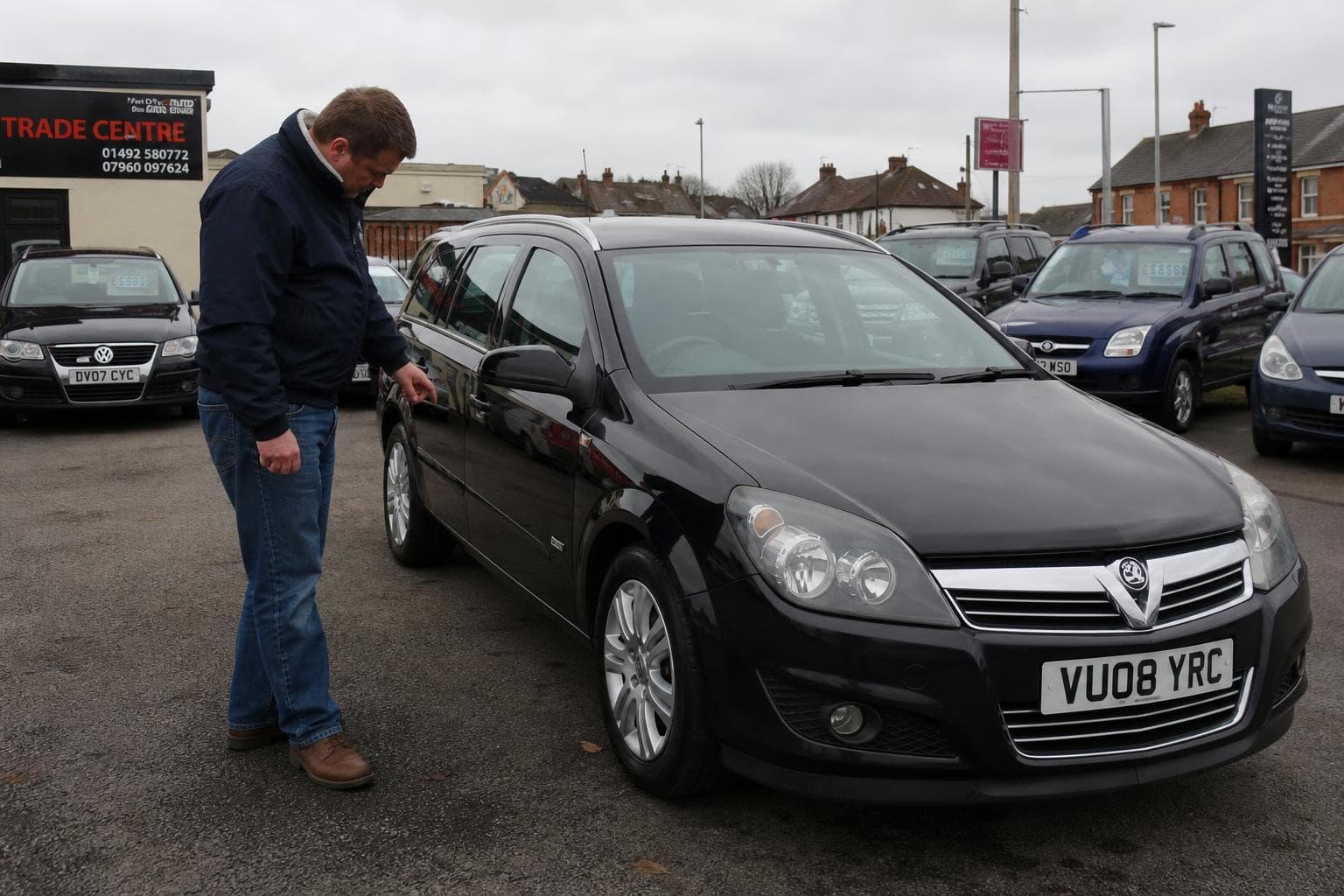
Look at panel gaps. They should be even and consistent. Open and close every door, the bonnet, and the boot. They should close cleanly with a solid thunk. A door that drops or does not align suggests accident damage or structural movement.
Check tyre tread depth and whether tyres match front to rear (mismatched tyres on the same axle is a fail point). Look at brake discs through the wheel spokes for heavy scoring or lipping.
Step 7: Check Under the Bonnet
Look for oil leaks on the rocker cover and around seals. Check the coolant reservoir for a brown or mayonnaise-like residue - this indicates oil contamination, which is a serious engine problem. Check the oil level and condition on the dipstick.
None of this requires mechanical expertise. You are looking for things that are obviously wrong.
Then Test Drive
Once you have completed all of the above, test drive the car. By this point you have already eliminated hidden financial problems, document fraud, and obvious mechanical red flags. The test drive is about whether you like the car, not about whether you should buy it at all.
Useful Links
- Citizens Advice - buying a used car - Your rights when buying privately
- Run a full vehicle check - Bad Drivers UK - Finance, stolen, write-off and MOT history before you travel to view
- GOV.UK - consumer rights on used cars - What protection you have as a buyer