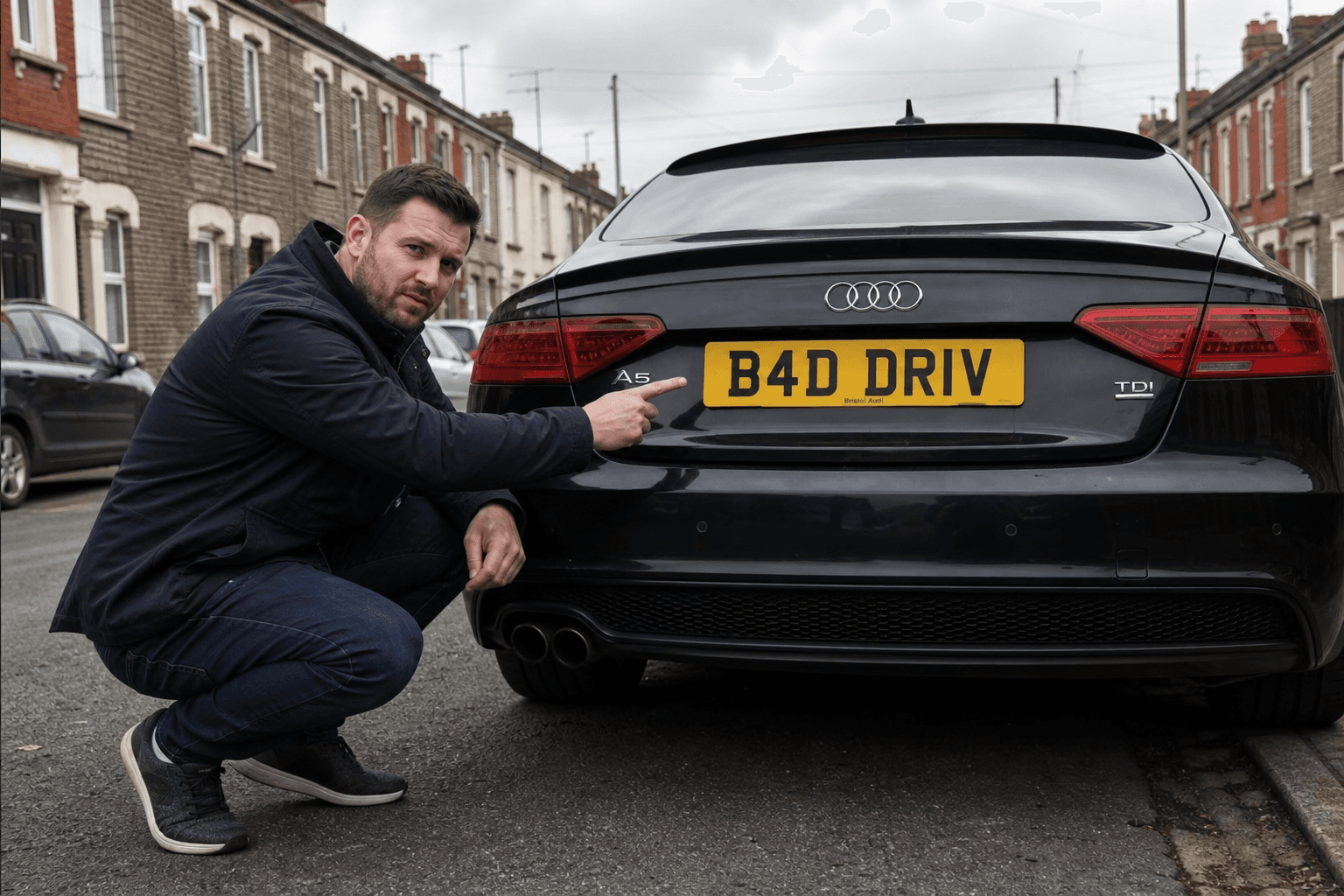
A private number plate is a personalised registration assigned to a vehicle instead of its original age-related plate. Most are bought as a style choice. But some are used to make a car harder to investigate.
How Private Plates Work
The DVLA assigns standard registrations that include a year identifier. Personalised plates - bought from the DVLA or from private sellers - do not follow this format.
Once purchased, the registration is transferred onto the vehicle. The car's DVLA record is updated to show the new plate. The original registration is either surrendered or retained on a certificate for use later.
From that point, the car is officially identified by the private plate.
How a Private Plate Can Obscure History
Age hiding. Standard plates contain the year of registration. A private dateless plate like B44 DRV could belong to a car from any decade. Buyers unfamiliar with this may not question a car's stated age.
Breaking the MOT trail. DVLA MOT records are linked to the registration number as well as the VIN. A plate change mid-way through a car's life means older MOT tests may be recorded under a different number. Searching only by the current plate can produce a shorter-than-expected history.
Creating urgency to avoid scrutiny. Sellers who use the complexity of a private plate as justification for why a history check might not work cleanly are using it as a distraction tool. A proper check searches by VIN, not plate.
What to Check
Verify the age from the V5C. The date of first registration on the V5C is the actual age of the car. It does not change with a plate transfer. Check it against what the seller told you.
Cross-reference the VIN. The VIN is stamped in the engine bay, on a sticker inside the driver's door frame, and visible on the windscreen dash. It never changes. If any two of these do not match, walk away immediately.
Run a VIN-based history check. A full check at check.bad-drivers.uk uses the VIN to recover the full history regardless of what plate is currently showing. Previous registrations, full MOT records, and any write-off or finance markers attached to the vehicle identity will show.
When Private Plates Are Not a Concern
The majority of private plates are fitted by owners who simply want a personalised registration. The car has a full, clean history that is fully traceable.
A private plate becomes a concern when combined with other signs: gaps in MOT history, a seller who cannot explain the car's age clearly, or a price that seems too low for the apparent specification.
Use the VIN check and verify the V5C. If the history is clean and consistent, the private plate is cosmetic.
Useful Links
- DVLA personalised registrations - GOV.UK - How transfers are registered officially
- Run a full vehicle check - Bad Drivers UK - MOT history, plate changes, finance and write-off records searched by VIN
- Action Fraud - Report vehicle identity fraud