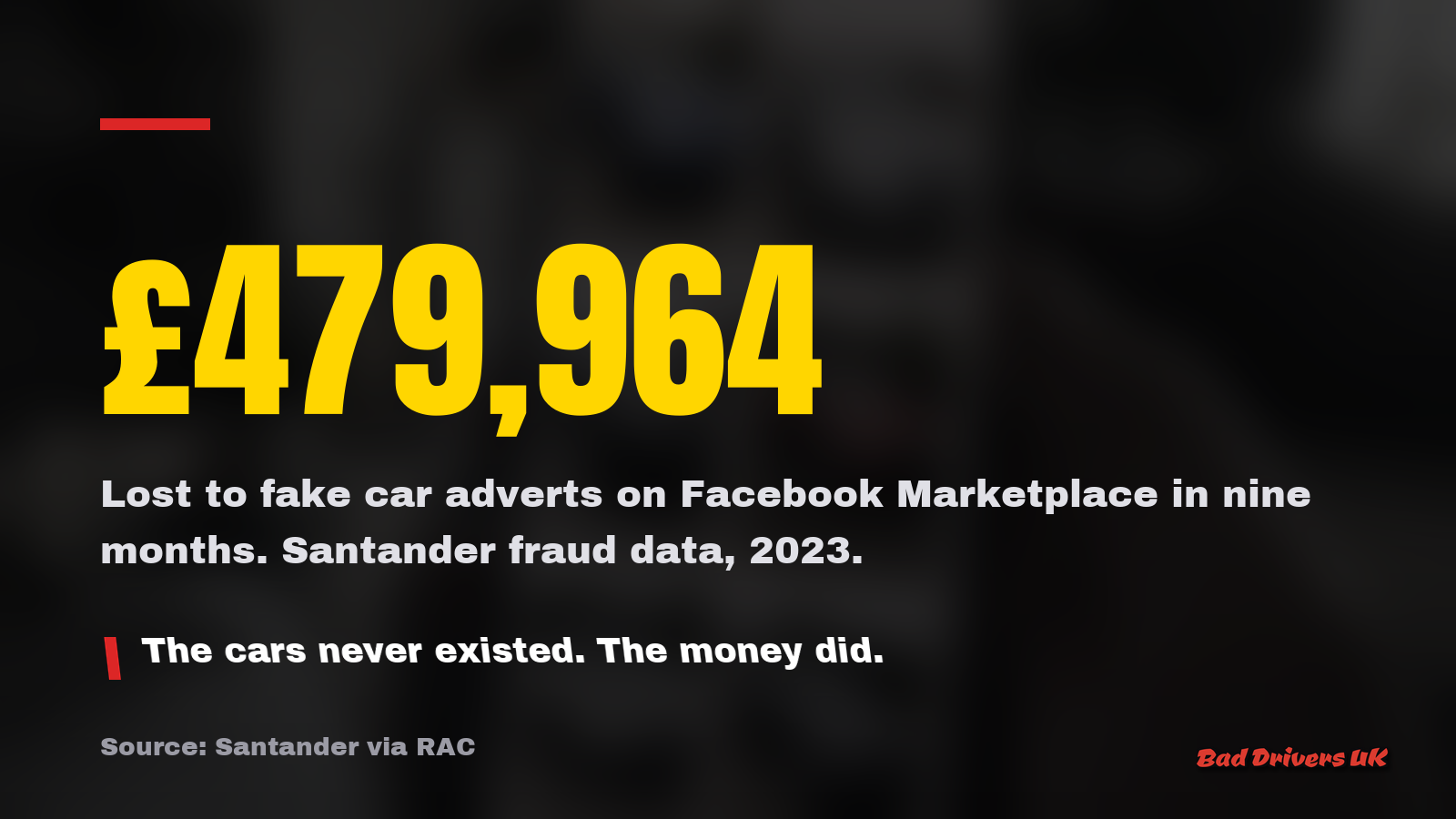
Buyers handed over £479,964 in nine months for cars advertised on Facebook Marketplace that did not exist. Not misdescribed cars. Not clocked cars. Cars that were never there at all, built out of photos stolen from genuine adverts and priced just low enough to make you move fast.
That figure comes from Santander's own fraud data, reported by the RAC, and it covers just one bank's customers over January to September 2023. It was up 93 per cent on the year before, and the conditions since then have only got better for the scammers.
How the Facebook Marketplace Car Scam Works
The mechanics are simple, which is exactly why they scale.
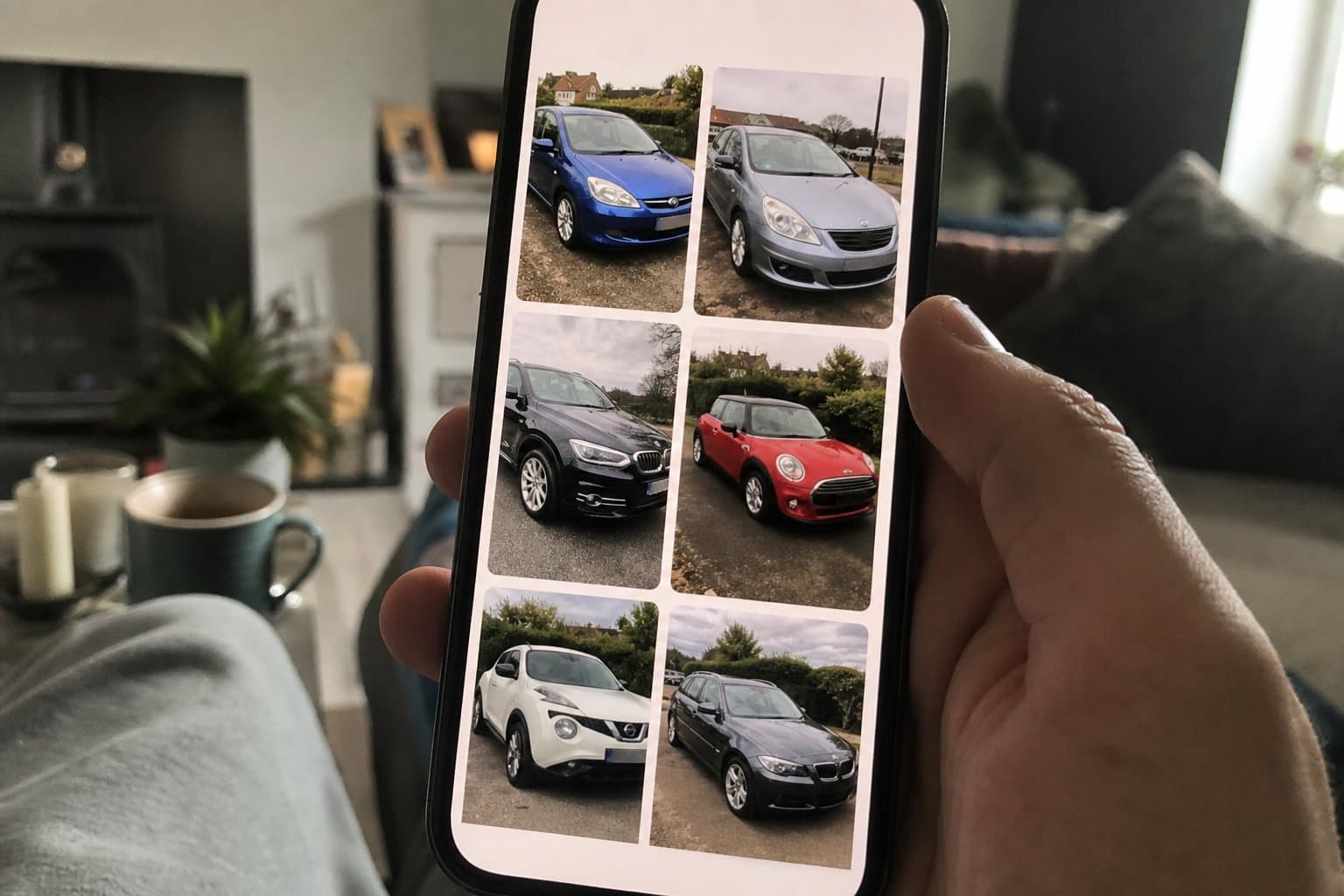
The fraudster lifts photos and videos of a real car from a genuine listing, often a clean, desirable, ordinary motor: a Fiesta, a Golf, a Corsa. They relist it in a different city with a price that undercuts the market by just enough to feel like luck rather than a trap.
When you message, the story is smooth. The car is real, after all, they have every photo and answer they need. Then comes the hook: plenty of interest, can you pay a deposit to hold it, or better, pay in full and collect at the weekend. Bank transfer, please.
The moment the money lands, you are blocked. There is no car, no seller, and no weekend collection. There is just a Facebook profile that stopped existing.
The Scale of the Scam Wave
The half-million figure gets the headlines, but the detail underneath it is worse.
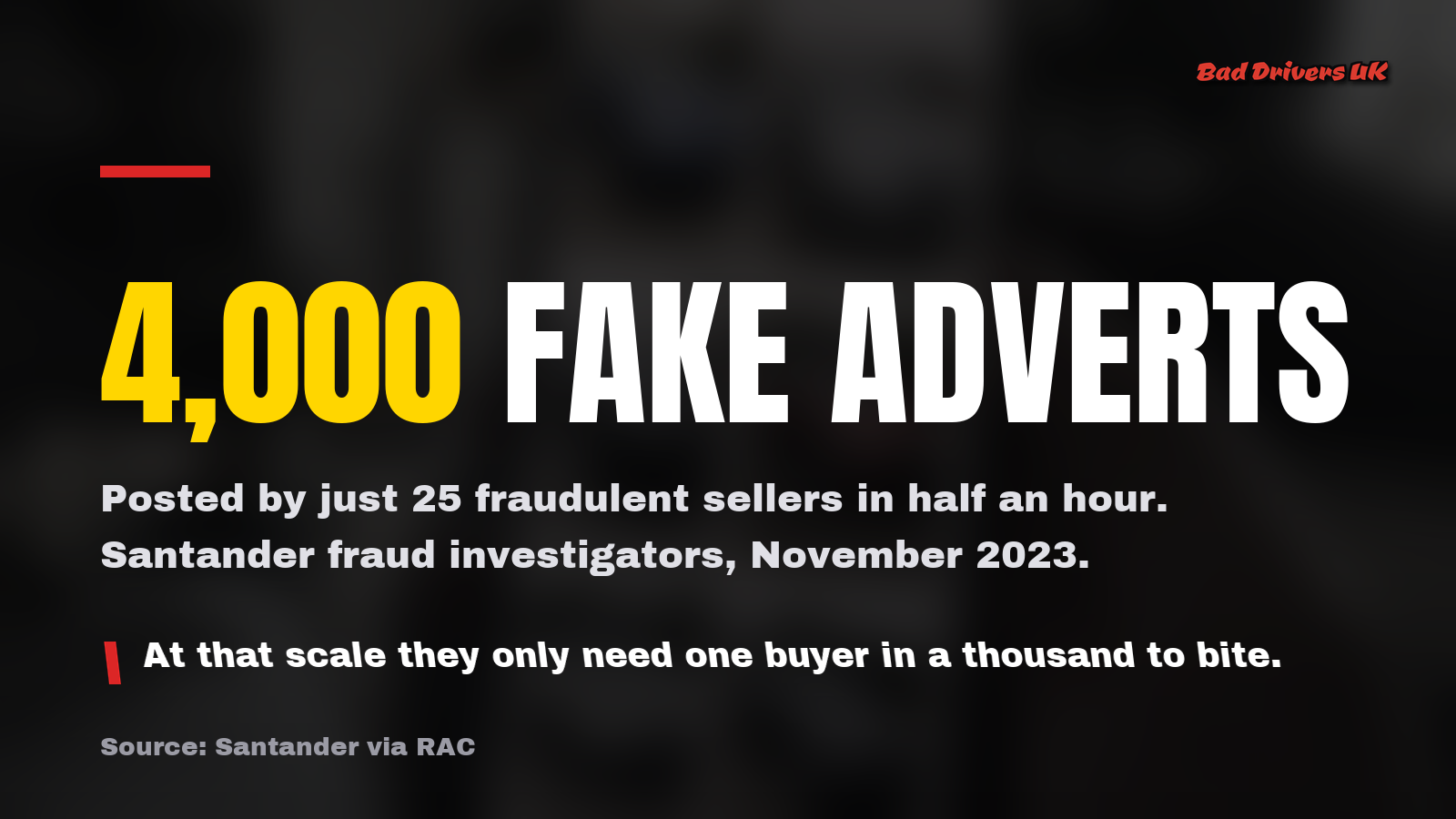
Santander's fraud investigators ran a spot check in November 2023 and found 25 fake seller accounts posting roughly 4,000 fraudulent car adverts in a single 30 minute window. That is not opportunists chancing their arm. That is production-line fraud.
The victim spread should kill the idea that this only catches the naive. Buyers aged 18 to 25 made up a fifth of cases, the biggest single group. But the over-60s lost the most per hit, an average of £1,564 each, more than double the previous year's figure. The scam does not care how old you are. It cares how quickly you can transfer money.
Why the Problem Is Surging Now
The used car market handed the fraudsters a bigger pond to fish in. UK used car transactions hit 7,807,872 in 2025, the highest figure ever recorded, up 2.1 per cent on 2024 according to SMMT data reported by GB News. Searches for "Facebook marketplace cars for sale near me" rose 52 per cent in a year.
More buyers are skipping dealers and going straight to private platforms, and the trade has noticed what followed them there. Matt Clamp, a used car expert at Scrap Car Comparison, told GB News the volume of stolen and fraudulently altered vehicles entering the private market is "something we haven't seen before".
That points at the second layer of the problem. The pure ghost advert takes your deposit and runs. But real cars on Marketplace can be dirty too: cloned identities, doctored VINs, falsified history screenshots sent by the seller. We cover the physical warning signs in our guide to red flags when buying privately, and if a deal has already gone wrong, our guide on unknowingly buying a stolen car explains where you stand.
The Rules That Beat the Scam
None of this requires you to stop using Marketplace. It requires you to act like the platform does no vetting, because it does not.
- Never transfer money before the car is in your possession. Santander's head of fraud risk management, Chris Ainsley, calls this the single best protection there is. No deposit to hold it, no payment to release delivery, nothing. A seller who needs money before you have seen the car is not a seller.
- Reverse-search the photos. Stolen images often surface in the original advert, in another town, at a different price, with a different name attached.
- See the car, then check the car. VIN on the dashboard and door frame must match the V5C exactly. Ask to see the V5C in the seller's name at the address you are standing at.
- Treat a bargain price as a red flag, not a reward. Fraudulent listings are priced to make you rush. Anything well under market value is under it for a reason.
- Run the history before you travel. Independent checks pull the vehicle's recorded history from official data rather than from screenshots a seller sends you, and scammers rely on you not bothering.
The £479,964 was not lost by careless people. It was lost by people who trusted that a normal-looking advert was a normal advert. On Marketplace, that assumption is the product being sold.
Useful Links
- Buying or selling a vehicle - GOV.UK - The official paperwork that must change hands when a vehicle is sold
- Report suspicious emails, websites and adverts - GOV.UK - How to report online scam content to the National Cyber Security Centre
- Consumer protection rights - GOV.UK - Your legal rights when a purchase goes wrong
FAQ
How do Facebook Marketplace car scams work?
Fraudsters steal photos and videos of real cars from genuine adverts, relist them at tempting prices, and push buyers to pay a deposit or the full amount by bank transfer before viewing. Once the money lands they block the buyer and vanish. The car was never theirs to sell and usually never existed at the advertised location.
How much money has been lost to Facebook car scams?
Santander reported £479,964 lost to Facebook car scams in the first nine months of 2023 alone, a 93 per cent increase on the same period the year before. That is one bank's customers. The true national figure across all banks is far higher.
Is it safe to buy a car on Facebook Marketplace?
It can be, but only if you treat every listing as unverified. Marketplace does not vet sellers or vehicles. See the car in person, check the VIN and paperwork match, and never send money before the vehicle is in your possession. A genuine seller will not object to any of that.
Should I ever pay a deposit to hold a car?
Not to a private seller you have never met, and never by bank transfer. Santander's own fraud team puts it plainly: do not transfer funds until the vehicle is in your possession. A seller who insists on money before viewing is telling you what they are.
What should I do if I have been scammed on Facebook Marketplace?
Contact your bank immediately, report the fraud to Action Fraud, and report the listing to Facebook. Banks can sometimes recover transferred funds if you act within hours. Keep every message, the advert, and the account details you paid, they are evidence.