There is a legal gap in the UK used car market that most buyers have never heard of. A car can be crashed hard enough for an insurer to write it off, repaired by anyone, to any standard, and sold back onto the road without a single independent person ever inspecting the work. Not the DVLA. Not the DVSA. Nobody.
That is not a loophole being quietly exploited by a handful of chancers. It is the system working as designed, and the scale of it was laid out by Autocar in an investigation by John Evans published in August 2024. The reporting that follows is theirs, and it deserves the credit for putting hard numbers on a problem the trade has known about for years.
What Autocar Found About Written Off Cars
Autocar's investigation followed the journey written off cars take from the salvage yard back to the classifieds. The numbers are not small. Copart, one salvage company, sells roughly 250,000 repairable write-offs a year in the UK. One online marketplace was advertising nearly 15,000 repaired Category S and Category N cars at the time of the investigation.
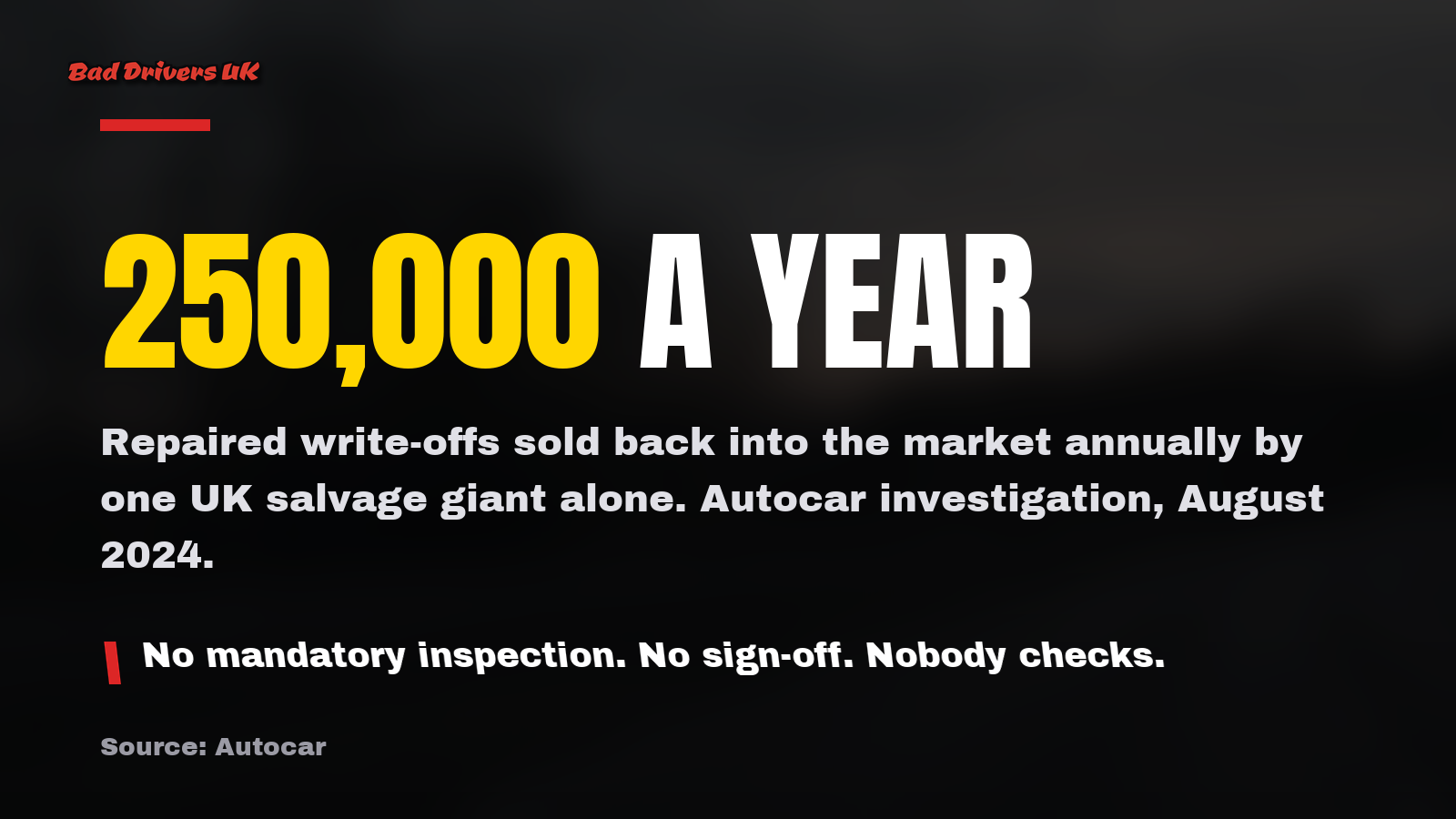
Every one of those cars was damaged badly enough that an insurer decided fixing it properly cost more than the car was worth. Every one of them can return to the road with no independent check on the quality of the repair.
The Rules on Cat S and Cat N Write-Offs
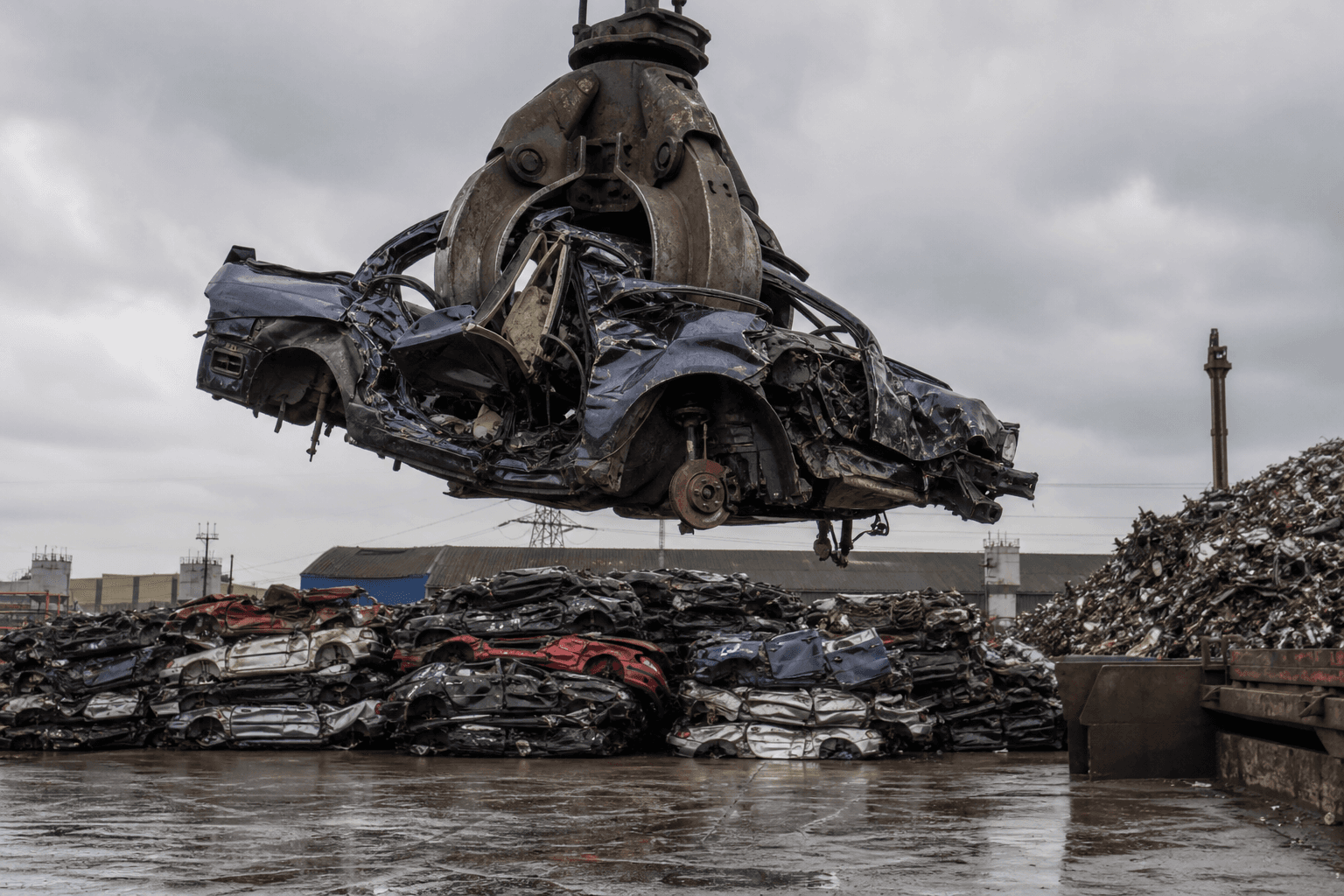
The write-off categories sort damaged cars into four bins. Category A must be crushed. Category B can be stripped for parts but the shell must be destroyed. We cover both in our guide to Category A write-offs.
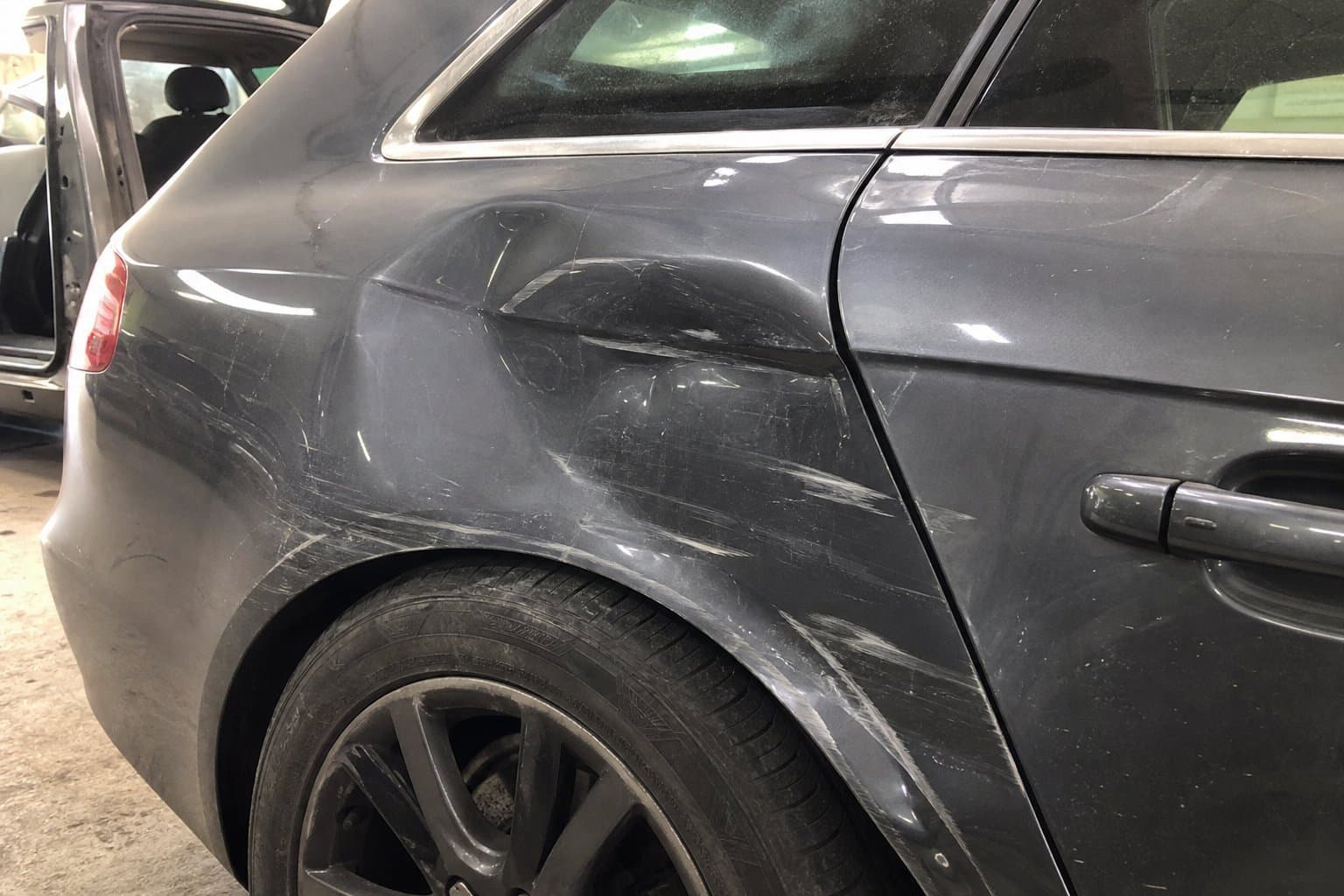
The two that matter here are Category S, structural damage, and Category N, non-structural damage. Both are legal to repair and resell. Our full guide to what Category S means covers the definitions, but the short version is blunt: S means the crash reached the parts of the car that keep you alive in the next one.
And here is the gap. Once a Cat S or Cat N car is repaired, no law requires an independent engineer to look at it before it carries passengers again. An MOT does not do that job. An MOT checks lights, brakes, tyres and emissions on the day. It does not X-ray welds or measure whether a crumple zone was rebuilt to factory spec.
The Case That Shows What Is at Stake
This is not an abstract risk, and Autocar's investigation is honest about that in a way that deserves repeating carefully.
In 2008 a Vauxhall Corsa was written off. It was repaired and resold, and six years later six-year-old Sadie McGrady died in a crash while travelling in it. The inquest heard evidence from a vehicle examiner that the repairs had weakened the car's structure and made serious injury more likely. The coroner's conclusion cut to the heart of the system: "If it is beyond economic repair... that should be the end of the vehicle."
That inquest was more than a decade ago. The inspection gap it exposed is still open today. Nothing in the rules has changed.
Where the System Breaks Down
Autocar's reporting identified several pressure points, and they all push in the same direction.
The seller grades their own homework. Write-off categories are often assigned by the same businesses that profit from selling the salvage. A car graded S is worth less than a car graded N, so the incentive leans towards the softer grade. Miscoded cars, structural damage wearing a non-structural label, are a known problem in the trade.
Anyone can do the repair. There is no required qualification for putting a written off car back together. Modern cars use high-strength steels, bonded panels and aluminium structures that punish old-school repair techniques. A weld that looks tidy can still be a weak point where the engineering said crumple zone.
Even scrap-only shells attract interest. The investigation noted rising inquiries about Category B vehicles, the ones that are legally parts-only. If there is money in a shell, someone will try to put it back on the road.
Verification is voluntary. Independent inspection firms exist, and good repairers use them. Autolign, one such firm, told Autocar it inspects around 30 repaired vehicles a month. Set that against a quarter of a million salvage sales a year from one auction house and the arithmetic speaks for itself.
What This Means When You Are Buying
A repaired write-off is not automatically a death trap. Plenty are repaired properly, priced fairly and sold with full disclosure. The problem is that the paperwork will not tell you which kind you are looking at, and the seller might not either.
A dealer is legally obliged not to misdescribe a car, but private sellers operate under far looser rules, and a surprising number of write-offs surface in private adverts with no mention of their history. If you are weighing one up on price, read our guide on whether to buy a Cat S or Cat N write-off first.
The practical rules are short:
- Find out the write-off status before you view. A vehicle history check reveals recorded write-off markers and the category. Do this before you fall for the car, not after.
- Treat the category as a starting point, not a verdict. Remember who assigned it, and why a softer grade suits the seller.
- If it is a write-off and you still want it, pay an independent engineer. A proper post-repair inspection costs a fraction of the discount you are chasing. If the seller resists an inspection, that is your answer.
- Price in the exit. A repaired write-off is worth less for as long as you own it, and it will be worth less again when you sell. That discount you are getting is not free money.
Autocar did the industry a service by putting this on the record. The rules have not caught up yet. Until they do, the only inspection a repaired write-off gets is the one you arrange yourself.
Useful Links
- Scrapped and written off vehicles - GOV.UK - The official rules on write-off categories and what owners must do
- Consumer protection rights - GOV.UK - Your rights when a vehicle is misdescribed by a trader
- Find your local Trading Standards office - GOV.UK - Report a seller who hid a vehicle's write-off history
FAQ
Can a written off car legally go back on the road in the UK?
Yes, if it was classed Category S, N, C or D. Only Category A vehicles must be destroyed, and Category B shells can only be broken for parts. A Cat S or Cat N car can be repaired and driven again, and there is no legal requirement for an independent engineer to inspect the repair first.
Who checks the repairs on a Cat S or Cat N write-off?
Legally, nobody has to. There is no mandatory independent inspection before a repaired Cat S or Cat N vehicle returns to the road. An MOT does not assess crash repair quality. Voluntary inspections exist, but they only happen if a repairer, insurer or buyer chooses to pay for one.
Does a seller have to tell me a car was written off?
A dealer must not misdescribe a vehicle, and hiding write-off status can breach consumer protection law. A private seller is under far weaker obligations. In practice the burden falls on the buyer to find out before handing over money.
What is the difference between Cat S and Cat N?
Category S means the vehicle suffered structural damage, to the chassis or crash structure, that was assessed as uneconomic for the insurer to repair. Category N means the damage was non-structural, such as electrics, panels or interior. Both can be repaired and resold, and neither requires an independent inspection.
Should I avoid buying a repaired write-off completely?
Not necessarily. A properly repaired Cat N car can be honest value, and some Cat S repairs are done to a high standard. The problem is you cannot tell from the paperwork alone. If you are considering one, get the repair inspected by an independent engineer before you buy, not after.