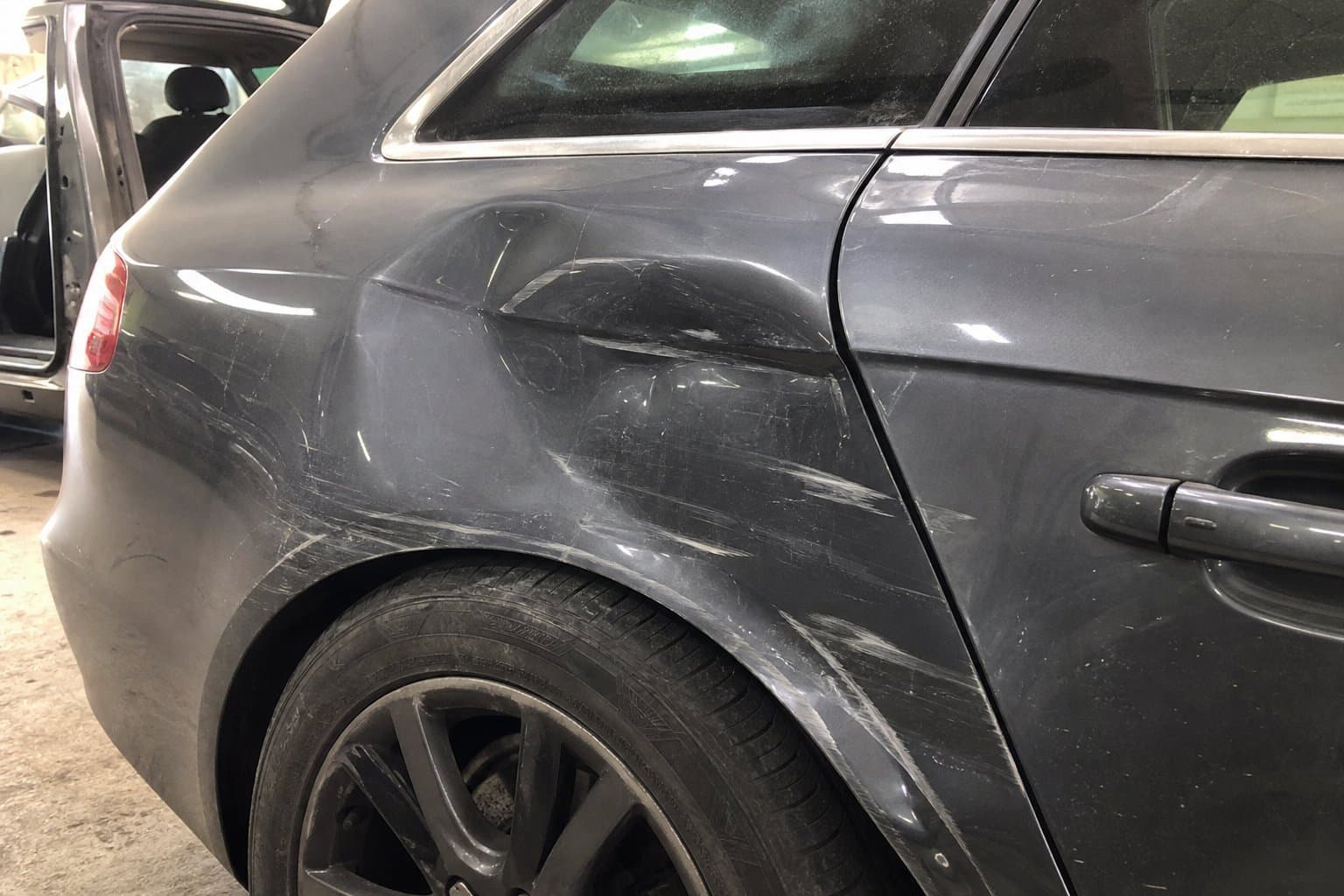
A reader wrote to Honest John with a story that plays out at dealer desks every week. He owned a 63 plate Skoda Yeti, a solid family car, and took it in for part exchange. The opening offer was £5,000. Then the dealer's history check came back, and the offer became £2,500.
The screen showed something the owner had never been told: at some point before he bought it, the Yeti had failed an MOT and been sold as salvage at auction. He had owned the car for around a year without the faintest idea. The full exchange is on Honest John, and it is worth reading, because the question in his title is the one everybody asks at that desk: should I have been told?
The Moment the Money Disappears
Notice when the damage actually landed. Not when the car was damaged, repaired or auctioned. The damage landed at the trade-in desk, the first time anyone ran a thorough check while money was on the table.
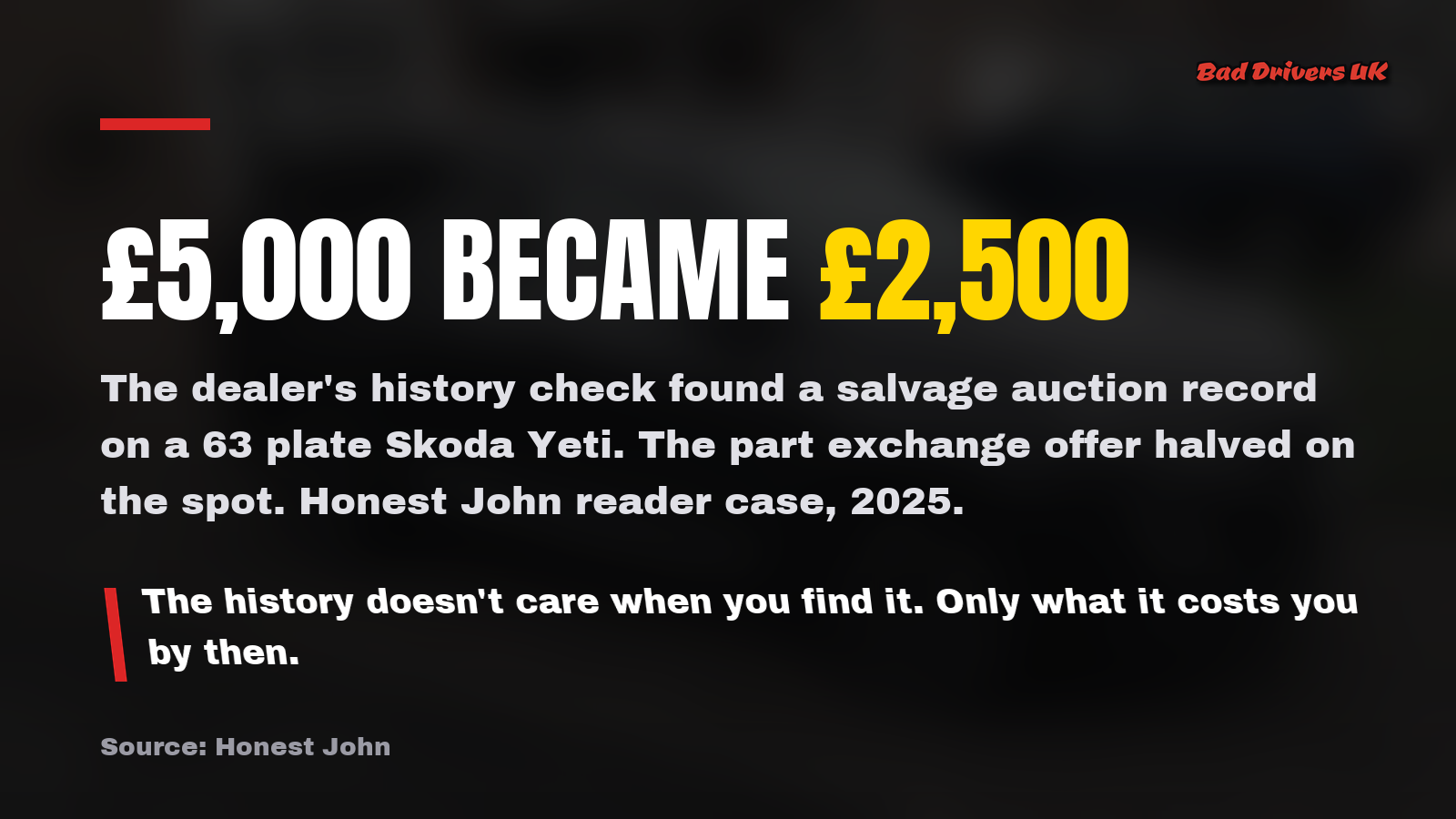
That is the cruel geometry of hidden history. The record sat there, attached to the car, through the sale, through a year of school runs, invisible because nobody with a reason to look had looked. Dealers always look, because their money is next in line. The £2,500 that vanished from the offer was never really his, it belonged to whoever failed to surface the record before he paid clean-car money for a salvage-history car.
Should He Have Been Told?
It depends who sold it, and the answer is less comforting than most owners expect.
From a dealer, concealing known write-off or salvage history is misdescription, and consumer protection law gives you real recourse: rejection, repair of the price, or a claim. A dealer is expected to know what they are selling.
From a private seller, the duty is thinner. A private seller must give truthful answers to direct questions, but has no general duty to volunteer the car's past. If nobody asked and nobody checked, a private sale can hand you a salvage car in perfect legal silence. Our guide to red flags when buying privately exists for exactly this reason.
Honest John's advice to the reader started somewhere else, though: go back to the history check he ran when he bought the car, and ask the provider why the salvage sale never showed.
Why the First Check Missed It
Here is the uncomfortable technical truth: not every check sees every record. Write-off markers, MOT results and salvage auction listings live in different databases owned by different organisations. A car can be sold for salvage at auction without carrying a formal insurance write-off marker, which means a check that only queries write-off data comes back clean while the auction record sits elsewhere, waiting for a more thorough query to find it.
The reader's check found the MOT failure but not the salvage sale. The dealer's check found both. Same car, same history, different depth of search, £2,500 of difference. When you are choosing what to run before a purchase, what the check actually covers matters more than what it costs, and our breakdown of what a car history check shows walks through which records come from where.
The Lessons, In Order of Cost
Before you buy: check like a dealer, not like a buyer. The dealer's habit, run the history while the money is still in your pocket, is the entire game. A salvage record found before purchase is a negotiating tool or a reason to walk. Found after, it is just a loss with your name on it.
Ask the direct question and get the answer in writing. "Has this car ever been written off, damaged and repaired, or sold as salvage?" A private seller who lies to that question in a message has handed you the evidence for a misrepresentation claim. A seller who goes quiet has answered it anyway.
If you already own the car, find out now. It feels better not to know, right up until the trade-in desk. If there is a record on your car, knowing early lets you sell with disclosure at an honest price, fix the story, or at least never pay for bodywork on a car that owes you nothing.
If you were misled, push back. Dealer sale: complaint in writing, then Trading Standards, and the paperwork from the day you bought it is your ammunition. The reader's £2,500 haircut is recoverable in the right circumstances, but only with evidence of what was said and sold.
The Yeti was, by every account, a decent car. That is what stings. The metal was fine, the history was not, and in the used market the history is half the price. Find out what a car has been before you pay for what it appears to be.
Useful Links
- Scrapped and written off vehicles - GOV.UK - The official rules on write-off categories and salvage
- Consumer protection rights - GOV.UK - Your rights when a vehicle's history was misrepresented
- Find your local Trading Standards office - GOV.UK - Where to escalate a dealer who concealed vehicle history
FAQ
Does a seller have to tell me a car was previously written off or sold as salvage?
A dealer must not misdescribe a vehicle, and concealing known salvage or write-off history from a consumer can breach consumer protection law. A private seller only has to give truthful answers to direct questions. If you never ask, and never check, a private sale can legally pass a salvage car to you in silence.
How much does a salvage or write-off record cut a car's value?
The market typically knocks 20 to 40 per cent off a comparable clean car, and in the Honest John reader's case the dealer cut the offer by half, from £5,000 to £2,500. The discount follows the car forever, because every future buyer's check will find the same record.
Why did the buyer's original history check miss the salvage sale?
Not every data source feeds every check. Insurance write-off markers, MOT records and salvage auction listings are held by different organisations, and a check is only as good as the sources it queries. A car can carry a salvage auction record without a formal insurance write-off marker.
What can I do if I already own a car with hidden salvage history?
Gather your purchase paperwork and any history report you ran at the time. If you bought from a dealer who failed to disclose known history, you may have a claim under consumer protection law, start with the dealer in writing and escalate to Trading Standards. Bought privately, your options are limited unless the seller lied to a direct question.
Should I still buy a car with a salvage or write-off record?
Only with your eyes open and money off. The car must be priced as what it is, not as a clean example, and the repair quality should be independently inspected. What you must never do is pay clean-car money for salvage history, which is exactly what happens when nobody checks.