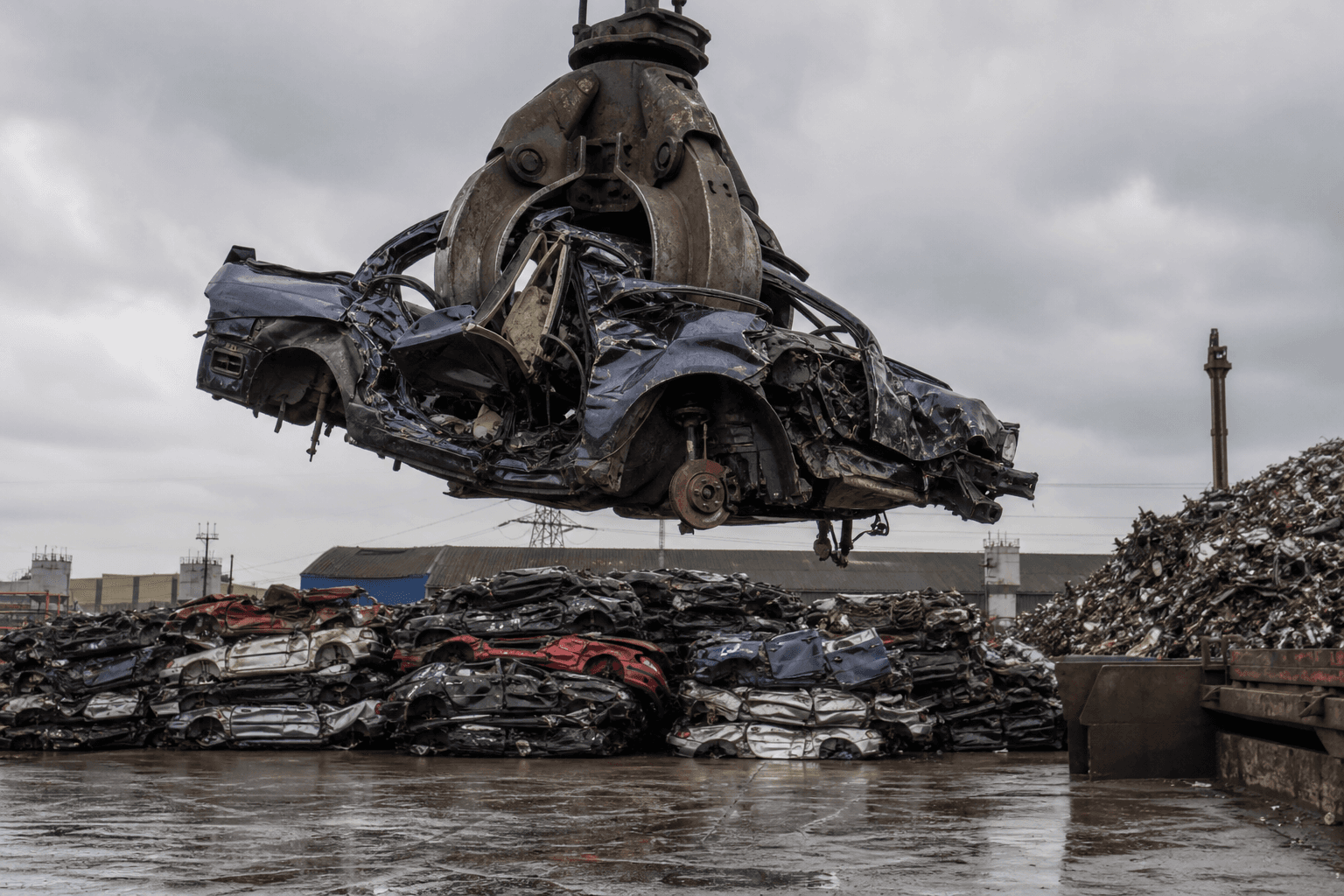
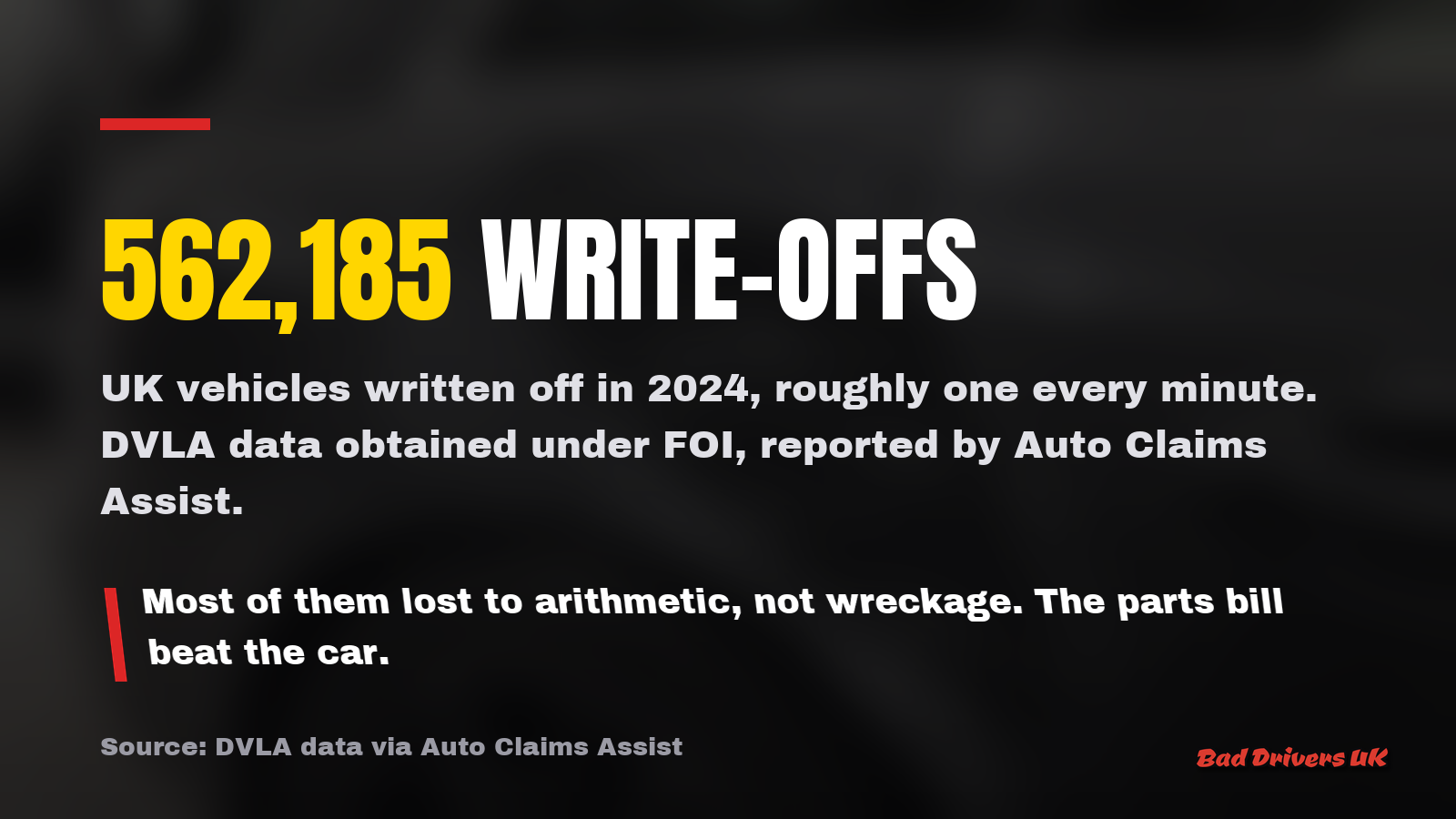
In 2024, 562,185 vehicles were written off in the UK. Divide that by the minutes in a year and it comes out at roughly one car written off every sixty seconds, around the clock. Most of them were not mangled wrecks on flatbeds. They were victims of arithmetic.
The figure comes from DVLA data released under freedom of information rules and analysed in a 2019 to 2025 repair-cost study by Auto Claims Assist, an accident claims management firm. The same dataset explains why the number keeps climbing, and it has very little to do with how hard people are crashing.
 Auto Claims Assist, 2019-2025 data report
The Arithmetic That Kills Cars
An insurer writes a car off when repairing it stops making financial sense, typically when the estimate reaches somewhere between half and two thirds of the car's value. That threshold has not moved much. What moved is everything on the other side of the equation.
The average repair cost in the Auto Claims Assist data went from £4,162 in 2019 to £5,147 in 2024, nearly 25 per cent up across the period. The parts basket alone rose 35 per cent between 2020 and 2024. Business electricity, the thing that runs a bodyshop, was 75 per cent above early-2021 levels by late 2024. And the industry is short of hands: about 23,000 vacancies in the aftermarket, with only 2 per cent of technicians formally qualified to work on the driver-assistance sensors that now live inside almost every bumper.
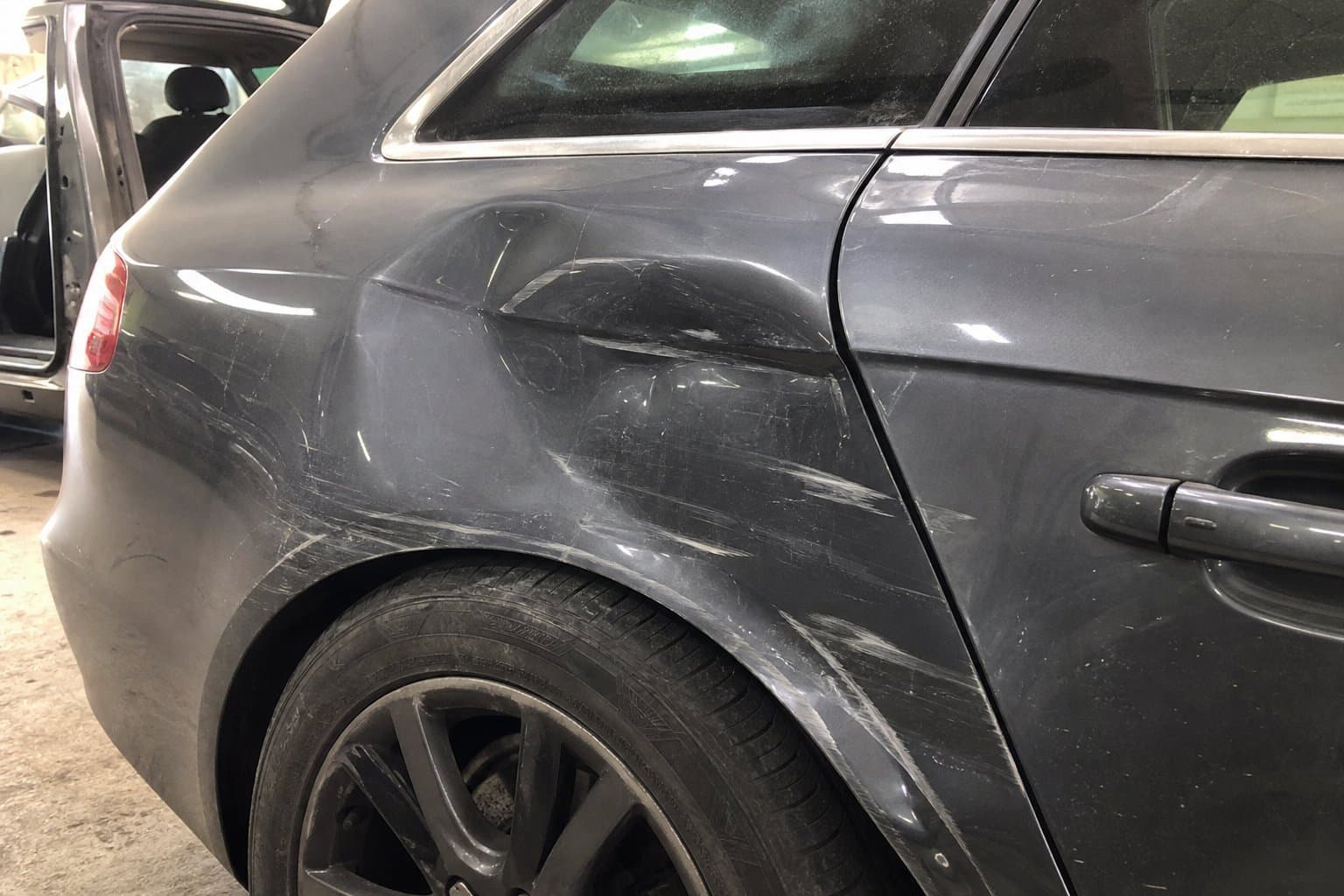
That last point deserves a second look, because it is the quiet killer. A bumper scuff on a 2012 hatchback was a £300 job. The same scuff on a 2022 car can mean a radar module, a camera bracket and a calibration rig before the paint is even mixed. The car did not get more broken. The repair got more expensive, and the write-off threshold got closer.
The result: the proportion of assessed vehicles being declared total losses peaked above 73 per cent in 2023 in Auto Claims Assist's claims data. Insurers paid out a record £11.7 billion in motor claims in 2024, per ABI figures in the same report. Cars that would have been fixed a decade ago are now scrapped or sold as salvage over a repair bill nobody wanted to pay.
Where Half a Million Write-Offs Go
A write-off is not a death certificate. Category A and B cars must be destroyed or broken, but the S and N categories, the economic casualties, can be repaired and put back on sale. With volumes this high, an entire industry exists to buy, patch and resell them, and as we covered in our piece on Autocar's write-off investigation, no law requires anyone independent to inspect those repairs.
For that pipeline to be safe for buyers, one thing has to work: the record. The write-off marker has to follow the car so the next owner knows what they are pricing. Which brings us to the second number.
The 91,000-Car Hole in the Records
In 2019, Auto Express ran an exclusive investigation comparing the DVLA's write-off records against MIAFTR, the Motor Insurance Anti Fraud and Theft Register, which is the database vehicle history checks query for write-off status. The registers did not match. In 2016/17, 94,821 written-off vehicles were missing from MIAFTR. In 2017/18 the gap was 91,156.
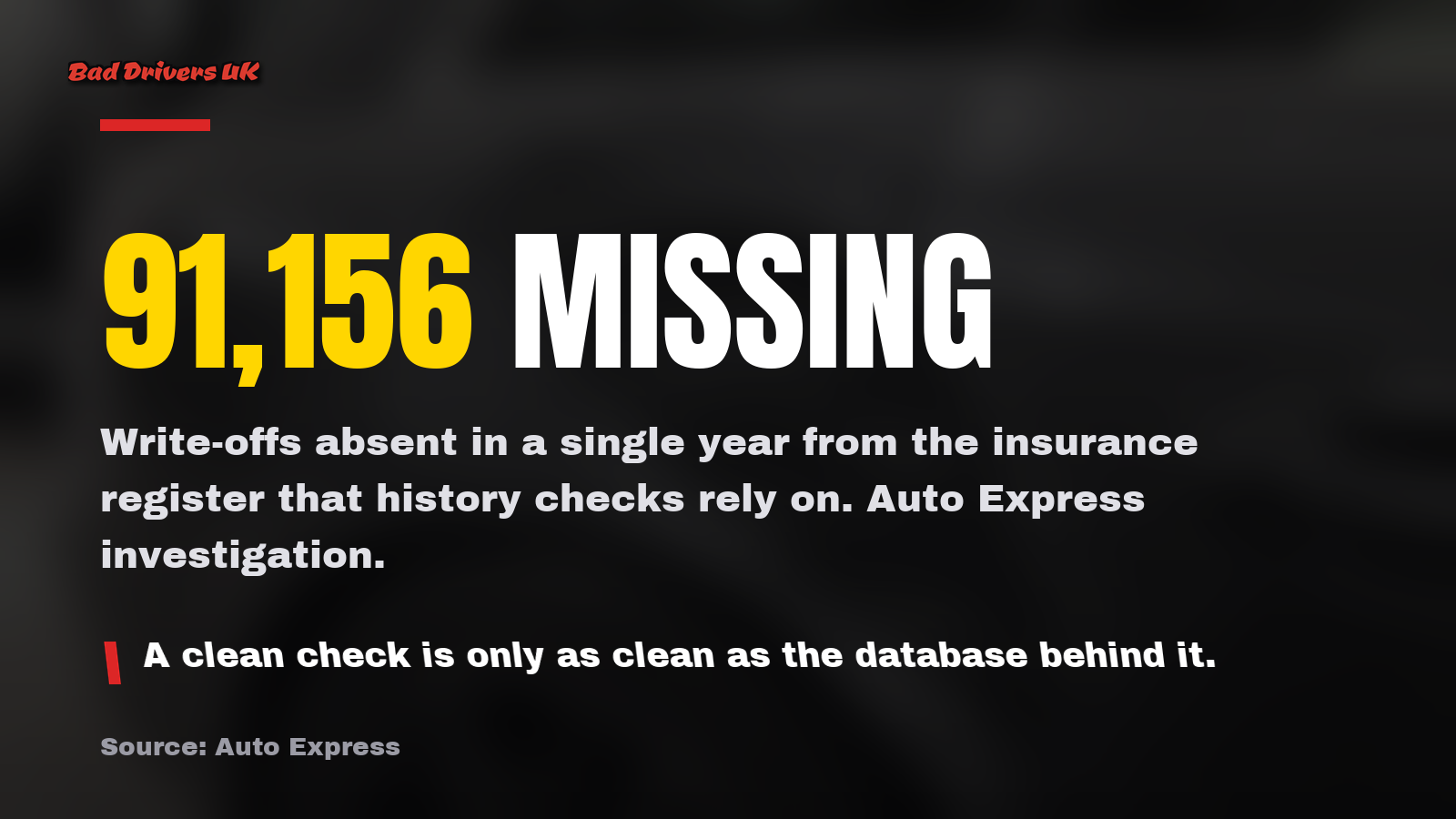 Auto Express, 20 November 2019
To prove the consequence, the Auto Express team took ten Category S cars sold through salvage auctions and ran them through the major history check providers. They came back without their write-off status showing. The Motor Insurers' Bureau's own customer officer admitted the industry "didn't understand the true scale of it".
The MIB and DVLA began work on closing the gaps after the investigation, and coverage has improved since. But the structural lesson has not aged a day: the write-off register is fed by insurers, not by law, and a car written off outside that pipeline, self-insured fleets, some paper claims, the odd non-participating insurer, can walk back into the market with a clean face.
What This Means for You
Buying: the flood of economic write-offs means more repaired Cat N and Cat S cars in the classifieds than ever, plenty of them properly repaired light-damage cars. The category alone does not tell you which is which, our guide to what a car history check shows explains which records exist, and an independent inspection tells you about the metal. Price the record, inspect the repair, and remember the register is strong evidence but not gospel: match the car's story against its MOT history, its paperwork and its panels, not just one database flag.
Owning: if your car takes a knock, understand the insurer's maths before you accept a write-off decision. Valuation disputes are now one of the biggest sources of motor insurance complaints, up 38 per cent in a year per Financial Ombudsman data. The write-off threshold runs on their estimate of your car's value; if that estimate is light, the whole decision is light.
Selling a repaired write-off: disclose it. The record usually surfaces the moment a dealer or informed buyer runs a check, as one Skoda Yeti owner found when his trade-in offer halved on the spot. A hidden write-off is not a negotiating position, it is a countdown.
Half a million cars a year are being retired by spreadsheet. That is not a scandal in itself, it is just economics. The scandal, when there is one, is what happens after: quiet repairs, thin records, and buyers paying clean-car money for cars the arithmetic already condemned once.
Useful Links
- Scrapped and written off vehicles - GOV.UK - The official rules for owners when a vehicle is written off
- Vehicle log book (V5C) - GOV.UK - How ownership records work when vehicles change hands
- Consumer protection rights - GOV.UK - Your rights if a vehicle's damage history was concealed
FAQ
Why do insurers write off cars with minor damage?
Because the decision is arithmetic, not engineering. When the repair estimate reaches roughly half to two thirds of the car's market value, paying the claim beats paying the bodyshop. Rising parts prices, sensor-laden bumpers and recalibration costs push even light knocks over that line on older or cheaper cars.
How many cars are written off each year in the UK?
DVLA data obtained under freedom of information rules recorded 562,185 vehicles written off in 2024, which works out to roughly one a minute. Claims management data shows the proportion of assessed vehicles being declared total losses peaked above 73 per cent in 2023.
What was the 91,000 write-off records gap?
An Auto Express investigation compared DVLA write-off records with MIAFTR, the insurance industry register that history checks query, and found 91,156 vehicles missing from the register in a single year. Cars in that gap could pass a history check as clean despite having been written off.
Can a written off car really come back with a clean history?
It has happened. Auto Express bought details of ten Category S cars sold at salvage auction and found they passed major history checks without their write-off status showing. The registers have improved since, but the lesson stands: no single database sees everything.
Does a write-off record always mean a car was badly damaged?
No. A high proportion of write-offs are economic decisions about repair cost against value, and some Cat N cars carry damage as light as a scuffed bumper with a damaged sensor. That is why the category, the repair quality and the price all need assessing together.