Every fraudulent car on every marketplace shares one weakness. Not the price, not the seller's patter, not the photos. It is a seventeen character code stamped into the metal in multiple places, and it is the single hardest thing on the car to fake convincingly everywhere at once.
The vehicle identification number is the closest thing a car has to DNA, and with private-platform fraud surging, the trade is pointing at it as the front line. When GB News covered the wave of fraud on Facebook Marketplace in May 2026, the used car expert they spoke to, Scrap Car Comparison's Matt Clamp, said the thing worth framing: "What concerns me most is how convincing these cars can look." The paperwork can be forged. The screenshots can be doctored. The VIN, checked properly, is where the story has to survive contact with the metal.
What the VIN Is and Where It Lives
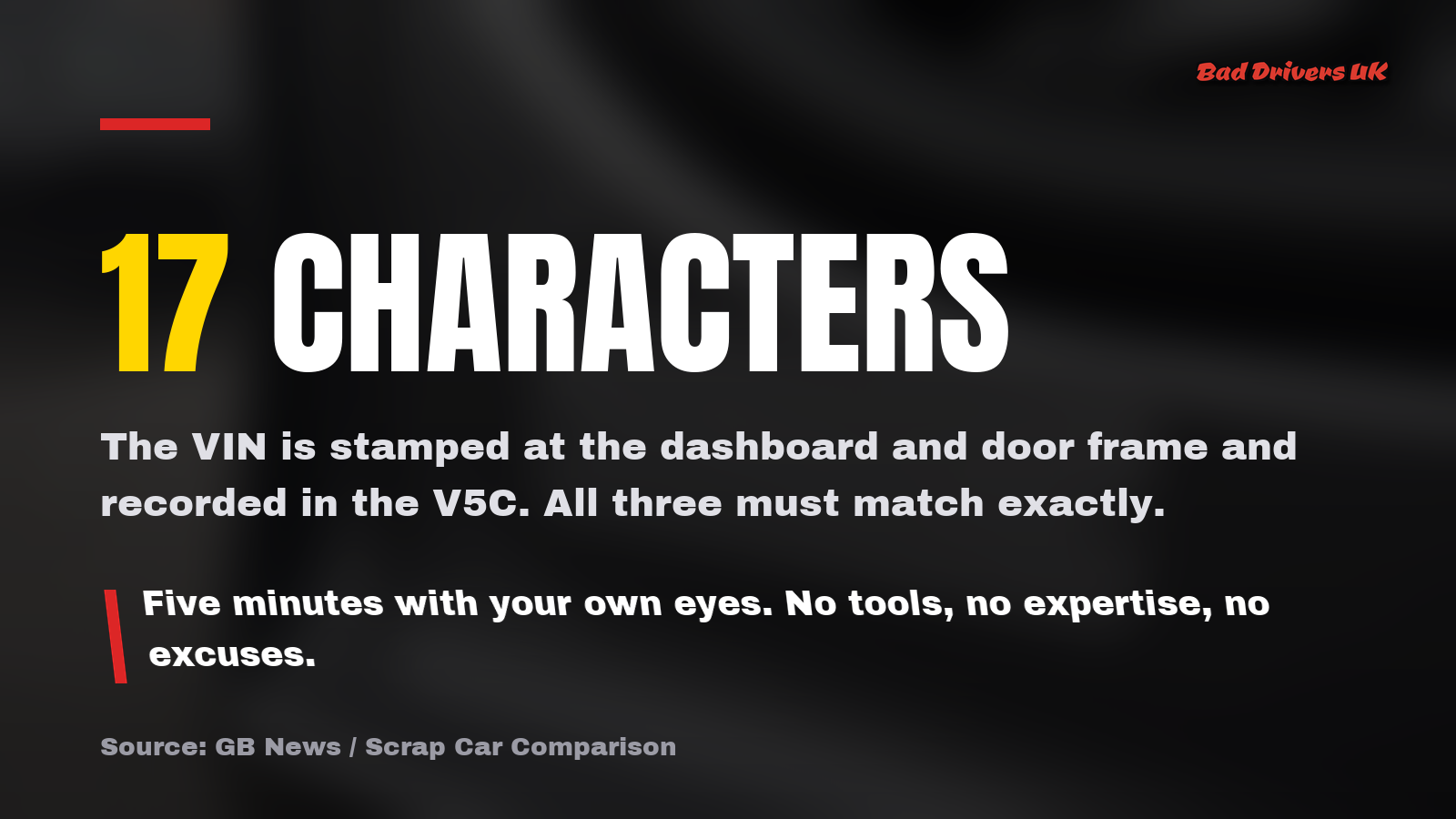
Seventeen characters, assigned at the factory, unique to the car for its whole life. It encodes the manufacturer, the model, the plant, the year, and a serial number. It does not change with the number plate, the owner or the paint.
You will find it in at least two places on the car and one document:
- Dashboard: stamped on the driver's side, read through the windscreen from outside
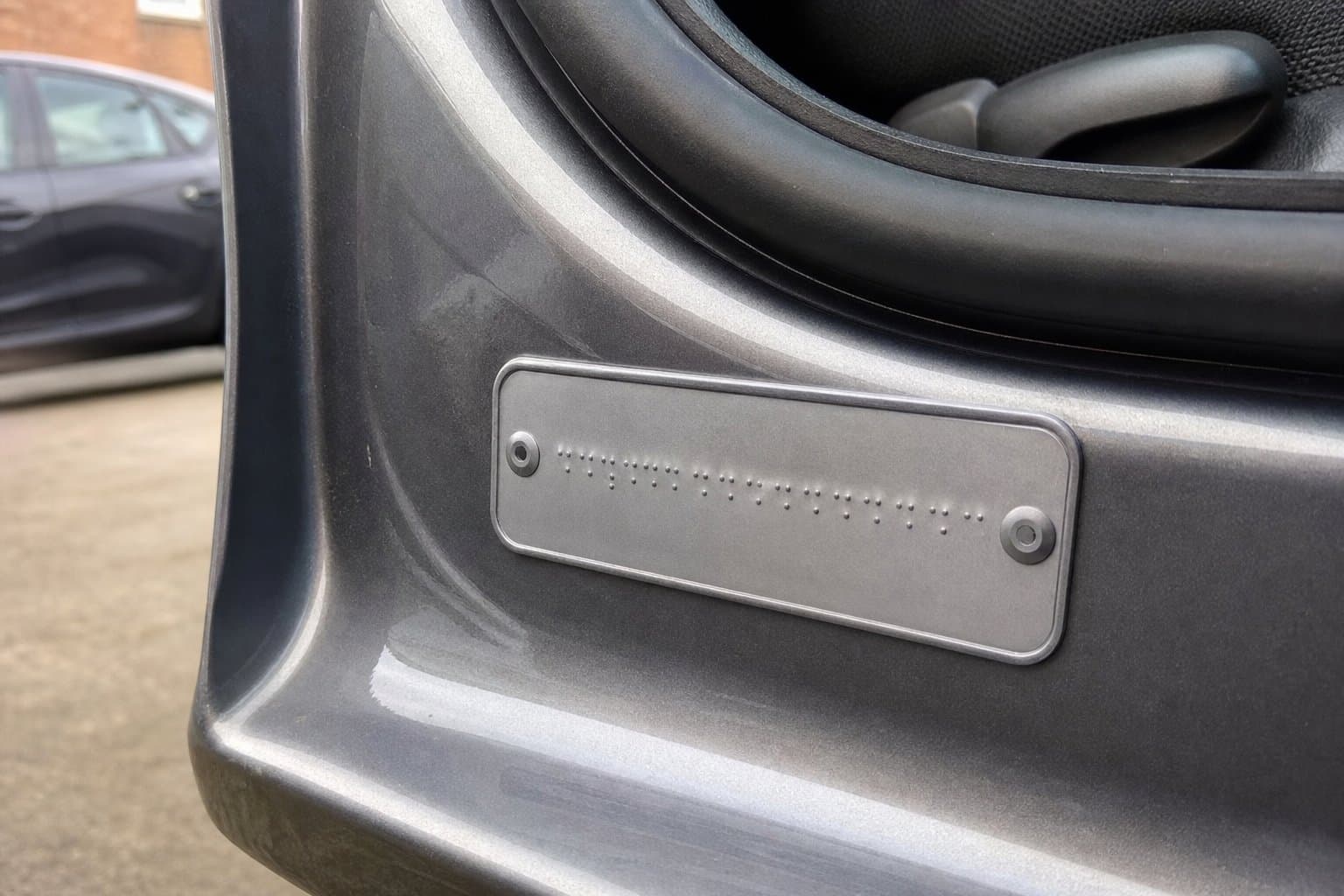
- Door frame: a plate or sticker inside the driver's door aperture
- V5C logbook: printed on the vehicle details page
Many cars carry it in more spots, under the bonnet, on the chassis, etched on glass. Every single instance must agree, with each other and with the paperwork.
Why Fraud Dies at the VIN
Think about what each flavour of fraud is actually hiding, and why the VIN exposes it.
Cloned cars wear another vehicle's registration, but the VIN stampings still belong to the stolen car underneath. Plate says one identity, metal says another. This is why cloning checks start at the door frame, not the number plate, as our guide to spotting a cloned car explains.
Clocked cars with forged histories rely on seller-supplied evidence. When a buyer runs their own check on the real VIN, the recorded history surfaces, which is exactly how the buyer in the 66,000 mile near-miss we covered discovered the car had done 250,000.
Stolen and rebuilt cars need the VIN physically altered, ground off, restamped, or swapped from a scrapped donor. That is why tampering marks matter as much as the characters: scratches around the stamping, a riveted plate that looks newer than the car, adhesive where there should be metal.
Scrap Car Comparison told GB News it has seen a sharp increase in vehicles arriving with fake or altered VINs. The fraudsters have learned that buyers check plates and paperwork. Fewer check the metal.
The Ten Minute Check
The in-person VIN check needs no tools and no expertise, and Clamp's estimate to GB News matches ours: five to ten minutes.
- Read the dashboard VIN through the windscreen. Photograph it.
- Open the driver's door and read the door frame plate. Photograph that too.
- Compare the two. They must be identical, all seventeen characters.
- Compare both to the V5C. Same again. Also confirm the V5C's make, model and colour describe the car in front of you, and that the seller's address matches the logbook.
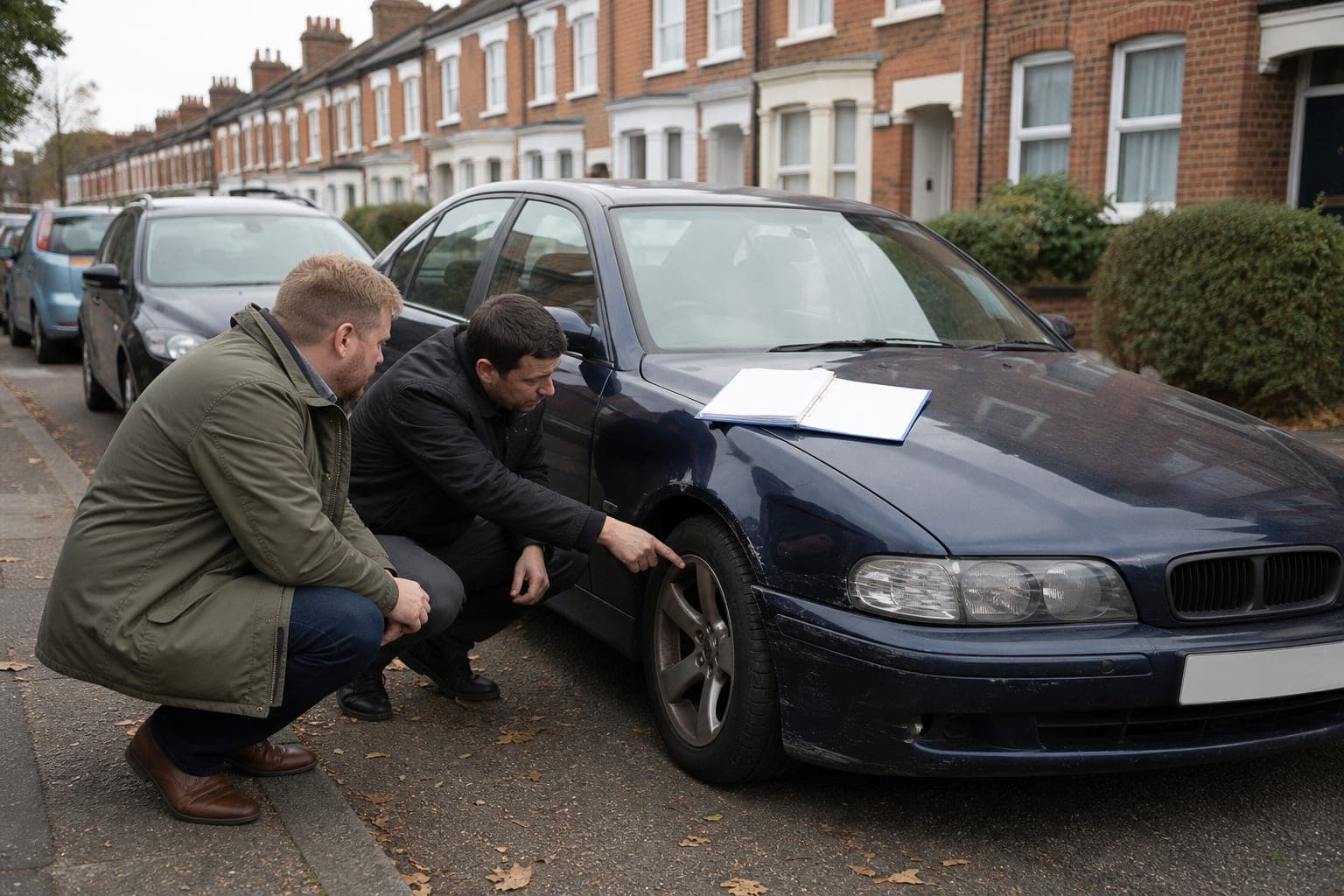
- Look at the stampings themselves. Fresh rivets, disturbed paint, misaligned characters or a plate that sits proud are all wrong answers.
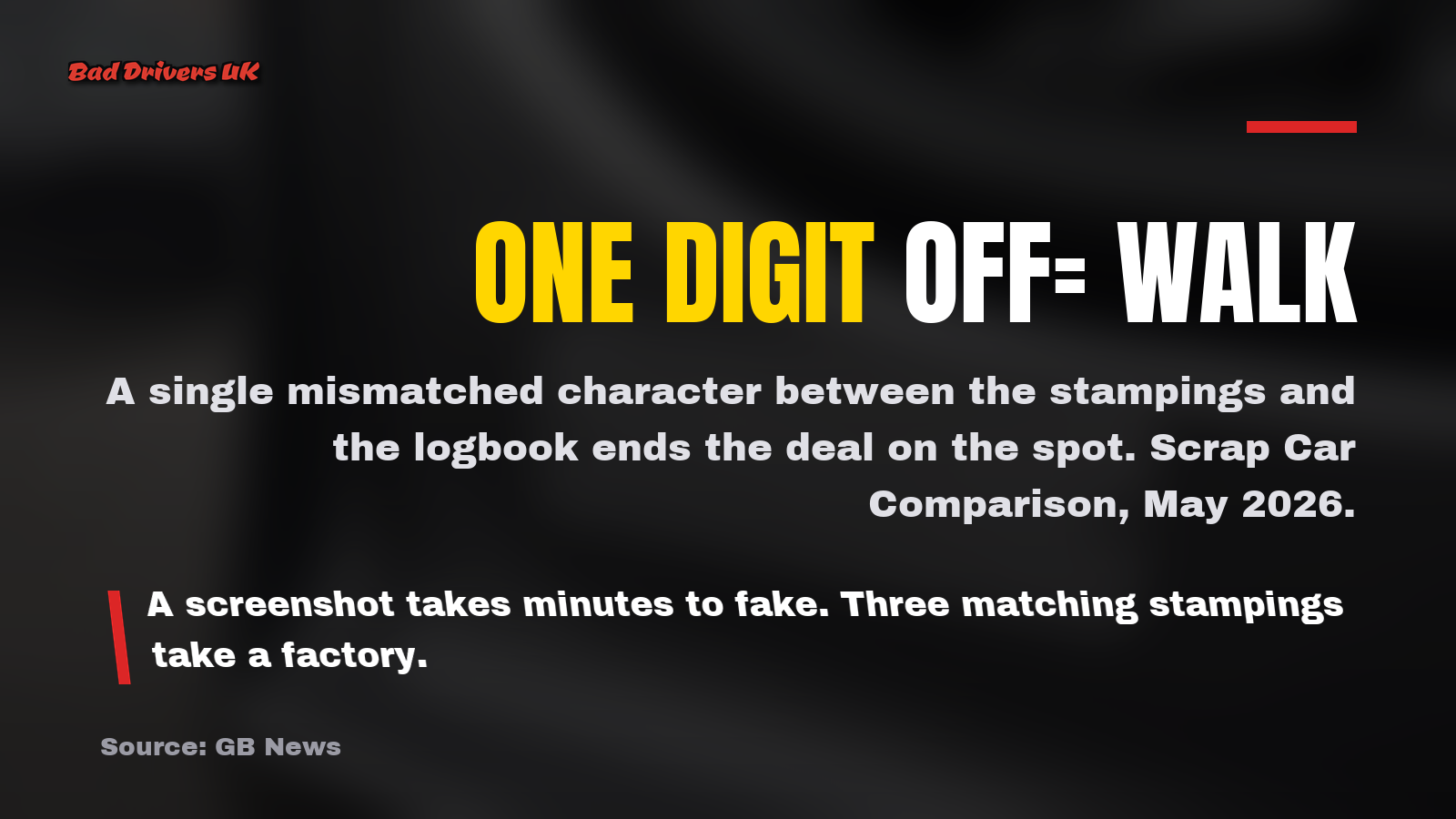
One character out of place, anywhere, and the viewing is over. Not a question, not a negotiation. Over.
Before You Even Travel
The VIN earns its keep twice. The second time is at the car. The first time is from your sofa.
Ask the seller for the VIN and registration before you arrange a viewing, and run an independent history check on them. What comes back, make, model, colour, recorded history, must match the advert. A returned silver diesel estate attached to an advertised blue petrol hatchback is a cloned or misrepresented identity, and you found out for the cost of a message.
And the refusal is data. A genuine seller hands over the VIN without a second thought, it identifies the car, not them. Evasion, excuses, or a helpful offer of their own report screenshots instead: each one is the same answer wearing a different coat. Our guide to vehicle identity checks covers what the records confirm and how identity fraud unravels on paper.
The Habit That Costs Nothing
Buying on Marketplace, at auction, from a driveway or from a forecourt, the sequence does not change:
VIN before you travel. Metal before you negotiate. Paperwork before you pay.
Fraud at every scale, from the chancer with a doctored screenshot to the crew moving stolen cars through cloned identities, depends on buyers skipping those ten minutes. The people losing thousands are not doing anything wrong, as Clamp put it, they just do not know the check exists. Now you do.
Useful Links
- Vehicle log book (V5C) - GOV.UK - The document every VIN must be checked against
- Buying or selling a vehicle - GOV.UK - The official process and paperwork for a private sale
- Consumer protection rights - GOV.UK - Where you stand if a vehicle's identity was misrepresented
FAQ
What is a VIN and where do I find it?
The vehicle identification number is a unique 17 character code assigned when the car is built. You will find it stamped on the driver's side of the dashboard, visible through the windscreen, on a plate or sticker in the door frame, and printed in the V5C logbook. On many cars it also appears under the bonnet or on the chassis.
What does it mean if the VIN does not match the V5C?
Walk away, whatever the explanation. A mismatch between the car's stampings and the logbook, or between the stampings themselves, points at a cloned identity, a stolen vehicle or a car built from parts. There is no version of that conversation that ends with you safely owning the car.
Why do fraudsters alter or fake VINs?
The VIN is the car's true identity. Change it convincingly and a stolen car borrows a clean car's history, a clone passes a paperwork glance, and a cut and shut hides its seams. Experts report a sharp rise in vehicles surfacing with fake or tampered VINs as private-platform sales have grown.
Can I check a VIN before viewing a car?
Yes, and you should. Ask the seller for the VIN and registration before travelling, then run an independent history check on them. If the returned make, model, colour or history does not match the advert, you have saved yourself the trip. A seller who refuses to share the VIN has answered your real question.
How long does a proper VIN check take in person?
Five to ten minutes. Read the dashboard stamping, open the driver's door and read the plate in the frame, and compare both to the V5C. No tools or expertise are needed. The point is agreement: every location and document showing the same seventeen characters.