You have the footage, you have the registration, and you want something to happen. Most people who report bad driving get nowhere, and it is almost never because the driving was not bad enough. It is because they took too long. There is a 14 day deadline buried in road traffic law that decides whether your clip ever reaches a court, and if you sit on the footage for a fortnight while you decide whether to bother, the answer is no.
Here is how the process actually works, and what makes a report stick.
Where to Report Bad Driving
Send it to the police force covering the area where it happened, not where you live. If it happened on the M6 near Preston, that is Lancashire Constabulary, even if you drove home to Kent.
Nearly every UK force now runs an online portal for dashcam and helmet camera footage. Many call it Operation Snap, a scheme that started in Wales and spread across the country, but names vary by force. Searching for your force name plus dashcam submission will find it.
The portal will ask for the clip, the date, the time, the location, the registration, a description of what happened, and your details as a witness. You submit the footage unedited. Do not trim it to the exciting bit, because the approach and the aftermath are often what prove the offence was deliberate rather than a wobble.
If the driving is dangerous and it is happening in front of you right now, that is a 999 call. A drunk driver weaving across a dual carriageway is an emergency, not a web form. Use 101 for non-urgent matters where there is no footage.
The 14 Day Rule That Kills Most Reports
This is the part almost nobody knows, and it is the reason to report bad driving quickly rather than eventually.
For a range of offences including speeding, careless driving and dangerous driving, where the driver was not stopped at the roadside at the time, the police must serve a Notice of Intended Prosecution on the registered keeper within 14 days of the offence. That is a statutory deadline. Miss it and the prosecution generally cannot proceed, no matter how clear the footage is.
Fourteen days sounds generous until you work backwards. The force has to receive your submission, have someone review the footage, identify the offence, look up the registered keeper, generate the notice and get it in the post. That is why most forces ask for footage within 7 days, and some ask for 3.
So the practical rule is simple. Submit it the same day, or the next. A clip sitting on a memory card for a fortnight while you think about it is a clip that will achieve nothing.
What Makes Footage Usable
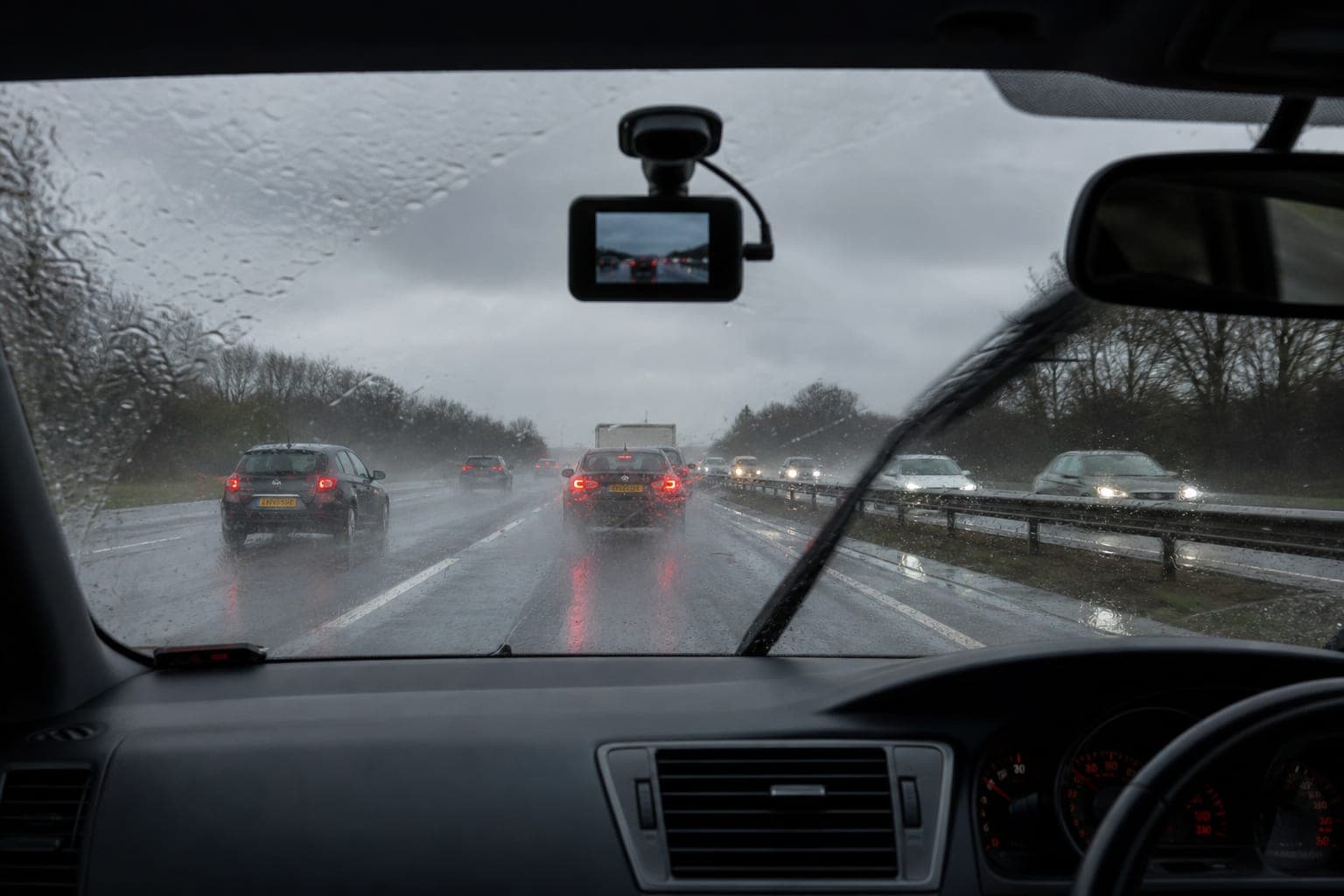
Clear registration is the single biggest factor. If the plate cannot be read, there is no keeper to serve a notice on and nothing can happen. Night footage and heavy rain defeat a lot of cameras, and a plate that is legible to your eye on a large screen may not be legible on the compressed file the portal receives.
Context matters nearly as much. Footage that starts the moment the other car does something stupid leaves the reviewer unable to see whether you contributed to it. Give them the thirty seconds before.
Do not edit, speed up, add commentary or overlay text. Submit the original file. Edited footage gets challenged and often discarded, and an unedited file carries timestamps and metadata that support your account.
Keep the original on the card or backed up until the case closes. Forces sometimes come back months later.
What Happens After You Submit
Outcomes vary. A driver may be sent on a driver awareness course, offered a fixed penalty with points, or prosecuted in a magistrates court for the more serious offences. Points attach to the driver's licence rather than to the car, which is covered in more detail in our guide to what a car history check shows.
You will usually be asked to sign a witness statement as part of the submission. If the driver pleads not guilty you can be called to give evidence. Most cases do not get that far, because clear footage tends to produce an early guilty plea.
Some forces tell you the outcome, some do not, and some only confirm that action was taken without detail. That is not the force ignoring you. Data protection limits what they can say about a third party's penalty.
What Not to Do
Do not post the registration on social media and invite a pile-on. Plates identify vehicles, vehicles link to households, and people have faced defamation and harassment claims over exactly this. Cloned plates make it worse, because the car in your footage may be wearing a number registered to somebody entirely uninvolved. Our guide on how to spot a cloned car explains how common that has become.
Do not try to look up the driver yourself. There is no public register of drivers and the DVLA will not release keeper details to a member of the public with a grievance, as covered in is there a bad drivers database in the UK.
Do not confront the driver. Reporting works. Roadside arguments end badly and can leave you facing the allegation instead.
FAQ
How do I report bad driving in the UK?
Submit it to the police force covering the area where it happened. Nearly every UK force runs an online portal for dashcam and helmet camera footage. You upload the unedited clip, give the location, time and registration, and provide a witness statement. If the driving is dangerous and happening now, call 999 instead.
How long do I have to report bad driving?
Submit within a few days. For offences like speeding and careless driving where the driver was not stopped at the scene, a Notice of Intended Prosecution must reach the registered keeper within 14 days. Most forces ask for footage within 7 days so they have time to process it and serve the notice.
What is Operation Snap?
Operation Snap is the name used by many UK police forces for their online dashcam submission scheme. It started in Wales and has been adopted widely. Forces use different names for the same thing, so search for your local force plus dashcam submission.
Will I have to go to court if I report someone?
Possibly. When you submit footage you normally sign a witness statement, and if the driver pleads not guilty you can be called to give evidence. Most cases never reach that point because the footage is clear enough that the driver accepts the offence or takes a course.
Can I post the registration on social media instead?
You should not. Number plates identify vehicles and vehicles link to households, so naming a plate publicly risks defamation and harassment claims. Cloned plates also mean the car you filmed may not be the car registered to that number.
Does reporting bad driving affect the car's history?
No. Penalties follow the driver's licence, not the vehicle. A car sold next week carries no record of the offence, which is why judging a used car on its own maintenance record matters more than guessing at who drove it.
Useful Links
- Speeding penalties - GOV.UK - The fines, points and court powers that apply to speeding offences.
- Penalty points (endorsements) - GOV.UK - What each endorsement code means and how long it stays on a licence.
- Driving disqualifications - GOV.UK - When a court can ban a driver and how the totting up process works.
- Driving licences - GOV.UK - Official guidance covering licence records and endorsements.