Buying a van is not buying a car with more space. A van is a tool that somebody used to make money, and the ones being sold are usually being sold because they have stopped being profitable to keep. Learning how to check a used van's history matters more than it does with a car, because everything about a van is designed to hide what happened to it. The load bay is lined. The paint is white and flat. The mileage tells you almost nothing.
Start With the MOT Record
The DVSA MOT history is public and free, and for a van it is the most valuable document you will see.
Vans need their first MOT at three years like a car, and the record shows every test, the result, the mileage on the day, every failure and every advisory. Read the pattern rather than the last result.
Suspension entries are the headline. Springs, dampers, bushes and rear axle items appearing repeatedly is the signature of a van that spent its life overloaded. Manufacturers publish a payload for a reason, and plenty of operators treat it as a suggestion. Overloading destroys rear suspension, and the damage carries on quietly after the load has gone.
Brakes, for the same reason. A van carrying a tonne stops very differently to an empty one. Repeated brake failures across consecutive tests mean heavy loads and late braking.
Corrosion advisories. Vans rust from the load bay outward and from the sills up, often hidden behind lining. An advisory mentioning corrosion on a structural area is a warning that gets more expensive every year it is ignored.
Mileage that changes character. Thirty thousand a year for four years, then eight thousand, means it left commercial service. That is the moment the current seller bought it.
Our guide to how to read a car MOT history covers reading the entries, and the same method applies here.
What Ply Lining Hides
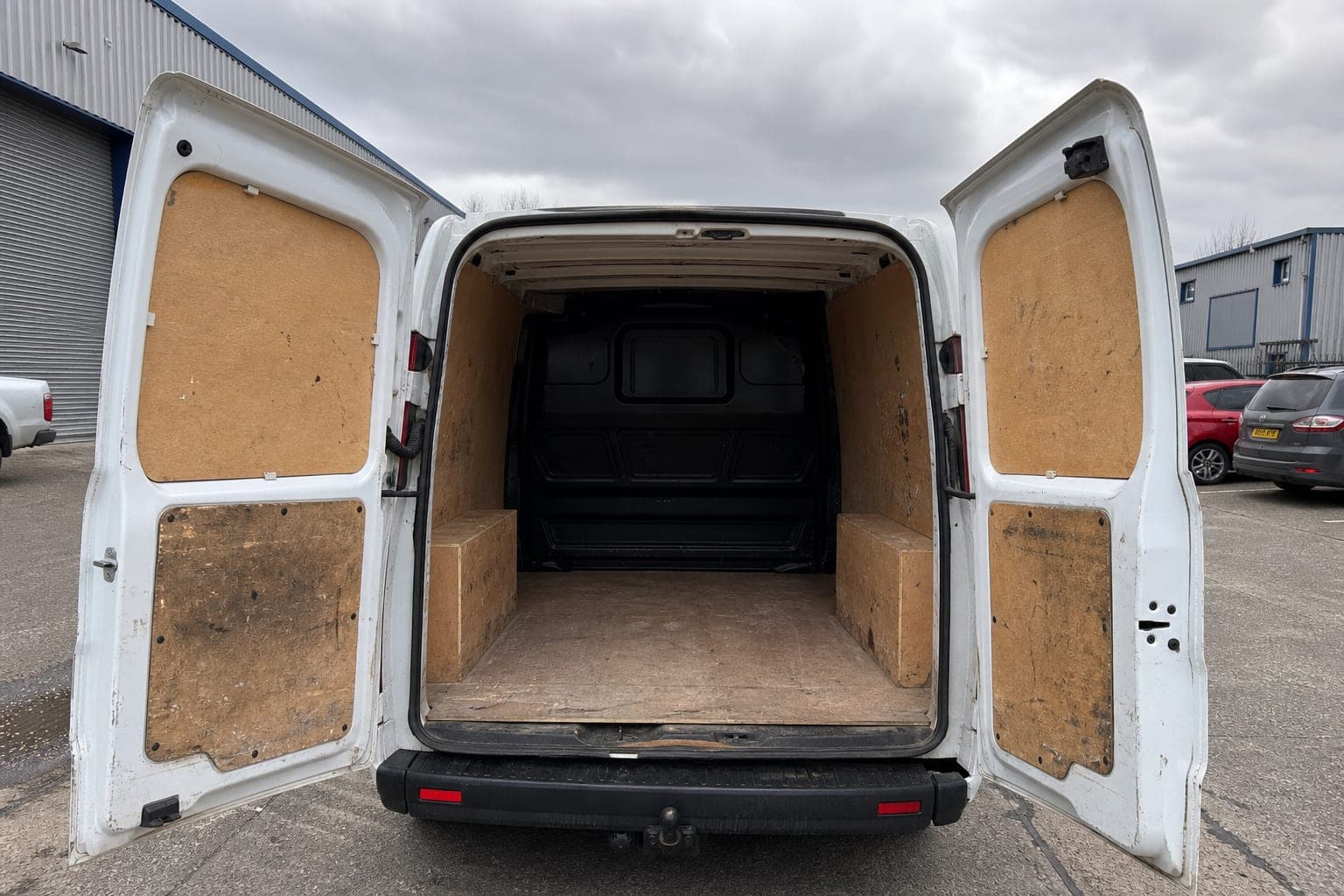
This is where van buyers get caught. The load bay is lined with plywood or plastic on almost every working van, and that lining sits directly over the panels most likely to be damaged.
Behind it you can find impact dents from unsecured loads, rust starting at the wheel arches and along the bottom of the side panels, badly repaired accident damage, and water ingress from failed seals around the rear doors.
Ask the seller to lift a panel. A genuine seller will not mind. If lifting the whole lining is not practical, check the corners, run your hand along the bottom edge of each side panel, and look hard at the floor at the rear door threshold where water sits.
Check the door seals and hinges too. Sliding side doors on high mileage vans wear their runners and drop, and that repair is not cheap.
Load, Not Miles
A van that has covered 130,000 motorway miles delivering parcels has usually had an easier life than one that did 55,000 urban miles with a tonne of building materials in the back every day.
So stop reading the odometer as a verdict. Look for what heavy use leaves behind. Sagging rear suspension when the van is empty. A rear end that sits noticeably lower than the front. Uneven wear across the rear tyres. Cracked or perished rear springs. Then cross reference all of it against the MOT record, because the tester has been writing this story down for years.
Signs a used car has been driven hard covers the same principle in more detail.
Signage and Previous Use
Most working vans carried livery, and removing it leaves evidence.
Adhesive vinyl protects the paint beneath it from sunlight, so peeling off a company logo leaves a patch that is a slightly different shade to the surrounding panel. In strong daylight you can often read the outline of the old lettering.
Roof racks, ladder racks, beacon bars and internal racking all bolt through panels. Look for filled or capped holes in the roof, on the bulkhead and along the load bay walls. Roof holes that were not sealed properly leak, and a wet load bay rots from the inside.
None of this is a reason to walk away. It tells you what the van did, which lets you judge whether the price reflects it.
The Checks That Decide Whether You Keep It
Everything above tells you what the van will cost to run. The next part decides whether it is yours at all.
Commercial vehicles are financed far more heavily than private cars. Sole traders and small firms buy on finance as a matter of routine, and agreements frequently run past the point where the van is sold on. If money is still owed against it, the finance company retains an interest and can recover the vehicle from you even though you paid the seller in full and knew nothing about it.
Van theft is also a much bigger problem than car theft in proportional terms, and cloned plates are common on stolen commercial vehicles. How to check if a car is stolen in the UK covers the markers involved.
Outstanding finance, stolen markers, insurance write-off category, keeper history, plate changes and a mileage cross-reference against independent records sit in the Full Report at £9.99, alongside valuation and outstanding recalls. What a car history check shows lists everything covered.
For a working vehicle bought to earn money, those are not optional extras. Losing a van to a finance company takes your income with it.
FAQ
How do I check a used van's history?
Start with the free DVSA MOT history for test dates, recorded mileages, failure reasons and advisories. Then run the Full Report at £9.99 for outstanding finance, stolen markers, insurance write-off category, keeper history, plate changes and a mileage cross-reference.
Is high mileage on a van as bad as on a car?
Mileage matters less than load. A van that covered 120,000 motorway miles carrying light parcels is often healthier than one that did 60,000 town miles loaded to its limit every day. Look at suspension and brake entries in the MOT record rather than the odometer.
Why does ply lining matter when inspecting a van?
Ply lining covers the load bay walls and floor, which is exactly where impact damage, rust and badly repaired accident damage hide. Ask to have a panel lifted, or at minimum check behind it at the corners and along the bottom of the side panels.
Are vans more likely to have outstanding finance?
Commercial vehicles are financed very heavily, often through business agreements that outlast the vehicle's time with the original operator. Finance is the most common reason a van buyer loses both the vehicle and their money, so it is the check that matters most.
What are the signs a van has been overloaded?
Sagging rear suspension when unladen, repeated spring, damper and bush entries in the MOT record, uneven rear tyre wear, and a rear body that sits visibly lower than the front. Overloading also wears brakes fast, so look for repeated brake items too.
Should I buy an ex-fleet van?
Often yes, because large operators service on schedule and keep records. The trade off is that fleet vans work hard and consumables are usually run to the limit. Budget for tyres, brakes and a clutch, and price the van accordingly rather than paying private money for it.
Useful Links
- Getting an MOT - GOV.UK - What the test covers, including the classes that apply to light commercial vehicles.
- Vehicle registration certificate (V5C) - GOV.UK - What the logbook records about keepers and vehicle details, and its limits as proof of ownership.
- Vehicle tax rate tables - GOV.UK - The rates applying to light goods vehicles, which differ from private cars.
- Driver and Vehicle Standards Agency - GOV.UK - The agency responsible for testing standards and published test records.