You cannot spot a stolen car by looking at it, which is exactly why learning how to check if a car is stolen matters before you buy. A stolen car can be clean, shiny, MOT'd and sitting on a driveway with a smiling seller next to it. The theft is not written on the paintwork. It is recorded in databases, and the only reliable way to know is to check those databases against the registration before any money changes hands. Eyeballing the car tells you nothing.
This post is about the actual how-to. Plenty of guides explain what happens after you have already bought a stolen car. This one is about avoiding that situation in the first place.
Where Stolen Vehicle Data Lives
There is no single public website where you type in a plate and the police confirm a theft. The data sits in a few places, and a proper check pulls them together.
The Police National Computer (PNC). When a car is reported stolen to the police, it is flagged on the PNC. This is the authoritative police record of stolen vehicles in the UK. A vehicle history check cross-references the PNC stolen marker, which is why a check can tell you something you simply cannot see.
MIAFTR. This is the Motor Insurance Anti-Fraud and Theft Register, run by the insurance industry. It records vehicles that insurers have logged as stolen, as well as those written off. A car can show up here because an insurer paid out a theft claim on it. Looking at MIAFTR alongside the police record gives you a fuller picture than either on its own.
The DVLA record. The DVLA holds the registration details, keeper history and vehicle description. On its own it does not flag theft, but it is the backbone that the other checks cross-reference against.
A stolen-vehicle check is reliable because it reads these registers. Your own judgement on a driveway is not, no matter how honest the seller seems.
Cross-Check the VIN and the V5C
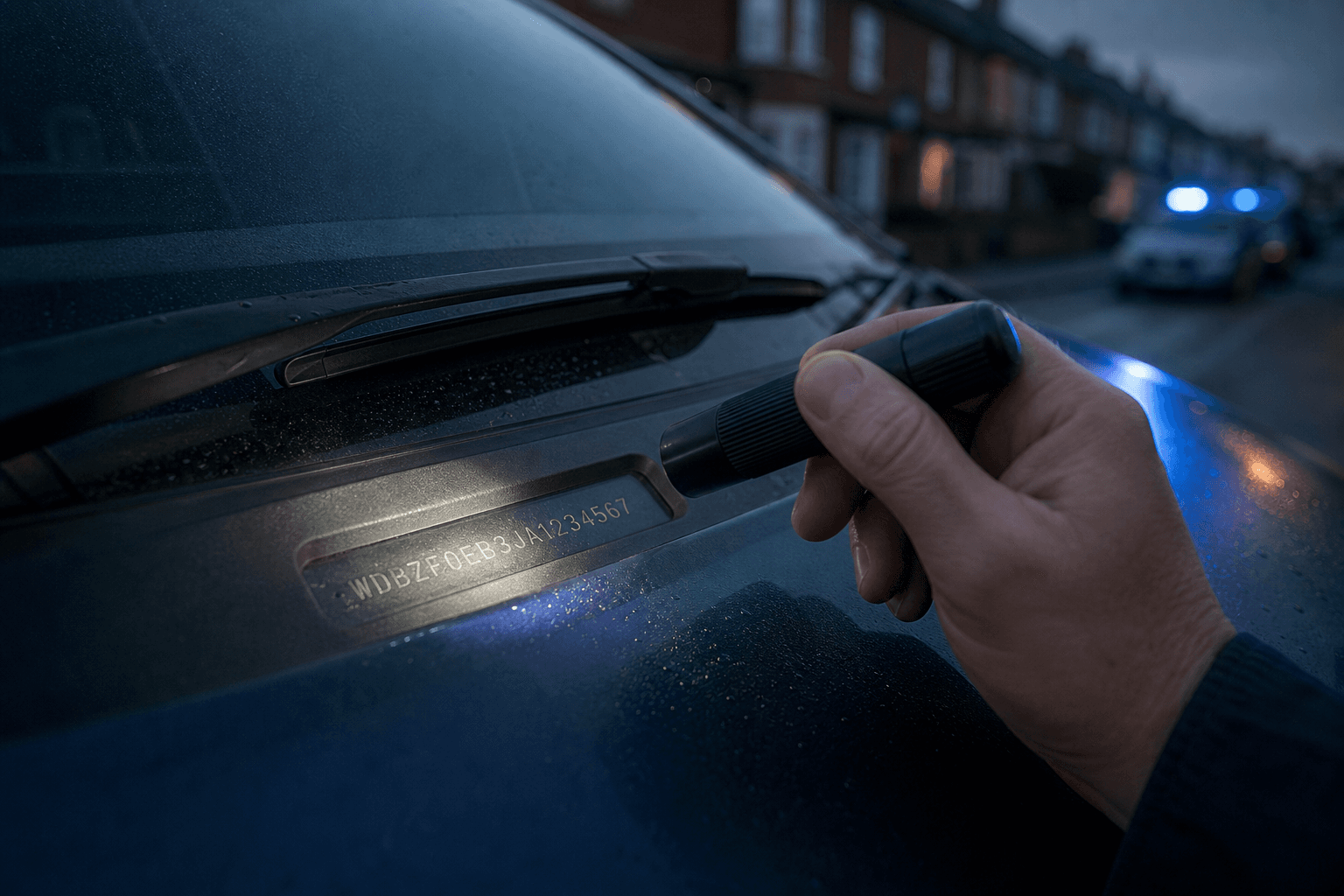
The registration plate is the easiest thing in the world to fake, so do not let it do your thinking for you. The number that matters more is the VIN, the seventeen character Vehicle Identification Number stamped into the car itself.
Find the VIN in at least two places: usually on a plate at the base of the windscreen, and on a sticker or stamp in the door shut or under the bonnet. Then compare it to the VIN printed on the V5C logbook. They must match exactly, character for character. If the windscreen VIN looks tampered with, sits crooked, has obvious rivets, or does not match the V5C, stop. That is a classic sign of a cloned or ringed car. Our guide on how to spot a cloned car goes into the warning signs in detail, and the vehicle identity check explains how identity gets reassigned to salvage.
Check the V5C itself too. It should have the DVLA watermark, and the serial number in the top right should not fall in any batch the DVLA has flagged as stolen blank logbooks. A genuine V5C document is your first line of defence against a faked identity.
Signs of a Cloned Identity
Cloning is the common dressing-up of a stolen car. The thief takes a stolen vehicle and gives it the identity of a legitimate car of the same make, model and colour, copying the plates and sometimes the VIN. On paper the car looks legitimate because it is wearing a real car's clothes. Watch for these:
- The seller wants to meet somewhere other than the address on the V5C, or away from a home entirely
- The price is noticeably below the going rate, the bait that makes you ignore your doubts
- The seller pushes for a fast cash sale and resists you taking time to check
- The V5C address does not match where the seller actually lives
- Service history, MOT location or paperwork point to a different part of the country than the seller
- The keys look like aftermarket replacements rather than original manufacturer keys
None of these alone proves theft, but several together should stop you cold.
Run the Check Before You Pay, Not After
The order matters. The whole point is to check before the money leaves your hands, because afterwards your options shrink fast. A history check against the registration cross-references the stolen registers, the finance records, the write-off categories and the mileage record in one go. Theft is rarely the only problem a dodgy car has, so a check that covers the lot is more useful than chasing one register at a time.
Treat a stolen marker as final. There is no innocent explanation you should talk yourself into. If the check flags the car as stolen, you do not negotiate, you do not give the seller a chance to explain, you walk away.
What to Do if a Car Flags as Stolen
If a check comes back showing a car as stolen, here is the sensible sequence.
- Do not buy it. Whatever the seller says, do not hand over money and do not take the car.
- Do not tip the seller off in a way that puts you at risk. Make your excuses and leave. You are not there to confront a potential criminal.
- Report it to the police. Call 101 to report a vehicle you believe is stolen, or 999 if a crime is in progress or you feel threatened. Give them the registration, the VIN, the location and the seller's details if you have them.
- Keep your evidence. Save the advert, the messages, the check result and any photos. The police may want them.
If you have already paid and only discovered the problem afterwards, the situation is harder, and our guide on what happens if you unknowingly buy a stolen car sets out where you stand. The short version is that you can lose the car and the money, because under UK law you generally cannot get legal title to stolen property. The rightful owner or their insurer can reclaim the car, and you are left chasing the seller, who has usually vanished.
That is the whole case for checking first. Five minutes and a check against the registers beats months of trying to recover thousands of pounds from someone you will never find. A stolen car is not a risk you manage. It is one you avoid entirely by checking before you pay.
Useful Links
- Buying a vehicle - GOV.UK - Official guidance on checks before you buy
- Vehicle log book (V5C) - GOV.UK - How to spot a genuine logbook and report a problem
- Contact the police - GOV.UK - How to report a vehicle you believe is stolen