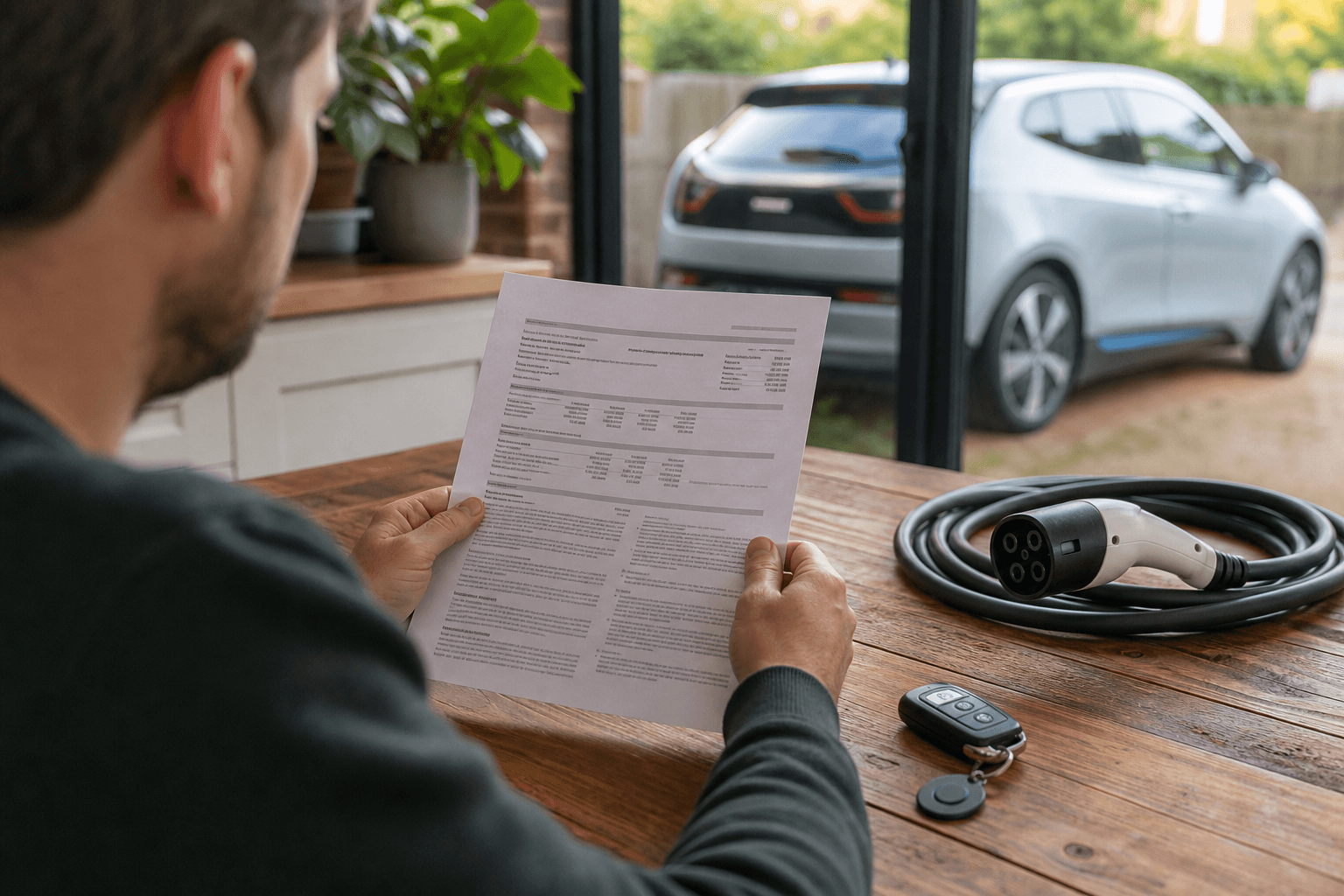
EV battery leasing is one of the few traps in the used car market that a normal history check will never warn you about. Picture it: you find a tidy used electric car, the price looks sharp compared to similar models, the paperwork checks out clean, and you buy it. Then a bill arrives for the battery, because on some cars you buy the vehicle but only rent the pack that makes it move. That is battery leasing, and it catches people out because nothing on the car or the standard checks tells you it is there.
This was never universal, but it was common enough on certain models that it is worth understanding before you view any used EV.
What Battery Leasing Actually Is
On a normally sold EV, the battery is part of the car. You buy the car, you own the battery, end of story. On a leased battery car, the manufacturer split the two apart. You buy the vehicle, but the battery remains the property of a finance company, and you pay a monthly rental for it on top.
The monthly figure varied with the mileage you signed up for, but it typically sat somewhere between around 50 and 110 pounds a month. The upside is that the lease usually guaranteed the battery. If its capacity dropped below a set threshold, the lease company replaced it at no cost. The downside is obvious. You never stop paying, and the car is cheaper to buy precisely because you do not own the most valuable part of it.
Which Cars Were Sold This Way
The classic example is the older Renault Zoe. For much of its early life, from roughly 2013 to 2019, a battery lease was the standard way Renault sold the car, although an owned battery version came later. A Zoe advertised at a tempting price is the single most likely car to carry a battery lease.
Other examples exist. Some early Renault Fluence ZE and Kangoo ZE vans used the same scheme. A limited number of Nissan and Smart electric models were offered with battery rental in certain markets. Most other mainstream EVs, including the bulk of Nissan Leafs sold in the UK, came with the battery owned outright. If you are looking at anything other than an early Zoe, leasing is unlikely, but on a Zoe you must assume it could apply until you have proof otherwise.
Why This Is a Provenance Trap
Here is the part that bites. The lease follows the car, not the person. If a previous owner stopped paying, or if the lease is simply still running, that obligation transfers to you when you buy. And the lease company holds a serious lever: if payments stop, they can remotely disable the car's ability to charge. The car is still legally yours, but a battery that will not charge is a paperweight.
A standard vehicle history check will not catch this. A history check looks at finance secured against the whole vehicle, write-off markers, stolen records, mileage and keeper history. A battery lease is a separate consumer contract with the manufacturer's finance division, recorded in their systems, not in the databases a history check reads. So you can run a perfectly clean check on a Zoe and still inherit a battery you do not own. If you want to understand the limits of what a check reveals, see what a car history check shows.
The V5C Will Not Tell You Either
Do not expect the logbook to clear this up. The V5C records the registered keeper and the vehicle's basic details. It does not record finance agreements and it does not record battery leases. A car with a leased battery has exactly the same V5C as a car with an owned one. Our guide to the V5C logbook explains what the document does and does not prove, and a battery lease is firmly in the does not column.
How to Find Out for a Specific Car
There are three steps, and you need all three.
-
Ask the seller outright. A straight question: is the battery owned or leased? Get the answer in writing, by message or email, not just a verbal yes on the driveway. If the seller is vague or does not know, that is a warning in itself.
-
Confirm with the manufacturer's finance arm. This is the step that actually settles it. For Renault, that means contacting their finance operation, historically RCI Financial Services, now operating as Mobilize Financial Services. Quote the car's VIN and ask whether a battery lease is registered against it, whether it is up to date, and what the monthly cost is. The seller's word is a starting point. The finance company's record is the truth.
-
Get the transfer terms. If there is a lease, find out exactly what transferring it to your name involves, what the monthly cost will be, and whether there are any arrears. A lease in arrears is not something you want to inherit unknowingly.
Treat this the same way you would treat checking for finance on a conventional car. You would never buy a car with outstanding finance without resolving it first, and a battery lease deserves the same caution.
What to Confirm in Writing Before You Buy
Before money changes hands, get these in writing:
- Whether the battery is owned outright or leased
- If leased, the monthly cost and the mileage allowance
- Whether there are any outstanding or missed payments
- That the lease can transfer to you, and what that process costs
- Confirmation, ideally from the finance company, of the current status against the VIN
If the seller cannot or will not give you those, walk away or knock the cost of the situation off the price with your eyes open. A leased battery is not automatically a dealbreaker. A guaranteed battery has real value, and for some buyers the monthly cost is worth the peace it brings on degradation. But buying one without knowing is how people end up with a surprise bill and a car they cannot charge. If you have not yet checked the pack itself, our guide on how to check a used EV's battery health covers the other half of the job.
Useful Links
- Buying a vehicle - GOV.UK - Official guidance on checks before purchase
- Vehicle log book (V5C) - GOV.UK - What the logbook records and what it does not
- Contact DVLA - GOV.UK - For vehicle registration queries