Buyers ask this constantly, and the assumption behind it is reasonable. If a car check shows the vehicle's history, surely speeding fines show up on a car check too. They do not, and no service can make them, because a fine is attached to a person and a car check reports on a car. Once you see why the two are separate, the rest of what you are paying for makes a lot more sense.
Why Speeding Fines Never Show Up on a Car Check
Penalty points and fines are endorsed on a driving licence. The DVLA holds them against the individual driver's record, alongside their licence status and any disqualifications.
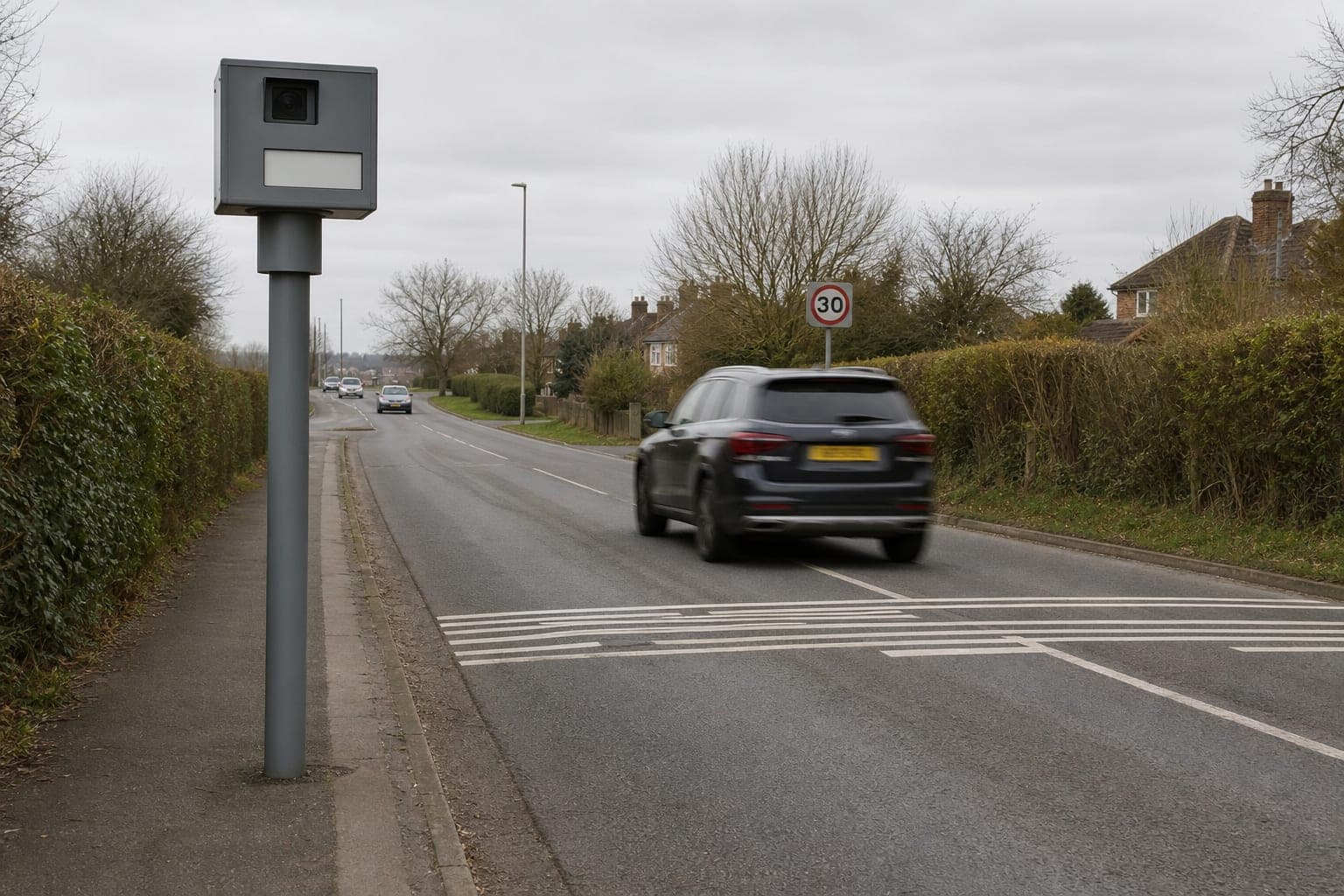
That record is personal data. It is not published, it cannot be searched by the public, and it does not attach to any vehicle the person happened to be driving at the time. When a speed camera flashes, the registered keeper receives the notice and must say who was driving, and it is that named driver who takes the points.
So there is no mechanism by which an offence could ever appear on a vehicle record. The two databases are separate by design, and the separation is deliberate rather than an oversight. We covered the wider version of this in is there a bad drivers database in the UK, which explains why no public register of drivers exists at all.
Points Do Not Follow the Car
This matters when you buy. A car that has spent three years being driven by somebody with nine points on their licence looks identical, on paper, to one owned by a retired accountant who never went above 60.
When the car is sold, the points stay exactly where they were, on the seller's licence. Nothing transfers. You are not inheriting anything, and you cannot discover anything either.
The reverse is also true and occasionally causes panic. If a notice arrives at your address weeks after you bought the car, it is because the offence happened before you owned it and the keeper record had not caught up. Respond to it, say when you acquired the vehicle, and provide the date from your V5C. Do not ignore it, because failing to respond to a request for driver details is an offence in its own right and carries more points than the original speeding would have.
Tell the DVLA the moment you buy so the record updates promptly. Our guide to what a V5C document is covers the notification process and why the dates on it matter.
What the Record Does Show
Here is the part that matters, because you are not really asking about fines. You are asking whether the car has had a hard life, and that question has an answer.
The DVSA MOT history is public and free. It gives you every test the car has taken, the date, the result, the mileage recorded on the day, every failure reason and every advisory the tester noted.
That is a behaviour record. Brakes and tyres failing repeatedly across several tests suggest a car driven hard and maintained late. Advisories that appear one year and become failures the next tell you the owner ignored warnings. A car doing 22,000 miles a year has spent its life on motorways, which is often kinder than 6,000 hard urban miles. Suspension and bush items appearing early point to potholes taken at speed.
None of that names a driver. It does not need to. It tells you what happened to the car, which is the thing that will cost you money. How to read a car MOT history breaks down what each entry means, and what MOT advisories mean covers the tester wording.
What the Paid Report Adds
The MOT record is only half the picture, and the missing half is where buyers get hurt.
Outstanding finance, a stolen marker, an insurance write-off category, the number of previous keepers, plate changes and a mileage cross-reference against independent sources sit in the Full Report at £9.99, alongside valuation and outstanding recalls.
Those items matter for a different reason to the MOT record. A worn suspension bush costs you a repair. A car with finance still owed on it can be repossessed from your driveway after you have paid the seller in full. What a car history check shows sets out the whole list.
What it will never show, at any price, is who was driving it or what they were fined for.
The Question Worth Asking Instead
Stop trying to assess the previous driver and start assessing the car. You can see the mileage pattern across a decade. You can see which components kept failing. You can see whether the car went to the same tester every year or bounced around. You can see whether it sat unused for two years and then suddenly did 30,000 miles.
That is a far better guide to what you are buying than a hypothetical list of speeding tickets, and unlike the driver's record, it is information you are actually entitled to.
FAQ
Do speeding fines show up on a car check?
No. Speeding fines and penalty points attach to the driver's licence, not to the vehicle. No car check, free or paid, shows the offences committed by anyone who drove the car, because that information sits on a private driving record protected by data protection law.
Do points follow the car when it is sold?
No. Points stay with the driver's licence and move with them. A car sold tomorrow carries no trace of its previous driver's endorsements, and a spotless car can have been driven for years by someone on nine points.
Will an outstanding speeding ticket become my problem if I buy the car?
Not for the offence itself, because liability follows the driver at the time. Problems arise when a notice is sent to an out of date keeper address, so tell the DVLA immediately when you buy and keep proof of the date you took the vehicle on.
Can I tell whether a used car has been driven hard?
Yes, from the car rather than from the driver. The MOT record shows recorded mileages, failure reasons and advisories over the whole life of the vehicle. Repeated brake, tyre and suspension items alongside heavy annual mileage point to a hard life.
What does a paid car check actually include?
The Full Report at £9.99 covers outstanding finance, stolen markers, insurance write-off category, keeper history, plate changes, a mileage cross-reference, valuation and recalls. It reports on the vehicle's recorded history, never on any individual's driving offences.
A speeding notice arrived for a car I have just bought. What do I do?
Respond to it rather than ignoring it. State the date you acquired the vehicle and provide the seller's details if you have them. Failing to reply to a request for driver information is a separate offence that carries more points than most speeding cases.
Useful Links
- Speeding penalties - GOV.UK - The fines, bands and court powers that apply when a speeding case proceeds.
- Penalty points (endorsements) - GOV.UK - Endorsement codes, how long each stays on a licence and when it can be removed.
- Vehicle registration certificate (V5C) - GOV.UK - Updating keeper details after a sale and why the dates on the logbook matter.
- Getting an MOT - GOV.UK - What the annual test covers and how results and advisories are recorded.