Two cars on the same forecourt. Same model, same year, both showing 62,000 miles, both gleaming. One will run for another eight years and one will start emptying your bank account inside six months. The signs a used car has been driven hard are all there, but almost none of them are visible in the photos, and a valet hides most of the rest. They live in the records and in a handful of places a seller never thinks to clean.
Why Hard Miles Beat High Miles
Get this the right way round before anything else. Buyers fixate on the odometer and largely ignore how those miles were accumulated, which is backwards.
A car with 90,000 motorway miles has spent its life warm, at steady revs, in top gear, barely touching its brakes. A car with 40,000 urban miles has done tens of thousands of cold starts, short journeys where the oil never reaches temperature, constant gear changes and heavy braking. The second car is usually the worse buy despite showing less than half the mileage.
So the question is never simply how many miles. It is what kind of miles, and how the owner responded when things started wearing out.
What the MOT Record Gives Away
The DVSA MOT history is public and free, and it is the most honest document attached to any used car. It records every test, the result, the mileage on the day, every failure reason and every advisory.
Read it as a pattern rather than a list.
Brakes and tyres failing repeatedly. One tyre failure is a worn tyre. Brake discs, pads or tyres appearing across three or four consecutive tests is a driving style, not bad luck. That car has been braked late and hard for years.
Advisories that turn into failures. An advisory is a warning that something will need attention. When the same item appears as an advisory one year and a failure the next, the owner ignored it for twelve months. Do that with brakes and suspension and you learn what the previous keeper thought about maintenance.
Suspension and bushes early. Springs, dampers, arms and bushes wearing out on a car under 60,000 miles points to potholes and kerbs taken at speed. That wear also throws the geometry out, which is why the tyres kept failing too.
Mileage that changes character. A car doing 18,000 a year that suddenly drops to 3,000 has usually changed hands or changed use. A jump the other way often means it became somebody's commuter or, less happily, a delivery vehicle.
Exhaust and emissions items. Repeated emissions failures on a diesel suggest a life of short trips where the filter never regenerated properly. That is an expensive problem to inherit.
Our guide on how to read a car MOT history goes through the entries in detail, and what MOT advisories mean translates the tester wording.
The Physical Signs Sellers Forget
Bodywork gets polished. Interiors get valeted. A few things do not respond to either.
The driver's seat bolster. The outer edge of the driver's seat takes a beating from somebody climbing in and out. On a car claiming 45,000 miles, a collapsed and shiny bolster means either far more miles or a very short, very hard life.
Pedal rubbers. Brake and clutch pedal rubbers wear at a fairly predictable rate. Rubbers worn smooth on a low mileage car, or suspiciously new rubbers on an older one, are both worth a question.
The steering wheel. A shiny, worn rim at ten and two on a car with modest recorded mileage does not add up.
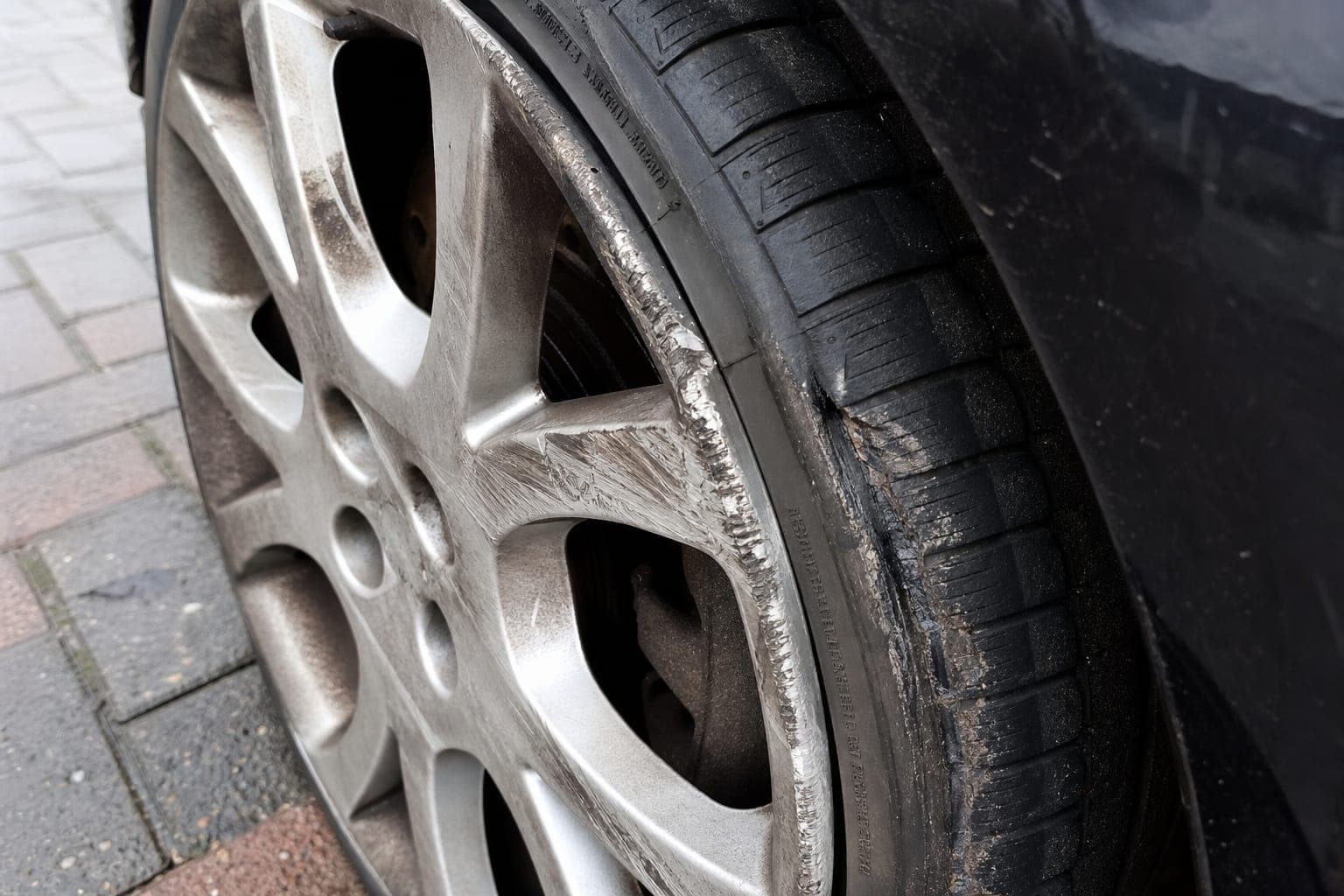
Kerbed alloys on every corner. One scuffed wheel is a parking mistake. Four means a habit, and the same habit that kerbs wheels destroys suspension geometry and tyre edges.
Uneven tyre wear. Feathering on the inner or outer edges points to geometry knocked out by impacts. Check the inner edges, because that is where sellers never look and where the evidence sits.
Clutch bite point. On a manual, a bite point right at the top of the pedal travel on a car with 50,000 miles suggests the clutch has been slipped hard, often by somebody who drove it like it owed them money.
Where the Records and the Metal Disagree
The moment those two sources contradict each other, slow down.
A car showing 45,000 miles with a wrecked driver's seat, worn pedals and repeated brake failures is telling you two different stories, and the metal is more reliable than the number. That gap is exactly what a mileage cross-reference exists to catch, and what a mileage discrepancy means explains how the records get compared.
Equally, a car with a thick service history and a clean MOT record that physically looks hammered deserves a closer look at whether the service book belongs to it at all.
The Checks the Free Record Cannot Make
Wear tells you what a car will cost you to run. It says nothing about whether you get to keep it.
Outstanding finance, a stolen marker, an insurance write-off category, the keeper count, plate changes and a mileage cross-reference against independent sources are in the Full Report at £9.99, along with valuation and outstanding recalls. Those are the ones where the downside is not a repair bill but losing the car and the money together. What a car history check shows lists the lot, and what to check before buying a used car covers the process end to end.
A thrashed car is a bad buy. A thrashed car with finance on it is a disaster.
FAQ
What are the signs a used car has been driven hard?
Repeated brake and tyre failures across several MOTs, advisories that escalate into failures, early suspension and bush wear, a worn driver's seat bolster and pedal rubbers that do not match the mileage, and clutch or gearbox complaints on a car with modest recorded miles.
Is high mileage worse than hard driving?
Usually not. A car with 90,000 steady motorway miles is often in better condition than one with 40,000 hard urban miles. Cold starts, short trips, heavy braking and constant gear changes wear an engine and drivetrain faster than cruising does.
Can the MOT history tell me how a car was driven?
Yes, better than anything else available free. It records the mileage at every test, every failure reason and every advisory across the car's whole life. Patterns in what keeps failing say a great deal about how the car was used and how quickly problems were addressed.
Does a full service history prove a car was driven gently?
No. It proves the oil was changed on schedule, which matters, but a car can be serviced faithfully and still be driven hard between services. Read the service record alongside the MOT failure pattern rather than treating stamps as a clean bill of health.
What should I check beyond the MOT record?
Outstanding finance, stolen markers, insurance write-off category, keeper history, plate changes and a mileage cross-reference against independent sources sit in the Full Report at £9.99. Those cover the risks that cost you the car rather than a repair bill.
Should I walk away from any car that has been driven hard?
Not automatically. Price it properly instead. A hard driven car with fresh discs, pads, tyres and recent suspension work can be a fair buy at the right money. The mistake is paying gentle owner prices for a car that has had the opposite life.
Useful Links
- Getting an MOT - GOV.UK - What the annual test inspects and how failures and advisories are recorded.
- Driver and Vehicle Standards Agency - GOV.UK - The agency responsible for MOT testing standards and tester guidance.
- Vehicle tax, MOT and insurance - GOV.UK - Official guidance covering the legal obligations attached to keeping a vehicle.
- Vehicle approval - GOV.UK - Guidance on type approval and the rules covering substantially modified vehicles.