Buying a used car in the UK is one of the biggest financial decisions most people make outside of property. Yet most buyers spend more time researching a new phone than they do on a car worth thousands of pounds.
Here is a practical checklist. Do these in order.
Before You Even View the Car
Run a vehicle history check. Do this first. Before you travel. Before you get attached. A history check tells you about outstanding finance, stolen markers, write-off history, mileage anomalies, and keeper history. If anything is wrong, you know before you waste your time.
Check the car at Bad Drivers UK for £9.99. It takes two minutes.
Check the MOT history. Free at the DVSA website. Look at the mileage progression. Check for patterns in failures and advisories. A car with repeated brake failures or rust advisories tells you about the owner's maintenance habits.
Research the market price. Check what similar cars are selling for on the main used car sites. If this one is priced well below market, find out why before you fall in love with the deal.
When You View the Car
View the car in daylight. Artificial light hides bodywork imperfections and mismatched paint.
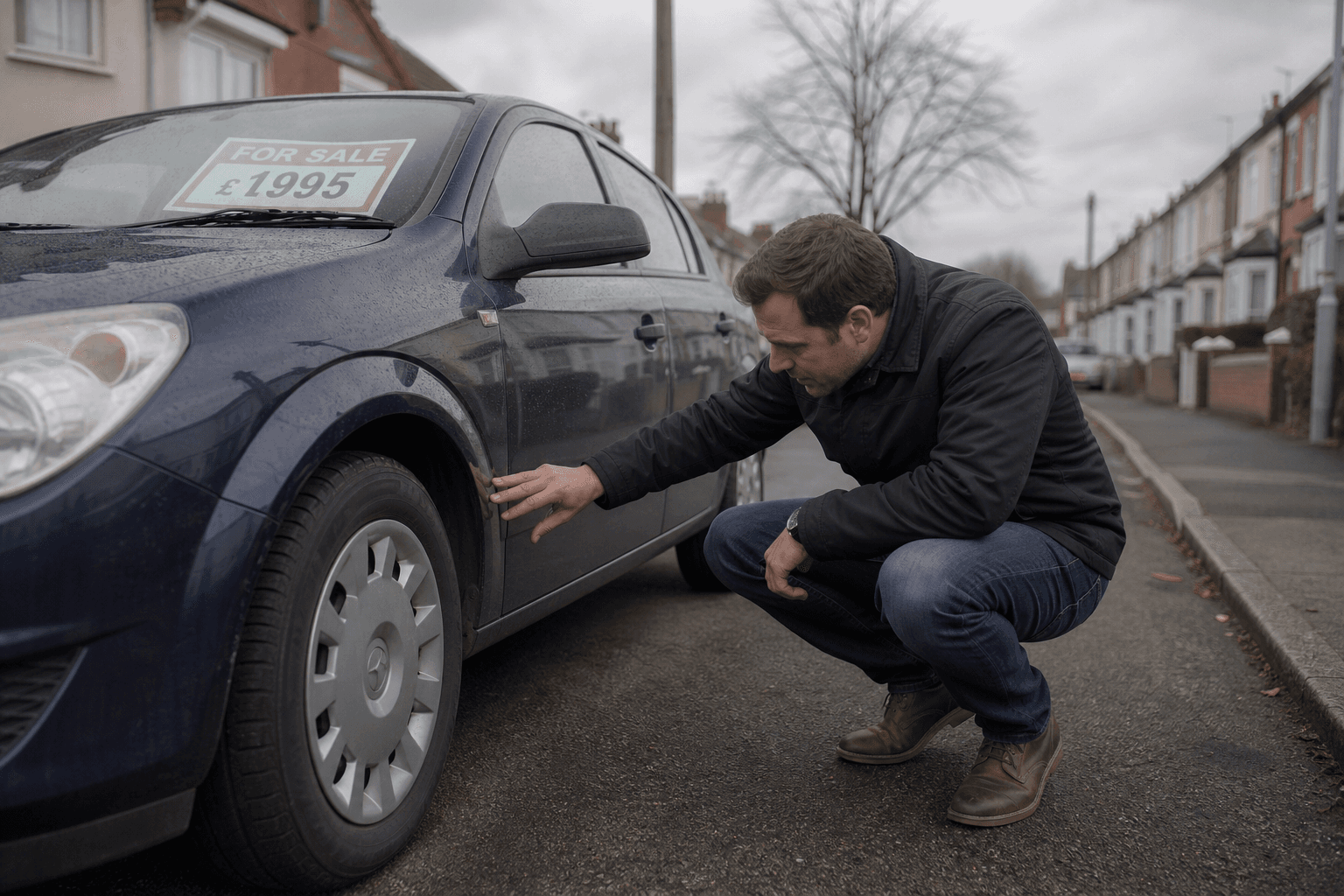
Check the exterior.
- Look along each panel for ripples or paint variations - signs of previous repairs
- Open and close each door. They should sit flush and operate smoothly
- Check door gaps are even all round
- Look at the bonnet gaps - uneven gaps suggest front-end damage
- Check the boot area for signs of repair
- Look underneath the sills for rust or fresh paint
Check under the bonnet.
- Look for oil leaks on the engine and surroundings
- Check the oil on the dipstick - black and thick means it is overdue for a change
- Check coolant level and colour - brown or rusty coolant is a problem
- Look for signs of fresh paint inside the engine bay (hiding crash damage)
- Check the battery date - if it is original and the car is over four years old, it will need replacing soon
Check the interior.
- Wear on the driver's seat, steering wheel, and pedal rubbers should match the claimed mileage
- A car with 30,000 miles should not have a worn-through steering wheel
- Check all the electrics: windows, mirrors, lights, air conditioning, infotainment
- Look under the mats for water or rust
On the Test Drive
Start from cold. If the seller has warmed the engine up before you arrive, that is suspicious. Some problems only show when starting from cold.
Listen for noises. Knocking from the engine under load, clunks over bumps, grinding from brakes or wheel bearings. Any of these needs investigation.
Check the gearbox. Manual gearboxes should change smoothly without crunching. Automatics should shift without delay or harshness.
Brake hard once in a safe location. The car should stop in a straight line without pulling to one side.
Check the steering. It should feel positive and return to centre naturally. Vagueness or pulling suggests worn components.
Look for warning lights. Any warning light that is on - or that comes on and then disappears - needs explanation.
Documentation
- V5C logbook should be present. The name and address on it should match where you are buying the car.
- Service history: look for stamps from recognisable garages or main dealers. Check the dates and mileages make sense.
- MOT certificate for the current test.
- Any receipts for recent work done.
Dealer vs Private Sale
Buying from a dealer gives you more legal protection under the Consumer Rights Act 2015. If the car has a significant fault that was not disclosed, you have a right to reject it within 30 days.
Private sales are as-is. The seller must not actively lie to you. But they have no obligation to volunteer everything. Caveat emptor applies.
Either way, run the history check. Dealers can sell cars with hidden history too.
FAQ
What is the most important check before buying a used car?
A vehicle history check. Run it before you view the car, before you travel, before you get emotionally attached to the deal. It takes two minutes and tells you about finance, write-offs, stolen markers, mileage, and keeper history.
What legal protection do you have when buying a used car privately?
Less than from a dealer. Private sellers must not lie to you, but they have no obligation to proactively disclose all faults. The Consumer Rights Act 2015 applies to dealer sales, not private ones. Caveat emptor - buyer beware - applies in private sales.
Should you get a pre-purchase inspection on a used car?
Yes, for higher-value cars or if you have any concerns. An AA, RAC, or independent engineer inspection typically costs £100 to £200 and gives you a written report on condition. A dealer who refuses to allow an inspection is hiding something.