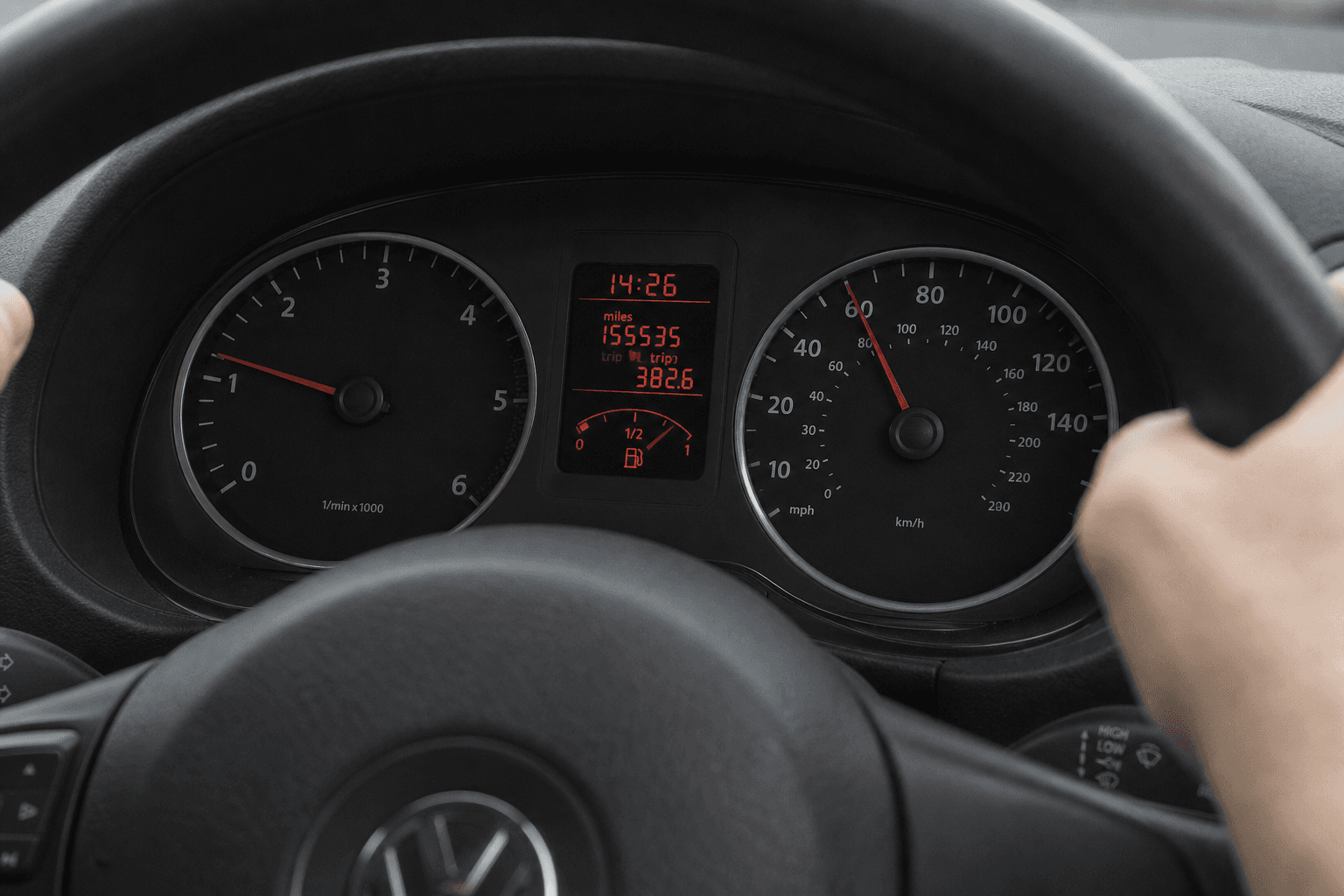
Clocking is the practice of winding back a car's odometer to show a lower mileage than the vehicle has actually covered. It is fraud under the Fraud Act 2006. It happens constantly in the UK used car market.
A clocked car is sold at a price that reflects the false lower mileage. You pay more than the car is worth and buy a vehicle whose components are more worn than you think.
Why Clocking Happens
Mileage matters in used car pricing. A 60,000-mile car might be worth 20 percent more than a 100,000-mile equivalent. That difference is the incentive for fraudsters.
Modern odometers are digital and harder to wind back than old mechanical units, but they are not impossible to alter. Specialist tools can reprogram dashboard electronics. The job takes less than an hour.
Check the MOT History Mileages
This is the fastest and most reliable check. Every MOT test records the mileage at the time of the test. The DVSA stores this data indefinitely.
Look at the mileage progression across every test:
- 2019: 34,200 miles
- 2020: 41,500 miles
- 2021: 49,800 miles
- 2022: 38,100 miles
That 2022 figure is a drop of over 11,000 miles. That car has been clocked.
Even without a dramatic drop, look for inconsistencies. A car that adds 12,000 miles per year for four years and then adds 1,000 miles in the fifth year raises questions.
Run a vehicle history check at Bad Drivers UK - it compiles the MOT mileage data and flags anomalies automatically.
Physical Wear Inspection
A car's physical condition should match its claimed mileage. High mileage cars show wear that cannot be easily faked.
Steering wheel. The leather or plastic on a genuine 30,000-mile car will be largely unmarked. A genuine 100,000-mile car will show wear at the 9 and 3 o'clock positions.
Pedals. Rubber pedal covers wear with use. A car with 30,000 miles should have barely worn pedals. Fresh pedal covers on a supposedly low-mileage car are suspicious - they might have been replaced to hide wear.
Driver's seat. The bolster on the driver's side wears faster than the passenger side. Significant wear on a low-mileage car is a warning sign.
Gear lever surround. The area around the gear lever in manual cars gets constant contact. Shine on plastic components here tells you how much use the car has had.
Door seals and carpets. Wear patterns build over time. Check inside the driver's door frame and the carpet in the footwell.
Service History Mileages
If the car has a service history, check the mileage on each stamp or invoice. These should match the MOT mileages and show a consistent progression.
Gaps in service history are common and not always suspicious. But if service records are present and the mileages conflict with MOT records, someone has been manipulating the data.
Dashboard and Instrument Cluster
Look closely at the instrument cluster. Signs it has been removed or tampered with include:
- Scratches or marks around the cluster bezel
- Incorrectly seated screws
- Trim that does not sit flush
- Any plastic that looks disturbed
Tyre Age
Tyres have a date code moulded into the sidewall - a four-digit number where the first two digits are the week and the last two are the year. 1423 means week 14 of 2023.
If a supposedly low-mileage car is on its third set of tyres by year three, those tyres are adding up to far more than the claimed mileage.
What to Do If You Suspect Clocking
Walk away. The burden is on the seller to prove the mileage is genuine, and if you cannot get clear evidence, the risk is yours to carry.
If you have already bought the car and discover it was clocked, you have a fraud claim against the seller. Report it to Action Fraud and Trading Standards.
FAQ
Is clocking a car illegal in the UK?
Yes. Selling a car knowing the mileage has been tampered with is fraud under the Fraud Act 2006. It is also an offence under the Consumer Protection from Unfair Trading Regulations 2008. If you discover you bought a clocked car, report it to Action Fraud and Trading Standards.
What is the fastest way to check for clocking?
Check the mileage progression in the MOT history. The DVSA records the mileage at every test. A drop in mileage between consecutive tests is a clear indicator of clocking. This check is free at the DVSA website.
Can you get your money back if you buy a clocked car?
You have a claim against the seller for fraud. If they sold it knowing the mileage was wrong, you can pursue a civil claim and report it to the police. Getting money back from a private seller can be difficult in practice, especially if they are hard to trace.