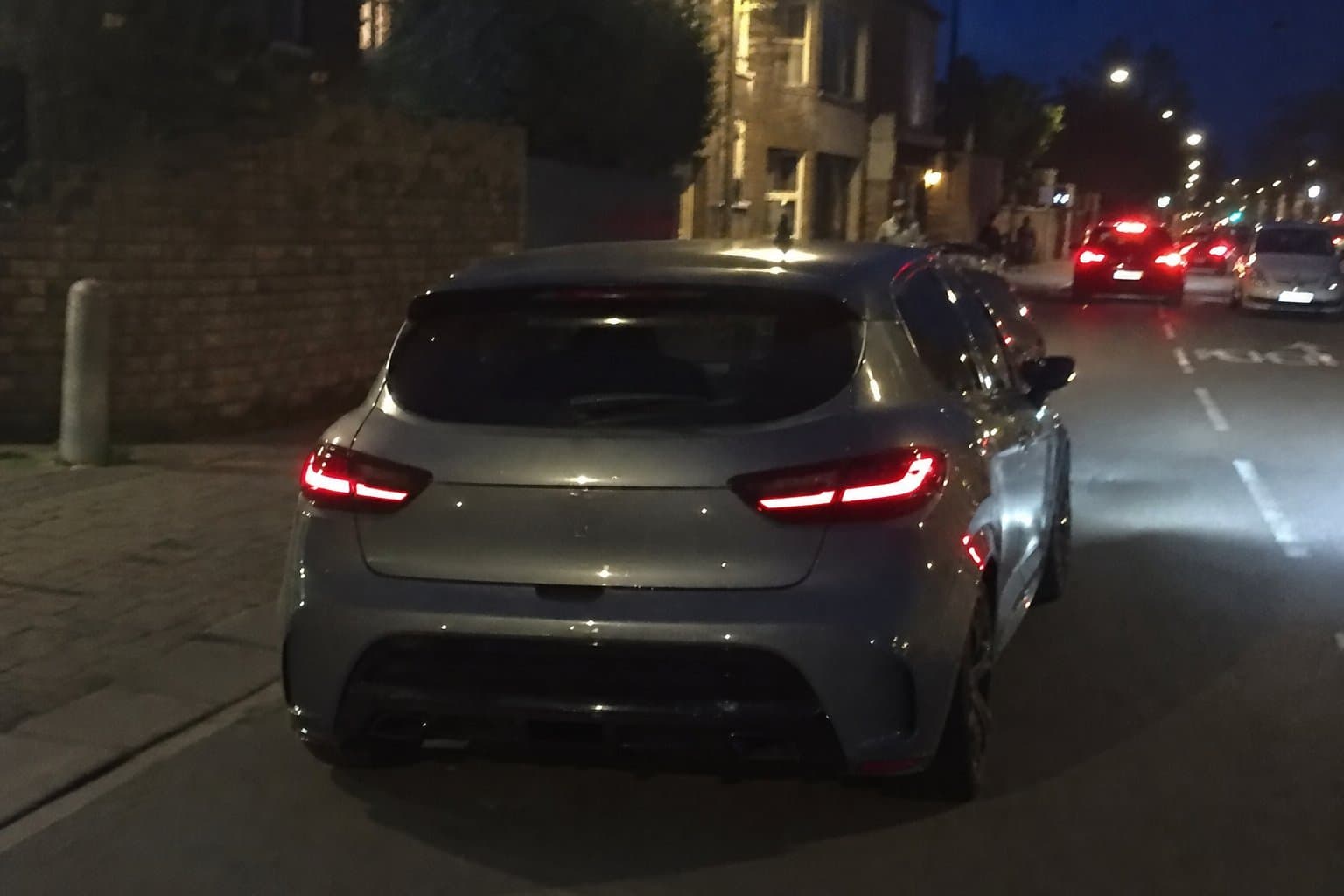
A buyer found a tidy hatchback on Facebook Marketplace. The advert said 66,000 miles. The real figure was 250,000. The only reason he kept his money was a single question he asked before setting off to view it: what is the VIN?
The story surfaced in a busy UK used car forum thread and was reported by GB News in May 2026, in a piece covering the wider surge of fraud on private selling platforms. It is worth retelling slowly, because the scam it exposes is cheap to run, common, and beatable with one habit.
The Near Miss, As Reported
The car looked right. Good photos, sensible price, plausible story. The buyer did the one thing most people skip: before committing to a two hour drive, he asked the seller for the VIN so he could run his own history check.
The seller would not hand it over. Instead came screenshots of a supposedly clean history report. Screenshots the buyer had no way to verify, showing a report he had not run, from an account he could not see.
He pushed. Eventually the VIN arrived, and his own check told a different story: a recorded 250,000 miles against the advertised 66,000. The report screenshots had been doctored. He blocked the seller, reported the listing, and kept his money.
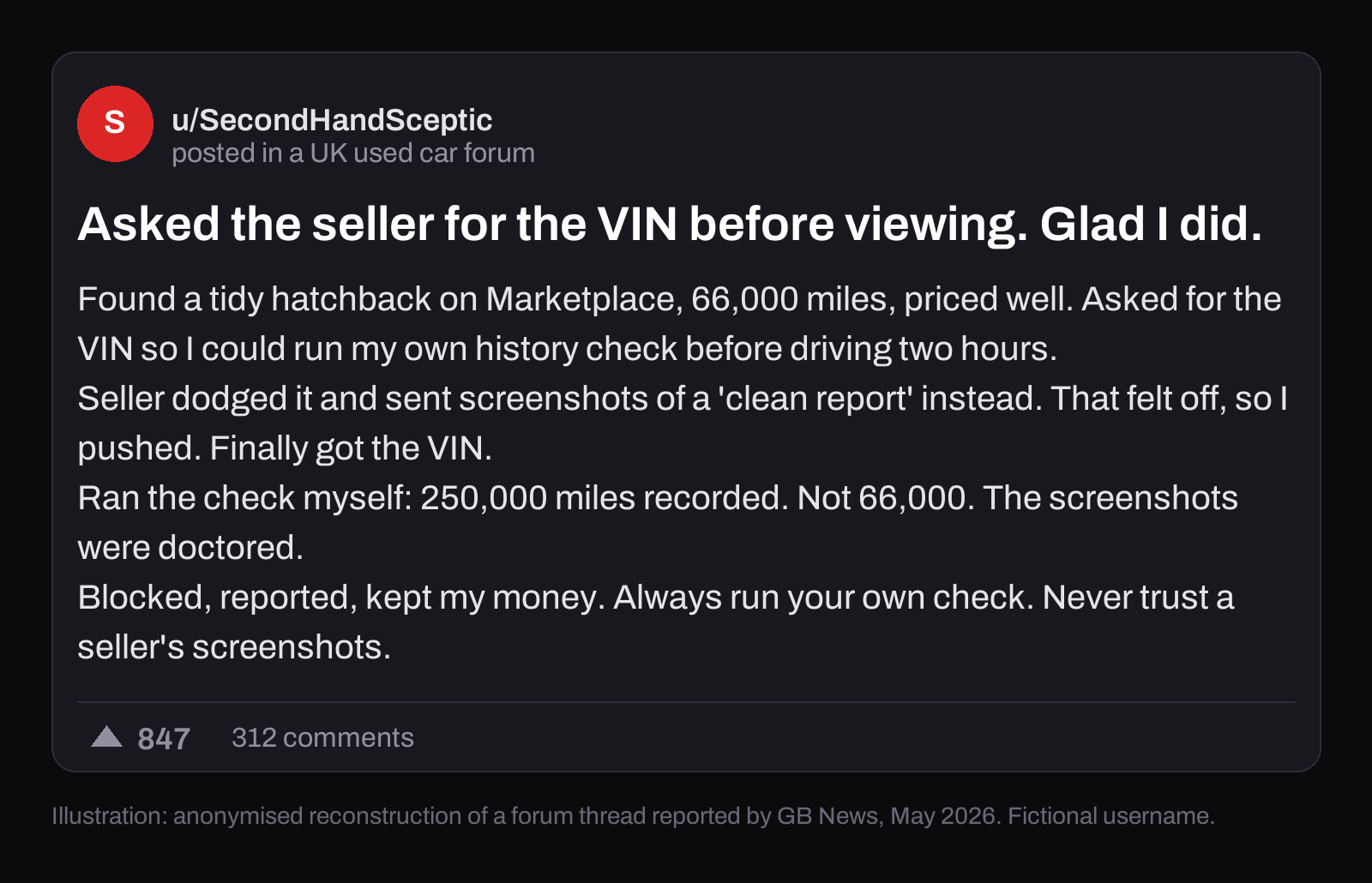 Anonymised reconstruction. Thread reported by GB News, 5 May 2026
That is the whole scam, and the whole defence, in one exchange.
What 184,000 Hidden Miles Actually Means
Strip away the fraud and look at the machinery. A car showing 66,000 miles is priced and bought as a car in early middle age. A car that has covered 250,000 miles is a different object entirely: clutch, gearbox, suspension bushes, engine mounts, every wear component is living on borrowed time, and the service schedule the buyer thinks applies is three lifetimes out of date.
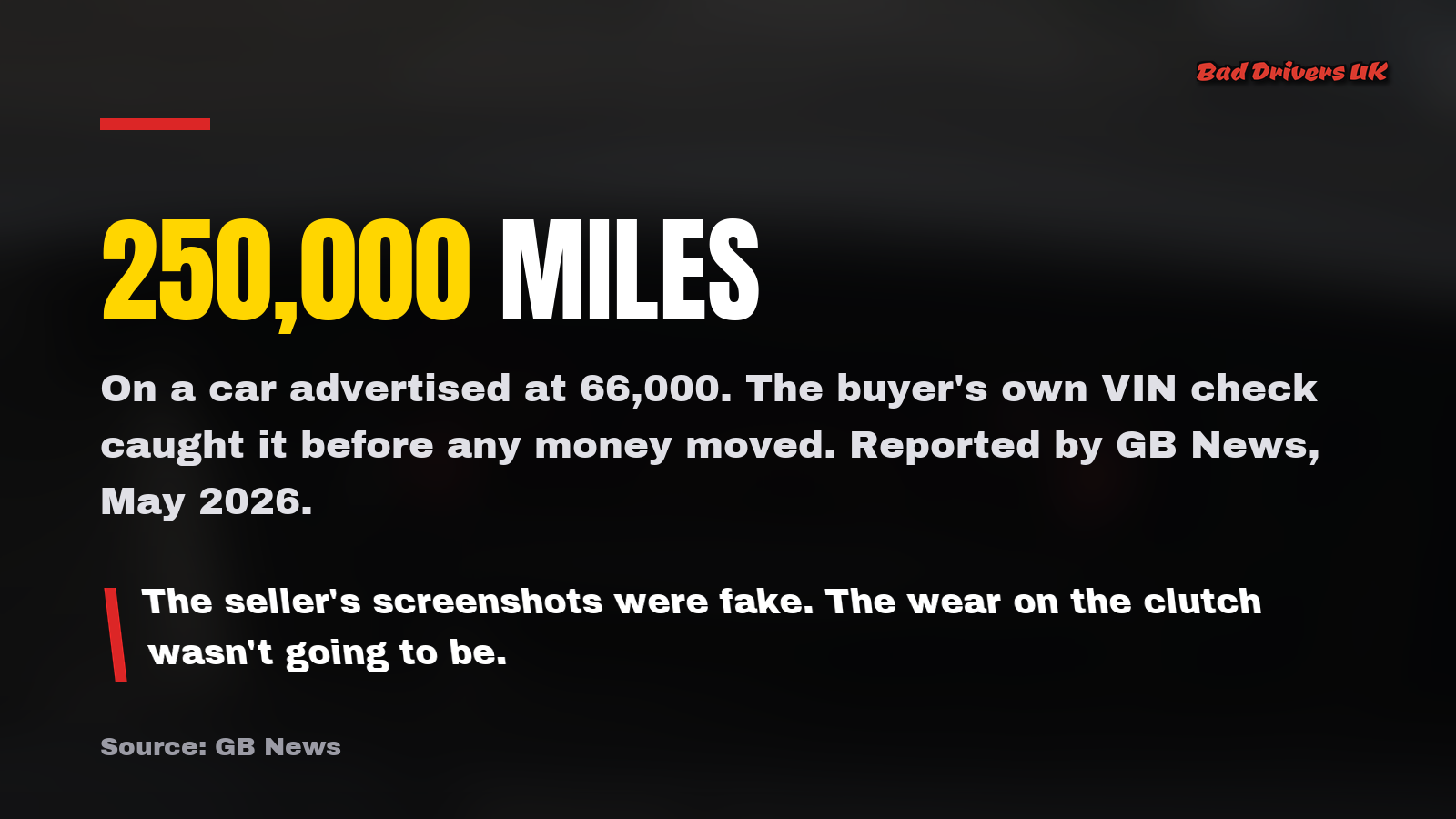
The price gap between those two cars is thousands of pounds. That gap is exactly what the seller was stealing, the same way the Oxford van trader we covered in the £20,000 odometer case stole it six times over. Fake mileage is not a paperwork quirk. It is money lifted straight out of your pocket, plus a mechanical time bomb left in your driveway.
Why Sellers Send Screenshots
A doctored screenshot costs nothing and takes minutes. Change a mileage figure, recolour a warning banner, crop out what does not help. The seller is betting that a picture of a clean report feels like proof.
It is not proof. It is an image. The GB News piece quotes Matt Clamp of Scrap Car Comparison on how convincing fraudulent cars have become, and his phrase for what happens under scrutiny is the right one: "that's where it unravels". The unravelling starts the moment you stop accepting evidence the seller controls and start generating your own.
That rule catches more than clocking. Cloned cars, hidden write-offs and outstanding finance all hide behind the same trick: a seller-supplied story, plausible screenshots, pressure to commit fast. Our guide to spotting a clocked car covers the physical tells, and our breakdown of mileage discrepancies explains how the recorded history exposes a rollback.
The VIN Habit
The vehicle identification number is a 17 character code stamped into the car itself: on the driver's side dashboard, visible through the windscreen, and on a plate in the door frame. It must match the V5C logbook exactly, character for character.
The habit that saved this buyer costs you one message and ten minutes:
- Ask for the VIN and registration before you travel. A genuine seller sends them without drama. It identifies the car, not them.
- Refusal is your answer. Any dodge, any excuse, any "here's my report instead" ends the conversation. There is no honest version of that response.
- Run your own check, always. Whatever a seller sends you, assume it is decoration. The only report that counts is the one you commissioned yourself.
- At the viewing, match the metal to the paper. Dashboard VIN, door frame VIN, V5C. Three sources, one answer. Any mismatch, even a single character, and you leave.
- Check the wear against the dial. Pedal rubbers, steering wheel, driver's seat bolster. A quarter-million-mile car cannot hide its age from your hands, whatever the odometer says.
The forum poster's closing advice was as blunt as anything we could write: run your own check, never trust a seller's screenshots. He got a wasted afternoon back. The next person the seller messaged might not have.
Useful Links
- Vehicle log book (V5C) - GOV.UK - What the V5C shows and why it must match the car in front of you
- Consumer protection rights - GOV.UK - Your rights when a purchase is misrepresented
- Find your local Trading Standards office - GOV.UK - Report a seller advertising false mileage
FAQ
How do sellers fake a car's mileage history?
Two ways, often together. The odometer itself can be rewound with cheap tools, and the paper trail can be forged with doctored screenshots of history reports showing clean, low-mileage records. The screenshots cost nothing to fake, which is why you should never accept a report you did not run yourself.
Why should I ask for the VIN before viewing a car?
The VIN lets you run your own independent history check before you travel. If the recorded mileage, write-off status or identity does not match the advert, you have saved yourself the trip and possibly thousands of pounds. A seller with nothing to hide hands the VIN over without fuss.
What if a seller refuses to give me the VIN?
Walk away. There is no innocent reason to withhold it. The VIN identifies the vehicle, not the owner, and sharing it costs the seller nothing. A refusal, or an offer of their own report screenshots instead, tells you the history will not survive an independent look.
Where is the VIN on a car?
Stamped on the driver's side of the dashboard and visible through the windscreen, and on a plate inside the door frame. Both must match each other and the V5C logbook exactly. Any mismatch, even one character, means you stop and walk away.
Can screenshots of a history report be trusted?
No. A screenshot is an image, and images are edited in minutes. The only history report you can trust is the one you run yourself, on the VIN and registration you have verified in person or been given directly.