A full service history adds value and peace of mind. It tells you the car has been maintained, gives you a paper trail of what work has been done, and confirms the mileages are consistent with the MOT records.
Checking a car's service history properly takes more than flicking through the book. Here is how to do it.
What a Service History Consists Of
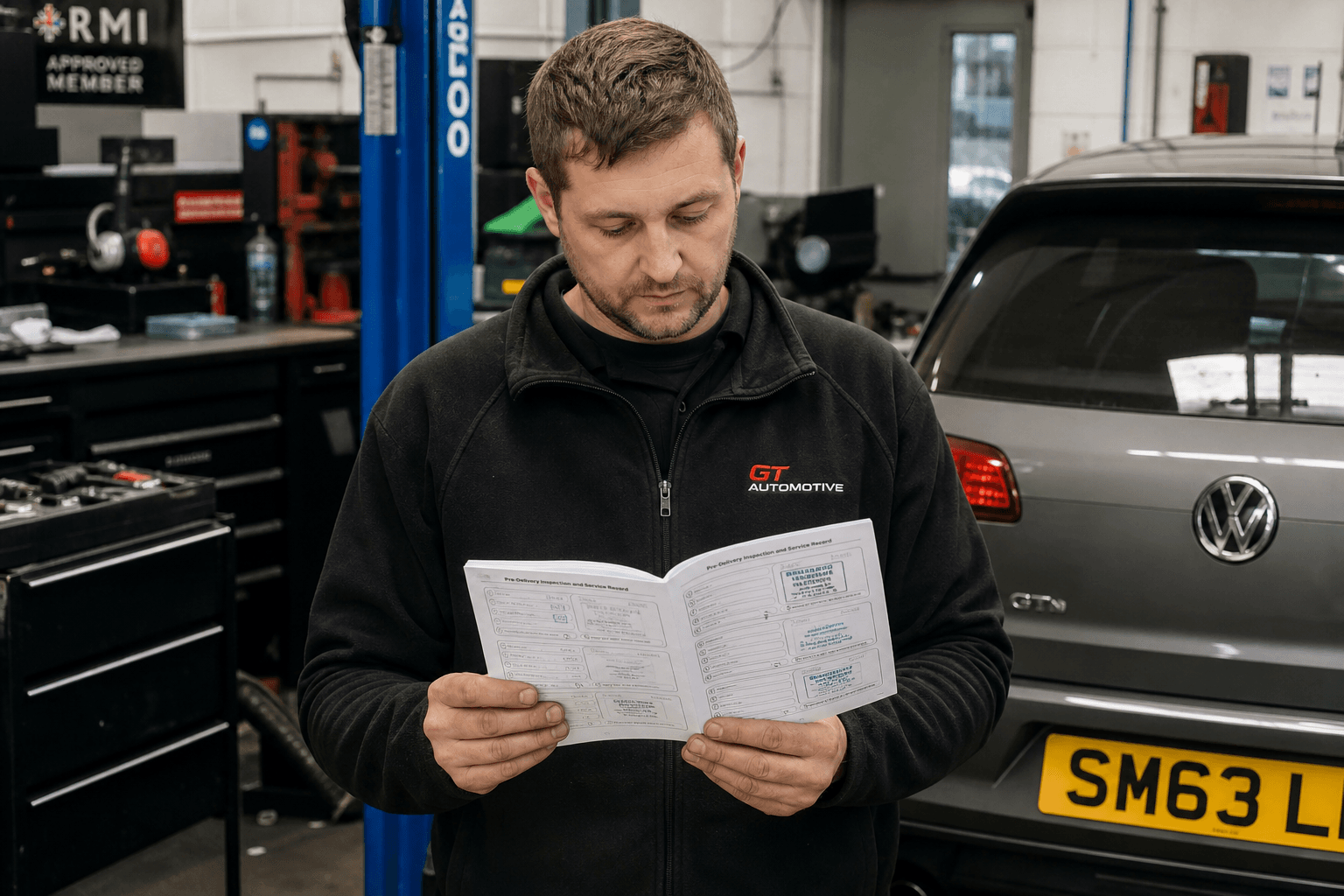
Most cars have a service record book that gets stamped by a garage at each service interval. This might be:
- A physical paper booklet with stamps from garages
- A digital service record maintained by a manufacturer or dealer network
- Invoices and receipts from independent garages
Main dealer stamps carry the most weight but cost more. Independent garage stamps are fine if the garage is identifiable and the dates and mileages are consistent.
How to Verify Stamps Are Genuine
Anyone can buy a stamp and fake a service record. Here is how to check:
Cross-reference with MOT mileages. Each service stamp has a mileage. Compare these to the DVSA MOT records. If the stamps show 45,000 miles in 2021 but the MOT shows 60,000 miles at the same time, the stamps are wrong.
Check the dates make sense. Services are typically at 12-month or mileage intervals. Stamps that cluster together or have unexplained gaps raise questions.
Phone the garages. This is the most reliable check. Take the garage name from a stamp and call them. Ask if they have records of servicing the vehicle at the listed registration number and date.
Check the ink and print quality. Genuine dealer stamps have consistent, professional-looking ink. Home-printed or copied stamps often look slightly off.
Look at the name on invoices. If there are receipts rather than stamps, check the name matches the current or previous keeper on the V5C.
Digital Service Records
Many newer vehicles have manufacturer digital service records maintained by the dealer network. These are harder to fake.
If the seller claims there is a digital service record, verify it by contacting a franchised dealer for that manufacturer with the VIN. They can pull up the full service history from the manufacturer's system.
Run a vehicle history check at Bad Drivers UK alongside the service check - the mileage data helps you validate service stamps quickly.
What to Do With Incomplete History
Incomplete history does not automatically mean a bad car. Many owners used non-VAT-registered mechanics, paid cash, and kept no paperwork. This is common.
What to check in the absence of service records:
- Oil and fluid condition
- Filter condition (air filter, cabin filter)
- Timing belt/chain status (critical - ask specifically about this)
- MOT history as a proxy for condition over time
Timing Belt: The Critical Question
For cars with a cam belt (rather than a chain), ask specifically when it was last changed. A snapped cam belt can write off the engine.
Find out the manufacturer's recommended change interval (typically every 40,000 to 60,000 miles or 4 to 5 years) and cross-reference with the claimed service history.
If you cannot confirm it has been done within the required interval, factor the cost of the job into your offer. Do not buy it and hope for the best.
What History Gaps Mean for Price
Full service history (FSH): No discount needed for history alone.
Partial service history: Negotiate a small discount to reflect the uncertainty.
No service history: Expect a meaningful discount and factor in the cost of bringing maintenance up to date.
FAQ
How do I verify a car's service history stamps are genuine?
Cross-reference the mileage on each stamp with the DVSA's free MOT history records. If the stamps show 45,000 miles but the MOT records 60,000 at the same point in time, the stamps are wrong. You can also phone the garage named on each stamp and ask them to confirm the service.
What should I do if a car has no service history?
Factor in the cost of bringing the car up to date. Budget for fresh oil, filters, and potentially a cam belt or chain inspection. Negotiate the price down accordingly. No service history is common on older cars and is not automatically a dealbreaker, but it does mean unknown maintenance.
Why is cam belt history so important?
A broken cam belt can destroy an engine completely. Replacement is typically required every 40,000 to 60,000 miles or 4 to 5 years depending on the manufacturer. If this service cannot be confirmed and the car is approaching or past the interval, factor the cost into your offer or walk away.