A DPF delete means the diesel particulate filter has been removed or bypassed. It is an illegal modification on UK roads. If the car you are looking at has had a DPF delete done, walk away. The legal and financial consequences of buying it are not worth whatever you are saving on the purchase price.
What a DPF Is and What It Does
The diesel particulate filter sits in the exhaust system and traps soot particles produced by diesel combustion. Over time the filter regenerates, burning off the accumulated soot at high temperature during motorway or fast A-road driving. It is a legally required component on diesel vehicles in the UK.
The DPF significantly reduces the particulate emissions that diesel engines produce. Without it, a diesel car emits soot at many times the legal limit.
DPFs were fitted as standard on most diesel passenger cars sold in the UK from around 2009 onwards, and on some models before that. If you are buying a diesel car from roughly 2009 onwards, it almost certainly left the factory with a DPF.
Why Some Owners Remove Them
DPFs can cause problems on certain driving patterns. The filter needs to regenerate by reaching high temperatures. A car used mainly for short urban trips may never complete a full regeneration cycle. The DPF becomes blocked with soot. Warning lights appear. Limp mode activates.
Proper regeneration requires driving at sustained speeds above 40 mph for at least 20 minutes. Many owners in urban environments do not drive that way regularly.
When a DPF blocks, replacement can cost between £1,000 and £3,000 depending on the vehicle. Some garages, particularly unregulated ones, offer a cheaper alternative: remove the DPF entirely, blank off the housing, and remap the engine management system to stop warning lights appearing.
It solves the immediate problem for the owner at lower cost. It transfers a much larger problem to the next buyer.
Why It Is Illegal on UK Roads
Removing or disabling the DPF on a vehicle used on public roads is an offence under the Road Vehicles (Construction and Use) Regulations 1986. The modification brings the vehicle outside its original type approval specification. A vehicle without its DPF does not meet the emissions standard it was tested against.
This is not a grey area. The DVSA confirmed in 2014 guidance that DPF removal is illegal for road use. Trading standards and the courts have prosecuted sellers for knowingly selling DPF-deleted vehicles.
Driving a DPF-deleted car on a public road means driving an illegally modified vehicle. That creates problems with insurance, MOT, and in principle, prosecution.
How to Spot a DPF Delete During a Viewing
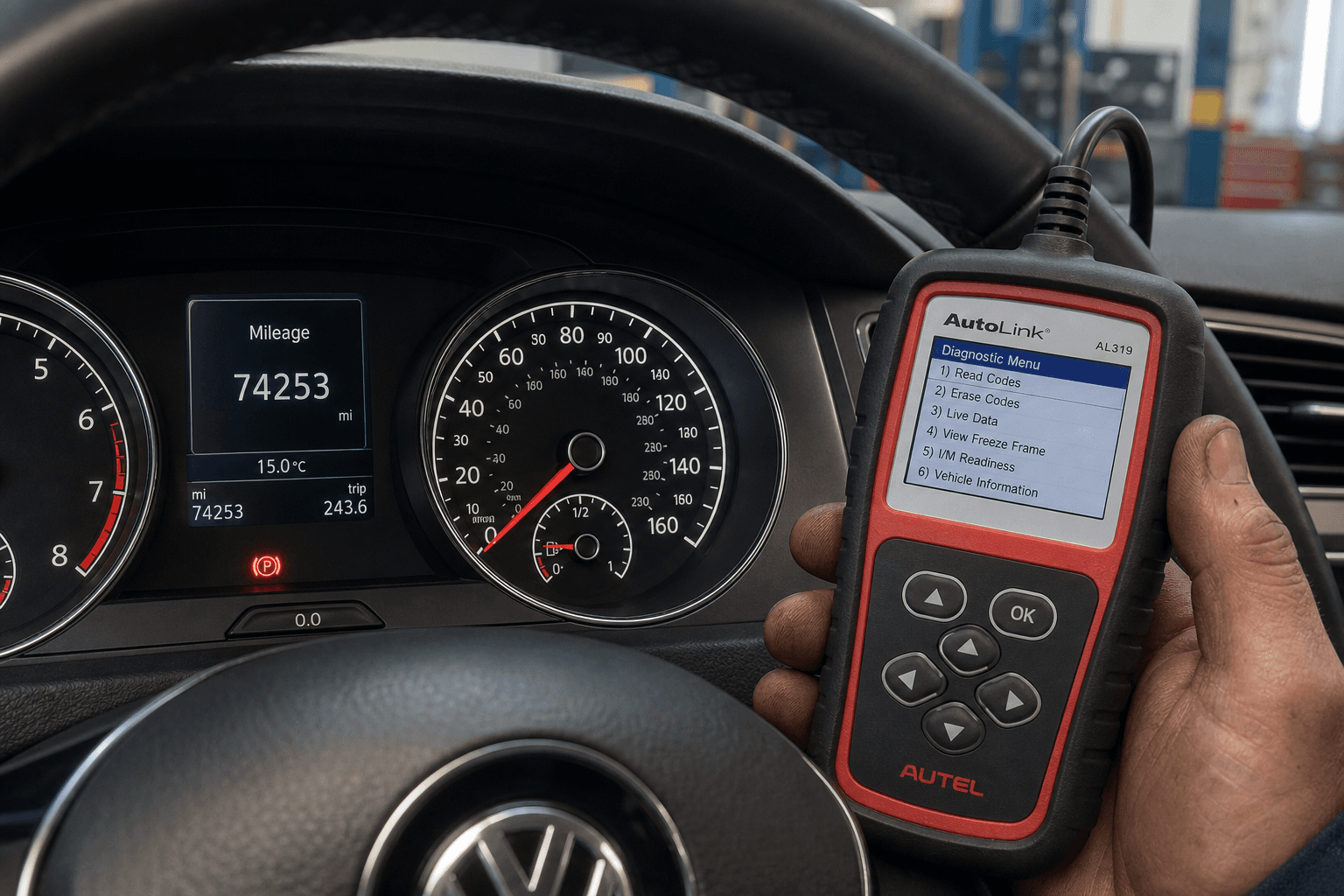
Check for warning lights. A DPF delete usually involves a remap to suppress the DPF warning. But some installs are incomplete and leave emissions or engine management lights active. Any warning light on a diesel is worth investigating before you buy.
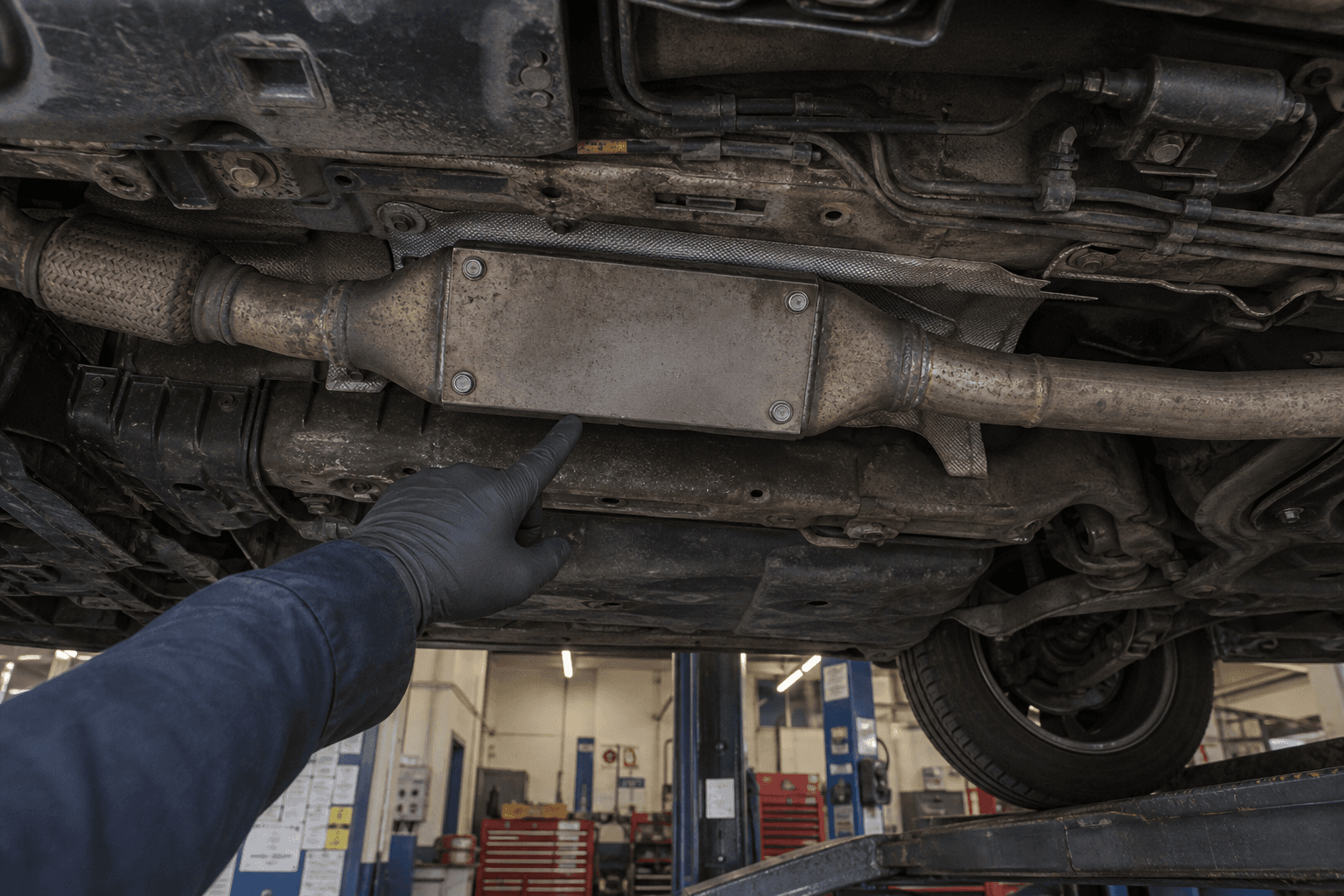
Look under the car at the exhaust system. On most modern diesels the DPF is a recognisable canister mounted on or close to the exhaust manifold. If you see a blank plate, a length of straight pipe, or a conspicuously simple exhaust where a chunky canister should be, ask questions.
Request an OBD scan. A diagnostic tool plugged into the OBD-II port can read live data from the exhaust sensors. Absent DPF-related data, or missing NOx and particulate sensor readings, can indicate a delete.
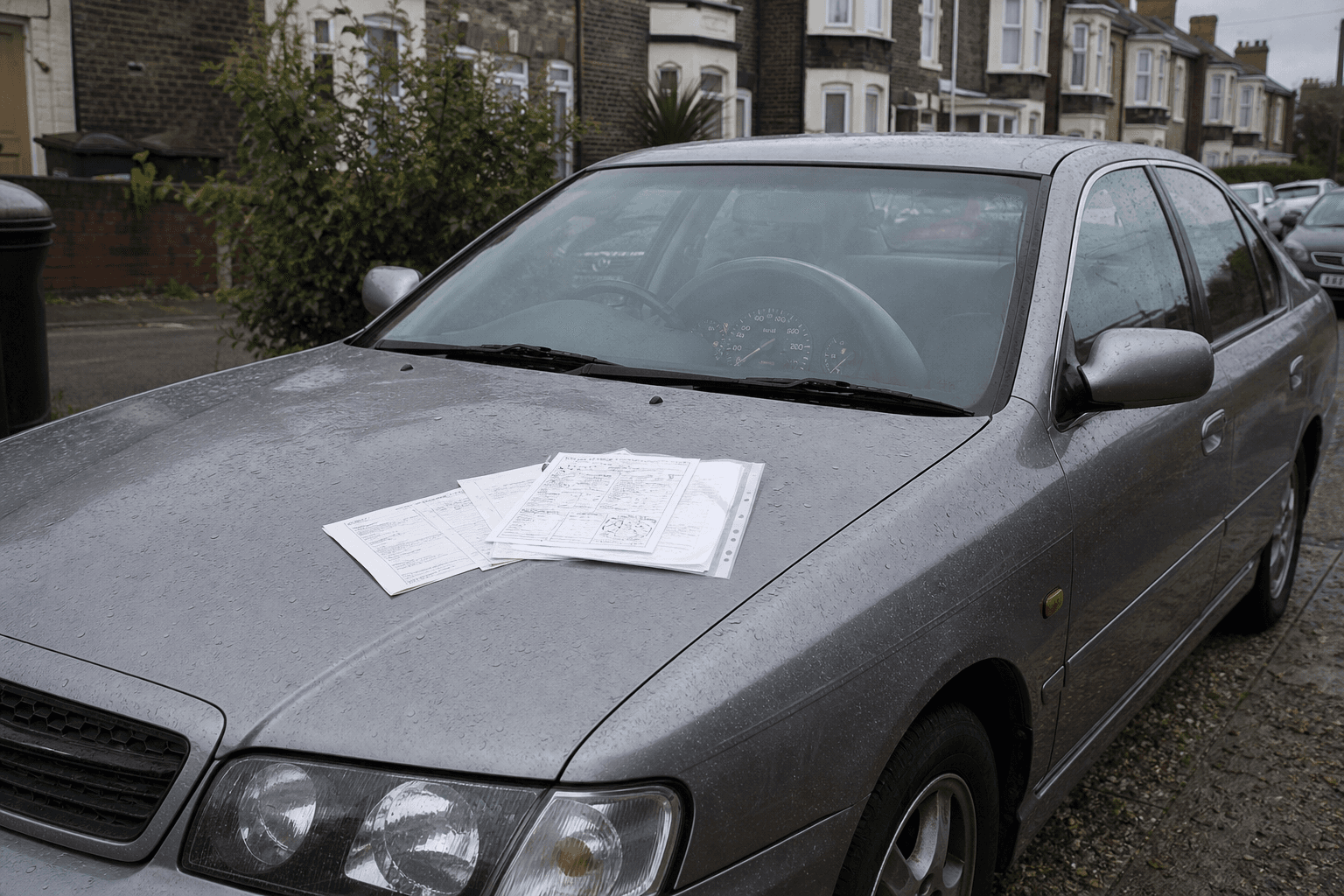
Check recent MOT history. A car that has passed MOT recently with no DPF issue could have had the delete done after the last test. If the car has had multiple MOT failures or gaps in testing, that is also worth examining.
MOT Failure
Since February 2014, MOT testers are required to visually check for the presence of a diesel particulate filter on diesel vehicles that were originally fitted with one. A missing DPF is a major defect - an automatic failure.
A car with a DPF delete cannot legally pass its MOT. If someone is selling a diesel with a valid current MOT and the DPF has been removed, either the tester missed it, the delete was done after the test, or the MOT is not genuine. None of those possibilities is reassuring.
Insurance Voiding Risk
Most car insurance policies require you to declare modifications that affect performance or emissions systems. A DPF delete is a material modification. If you buy a car with a DPF delete and do not disclose it to your insurer, you may be driving on an invalid policy.
If you are involved in an accident and the insurer discovers the modification was not declared, they can void your policy from inception and refuse to pay any claim. You could also face personal liability for third-party damages.
Even if you intend to reinstate the DPF, you own the risk from the moment you take delivery.
Useful Links
- Road Vehicles (Construction and Use) Regulations 1986 - The legal basis for emissions modification rules
- MOT inspection manual for private passenger vehicles - DVSA guidance on how MOT testers assess emissions systems
Run a full vehicle history check for £9.99. MOT history, previous keeper records, and modification flags. Check it before you commit.
FAQ
Is a DPF delete illegal in the UK?
Yes. Removing or bypassing the diesel particulate filter on a vehicle used on public roads is illegal under the Road Vehicles (Construction and Use) Regulations 1986. The car will fail its MOT emissions test and should be declared as modified to your insurer. Driving it on the road risks prosecution.
How can I tell if a car has had its DPF removed?
Warning lights for the DPF or emissions system may be active. A visual check of the exhaust can reveal a blank plate or straight-through pipe where the DPF housing should be. An independent specialist can also read live exhaust sensor data to confirm whether a DPF is present and functioning.
Will a car with a DPF delete fail its MOT?
Yes. Since February 2014, MOT testers are required to check for the presence of a diesel particulate filter on vehicles originally fitted with one. A missing DPF is a major defect and an automatic MOT failure.
Does removing a DPF void car insurance?
It depends on your policy and whether you declared the modification. Most standard policies require you to declare modifications affecting the engine or emissions systems. An undisclosed DPF removal can be grounds for insurers to void your policy or refuse a claim.