Sellers are not legally required to proactively disclose accident history in a private sale. If you ask directly and they lie, that is fraud. If they stay quiet and you do not ask, that is your problem.
Checking a car for accident history takes two approaches: a database check and a physical inspection.
Check the Vehicle History for Write-Off Status
The first step is running a vehicle history check. This searches insurance databases for write-off records.
If a car was involved in a significant accident and the repair cost exceeded the vehicle's value, it will have been written off by the insurer. This gets recorded as Category S (structural damage), Category N (non-structural damage), Category A (crush and destroy), or Category B (body shell only).
Run a vehicle history check at Bad Drivers UK before you view the car to find any insurance write-off records.
Physical Inspection: What to Look For
Many accidents result in repairs rather than write-offs. The damage is fixed, the car goes back on the road, and no database record is created. Finding these requires a physical inspection.
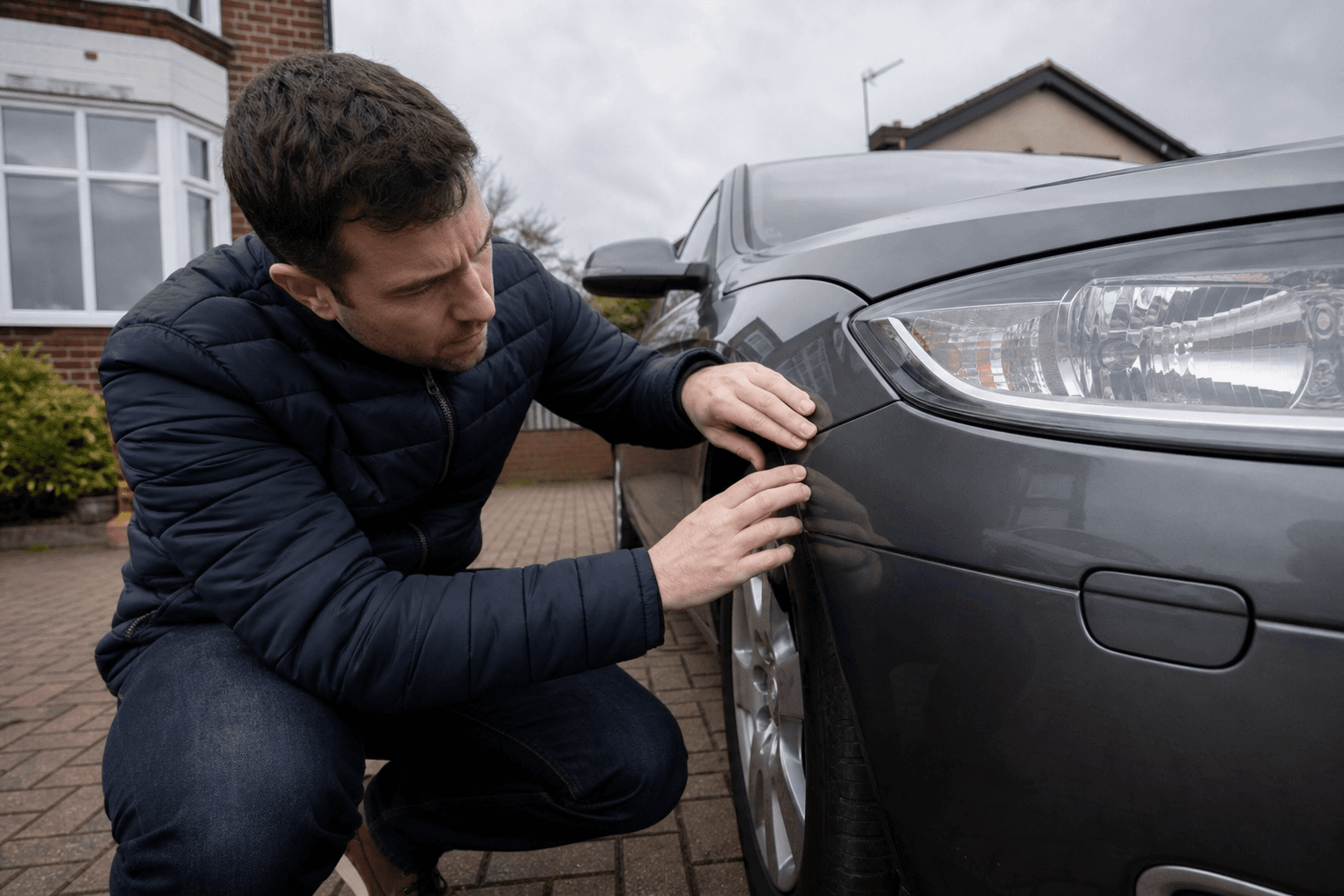
Panel gaps. Open and close every door, boot, and bonnet. Panel gaps should be even all around. Uneven gaps suggest the car's structure has been disturbed or panels have been replaced.
Paint matching. Stand back from the car and look along each panel in good daylight. Colour and finish should be consistent across the whole car. Any variation suggests a panel has been resprayed.
Overspray. Look for paint on rubber seals, trim clips, and inside shut lines. Overspray in these areas indicates a repair done with the car assembled - common in cheaper repairs.
Boot floor and under the bonnet. Lift the boot floor and look at the spare wheel well. This area is often not properly repainted after repair. Look for wrinkled or rough paint, welding marks, or fresh sealer.
Door shuts. Look inside the door jambs. Factory paint here should be consistent. Signs of fresh paint or sanding marks suggest the door has been replaced or the car has been resprayed.
Headlamp alignment. If the front end has been damaged and repaired, headlamp alignment can be off.
Tyre wear patterns. Uneven tyre wear suggests suspension geometry is out. This can result from accident damage that was not properly corrected.
Ask the Right Questions
Ask the seller directly: has this car ever been in an accident? Ask specifically about frontal impacts, kerbing damage, and side impacts.
Ask whether they have any documentation from repairs. A body shop invoice confirms work was done and tells you who did it.
Get a Pre-Purchase Inspection
For higher-value cars or any car where you suspect accident history, pay for an independent pre-purchase inspection. Services from the AA, RAC, and independent engineers specifically look for evidence of repair work.
These inspections typically cost £100 to £200 and include a written report.
Using the MOT History
Check the MOT history for gaps. An accident might lead to a SORN while the car is repaired. A gap in MOT history followed by a new MOT is worth investigating.
FAQ
Is a seller legally required to disclose accident history?
In a private sale, sellers are not required to proactively volunteer all information. But if you ask directly and they lie, that is fraud. From a dealer, the Consumer Rights Act 2015 applies and significant undisclosed issues give you the right to reject the vehicle.
Can a car with accident history be safe to drive?
Yes, if the repairs were done properly by a qualified bodyshop. A well-repaired non-structural repair (Cat N) can be structurally sound. A poorly repaired structural repair (Cat S) can be dangerous. The key is knowing what type of damage occurred and verifying the repair quality.
What is the best way to check if a car has been in an accident?
Combine a vehicle history check (to find any insurance write-off records) with a physical inspection in daylight (to look for mismatched paint, uneven panel gaps, and signs of repair). For higher-value cars, an independent pre-purchase inspection adds another layer of verification.