A flood damaged car can look perfectly clean after a valet. Water gets into everything, including behind the dashboard, inside the wiring loom, under the carpets, and inside the seat foam. The car drives fine for a few weeks, then things start to fail. Run a free check at check.bad-drivers.uk before you buy any used car, and always inspect in person before paying.
Why Flood Damage Is So Serious
Water and modern cars do not mix. Cars built in the last 20 years have a huge amount of electronics. Engine management units, ABS modules, airbag control units, infotainment systems, and dozens of sensors. Water corrodes the connectors and circuit boards inside all of those components.
The corrosion can take months to show up. The car passes a test drive with no obvious faults. Six months later, the ABS light comes on, then the airbag light, then the car refuses to start. By that point you own it and the seller is long gone.
Flood damage can also weaken the structural integrity of the car if it sat in water for long enough. Rust accelerates fast once it starts inside box sections, sills, and floor pans.
Some flood damaged cars are written off by insurers and properly disposed of. Others get sold at auction without being written off first, cleaned up, and relisted on the private market or on dealer forecourts. Not all of them are disclosed.
What to Look for Inside the Car
Start with your nose. A flood damaged car often smells musty or damp, even after a valet. Some sellers use air fresheners to mask it. If the car smells strongly of air freshener, ask yourself why.
Look at the seat belt webbing. Pull the belt all the way out. If the car was in water, there will often be a waterline stain on the webbing where the water level sat.
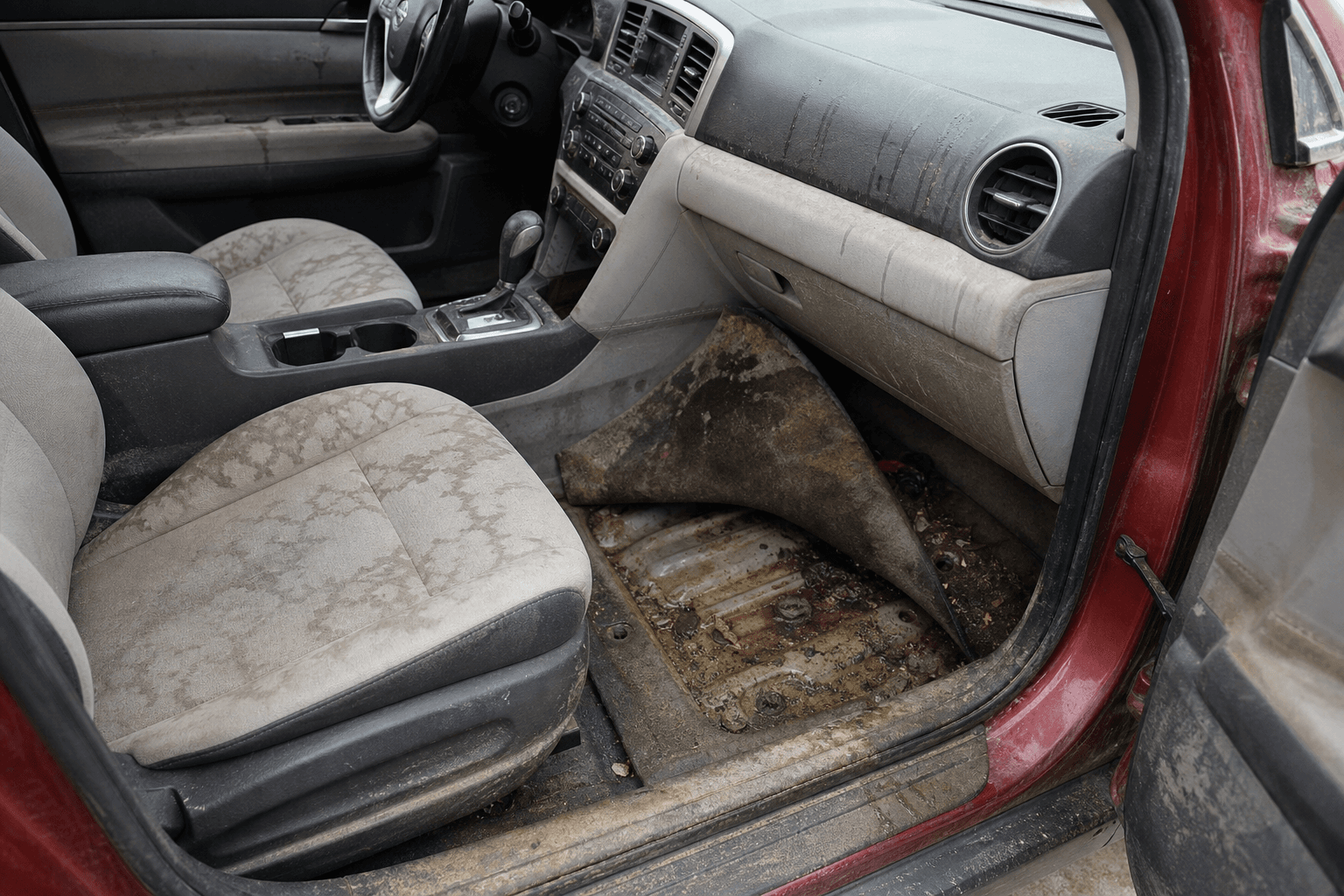
Lift the floor mats and look at the carpet underneath. New-looking carpet in an old car is a warning sign. Sellers replace carpets to hide watermarks. Original carpet that was in a flood often has tide marks, stiffness, or a crunchy feel where sediment dried into the fibres.
Check the spare wheel well in the boot. Water collects there and often stains the plastic lining with a distinct horizontal line. Look at the spare tyre itself for rust or silt on the rim.
Look at the door card sills at the base of each door. Water pools at the lowest point. Check for staining, rust on any metal fixings, or new sealant applied over old staining.
Open all four doors and look at the bottom of each door cavity. The plastic trim at the base of the door should be clean. Flood damage often leaves sediment, rust marks, or tide stains in that recess.
What to Check Under the Bonnet
Look at the fuse box under the bonnet. A fuse box that has been in water will often show signs of corrosion or discolouration on the plastic housing. New zip ties or new-looking wiring in an old engine bay suggests someone has been in there replacing components.
Check the battery terminals. Corrosion on battery terminals is common in older cars, but heavy or unusual corrosion can indicate prolonged water exposure.
Look at the underside of the bonnet. Water does not usually get under the bonnet in heavy rain. If you can see watermarks, sediment, or rust on components that would normally stay dry, that is a significant warning sign.
Check the engine oil by pulling the dipstick and looking at the colour. Water in the engine oil turns it milky or grey. If the oil looks wrong, walk away.
Look at the base of the engine bay where it meets the bulkhead. Silt and sediment settle in low points. A clean car with fresh muck in the corners of the engine bay should raise questions.
Electrical Problems to Watch For
Test every electrical item in the car. Every window. Every mirror. Central locking from all four doors. The heating and air conditioning. The infotainment screen. The reversing camera if fitted.
Water damaged electronics often work intermittently rather than failing completely at first. A window that goes down but struggles to come back up, a screen that flickers, central locking that does not respond every time. These are signs of corroding connections.
Check for warning lights on the dashboard. Turn the ignition on without starting the engine and watch the warning lights illuminate and then go out. An airbag light or ABS light that stays on is a serious problem. Flood damage commonly kills airbag control units and wheel speed sensors.
Ask the seller if any electrical repairs have been done. A flood damaged car often has a string of recent electrical part replacements on its service history. Multiple electrical repairs on a relatively new car is a pattern worth questioning.
What a History Check Can Tell You
A full vehicle history check will flag if the car has been declared a write-off by an insurer, including write-offs caused by flood damage. Some insurers categorise flood damaged cars as Cat S, Cat N, Cat B, or even Cat A depending on the severity.
Not every flood damaged car gets written off. Owners sometimes dry them out and sell them privately without involving an insurer at all. In those cases, no write-off marker will appear on the history check.
The check will also show the number of previous keepers and whether the car changed hands around the time of a known flood event. A car sold by multiple keepers in quick succession, especially after a wet autumn or winter, is worth looking at carefully.
Run a full check at check.bad-drivers.uk before viewing any used car. Write-off status, keeper history, and outstanding finance all in one report.
How to Protect Yourself Before Buying
Do not buy a car you cannot physically inspect. Walk away from any seller who refuses a viewing or rushes you. Flood damage takes time to find.
Take a torch. Look under the seats, under the dash, and into every corner of the boot. Look for the horizontal waterline that water leaves behind on flat surfaces.
Bring a small magnet. Check the floor pan under the car for body filler. Rust repairs under a flood damaged car are sometimes filled rather than properly treated. The magnet will not stick to filler.
Get an independent pre-purchase inspection from a qualified engineer if you are not confident doing this yourself. The cost is a fraction of what a flood damaged car will cost you in repairs.
If you are buying from a dealer and the car has any signs of water damage, ask for a written declaration that the car has no flood damage history. A legitimate dealer with nothing to hide will not refuse that.
Useful Links
- Gov.uk: Buying and selling vehicles - your rights and responsibilities when buying a used car privately
- Gov.uk: Consumer rights when buying from a dealer - what you are entitled to if a car is not as described
Run a full vehicle history check at check.bad-drivers.uk for £9.99. Write-off category, keeper history, outstanding finance, stolen marker, and MOT history. Check before you commit.
Frequently Asked Questions
How do you tell if a car has flood damage?
The most reliable signs are smell (musty or damp interior), waterline marks on seat belt webbing, tide marks in the spare wheel well, new-looking carpet in an older car, and corroded electrical connectors or fuse boxes. Get on your knees and look at the underside of the sills and door bases with a torch.
Will a flood damaged car show on a history check?
Only if it was declared a write-off by an insurer. Flood damaged cars that were never claimed on will not show a write-off marker. A history check is still worth running to see keeper history and any previous total loss markers, but it is not a substitute for a physical inspection.
Can a flood damaged car be repaired?
Minor flood damage to non-electrical components can sometimes be properly repaired. Deep flooding that reaches electrical systems, the engine, or the interior is very hard to fix reliably. Corrosion in wiring and control units often takes months to cause failures, making it near impossible to certify a deeply flooded car as fully repaired.
Is it safe to buy a flood damaged car?
It carries serious risks. Electrical failures can affect safety systems including airbags and ABS. Rust accelerates inside box sections and sills where you cannot easily see it. If you are buying a flood damaged car knowingly, you need an independent engineer's report, a significant price reduction, and specialist insurance advice. Buying one unknowingly is significantly worse because you have no way to assess the extent of the damage.
Do dealers have to disclose flood damage?
Under consumer law, a dealer must not misrepresent the condition of a vehicle. Selling a car without disclosing known flood damage could be considered a misrepresentation under the Consumer Rights Act 2015. Private sellers have fewer obligations, which is why private sales carry higher risk when flood damage is involved.