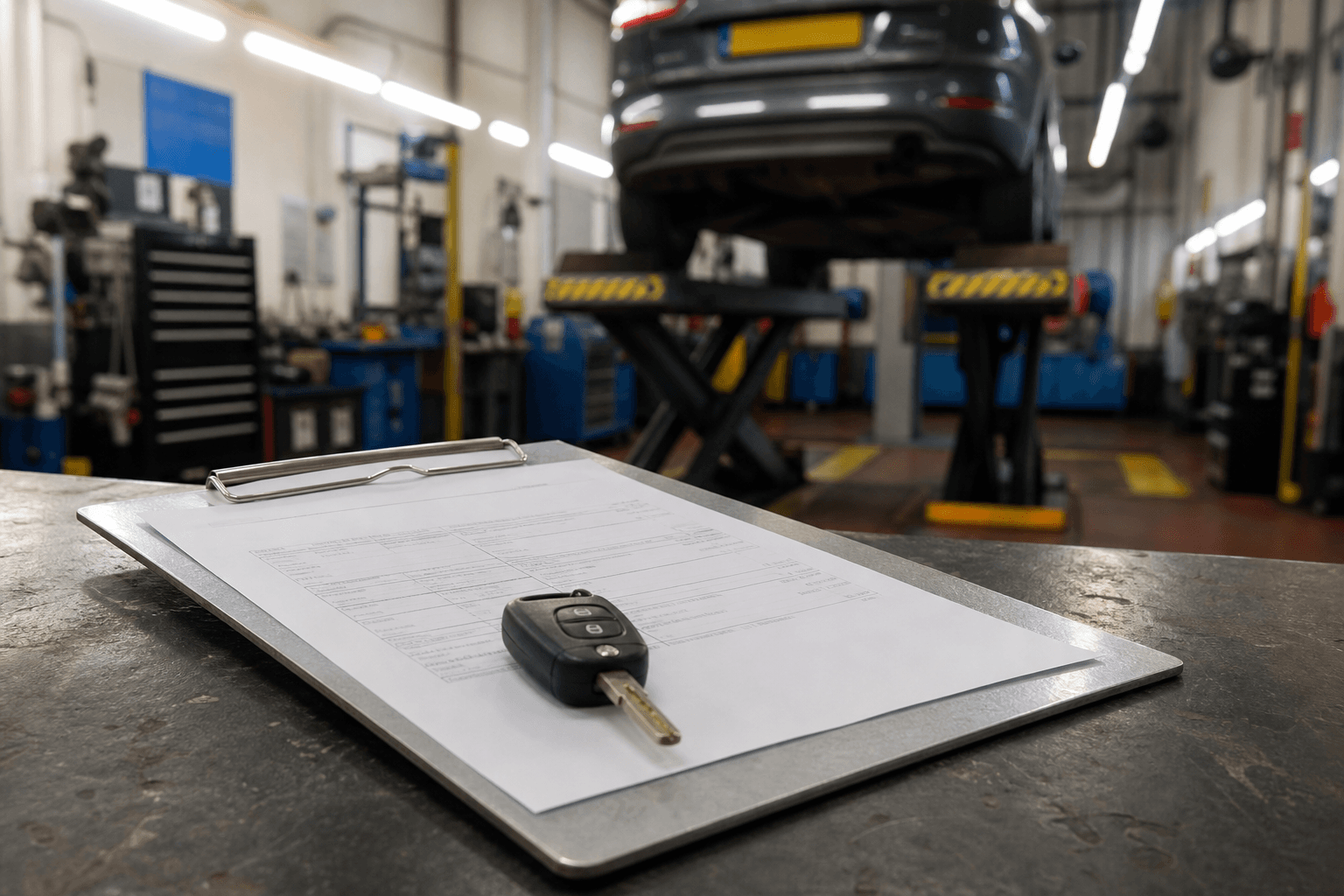
Your car fails its MOT and the tester hands you a sheet with one of three words on it. Whether you can drive home depends entirely on which word it is, and most drivers find that out in the worst possible way, standing in a garage reception being told they need to arrange a recovery truck.
MOT defects have been graded as dangerous, major or minor since May 2018. The grades are not a severity scale for information. They carry different legal consequences.
The Three Grades
Dangerous. A defect that poses a direct and immediate risk to road safety, or has a serious impact on the environment. The car fails, and it must not be driven on the road at all until the defect is repaired. Not home, not to another garage, not anywhere.
Major. A defect that may affect the vehicle's safety, put other road users at risk, or have a significant environmental impact. The car fails the test.
Minor. A defect with no significant effect on safety or the environment. The car passes, but the defect is recorded on the certificate and in the public record.
Advisories sit outside these three. An advisory is not a defect at all. It is the tester telling you something will need attention before long, which is covered in detail in what MOT advisories mean.
The Dangerous Defect Trap
This is the one worth understanding properly, because it catches people out and it is expensive.
A great many drivers believe that if their existing MOT certificate has not yet expired, a failure does not stop them driving. That is broadly true for a major defect. It is not true for a dangerous one.
A dangerous defect means the vehicle is not roadworthy, full stop. Your old certificate does not change that. Driving away risks prosecution for using a vehicle in a dangerous condition, which carries a fine and points, and your insurer may decline a claim on the basis that you knowingly drove a vehicle recorded as dangerous by a qualified tester an hour earlier.
Testers will normally ask you to confirm in writing that you understand the vehicle must not be driven. They cannot physically stop you leaving, and they do not immobilise the car, but the record exists and it is not a record you want to argue with.
The usual answers are repair on site, or recovery to a garage that can do the work.
What Typically Lands in Each Category
Rough guidance rather than a rulebook, because the same component can fall into different grades depending on severity.
Commonly dangerous: brake pipes corroded to the point of likely failure, a brake imbalance severe enough to pull the car across a lane, a tyre with cords showing or a serious bulge, a suspension component fractured or corroded through, steering with excessive free play, a seriously insecure seat or seatbelt anchorage.
Commonly major: brake efficiency below the required figure, a tyre below the 1.6mm limit, a headlight aimed wrongly, excessive emissions, a suspension bush badly worn, corrosion within a prescribed area that weakens the structure, a mirror missing.
Commonly minor: a number plate lamp out, a slightly weeping shock absorber, a small oil leak that is not dropping onto anything hot, a windscreen washer that underperforms.
Corrosion is a good illustration of why the grade matters more than the component. Surface rust on a wing is cosmetic and does not appear at all. The same process on a brake pipe becomes dangerous, and our MOT failure study shows corroded brake pipes are around eighty times more common in some parts of Britain than others.
Why This Matters When Buying
The grades are public, and they tell you things a seller will not.
Pull the MOT history for any car you are considering. It lists every failure and the grade attached, going back years. A car that has failed on dangerous defects more than once has been run until something became a genuine hazard, repeatedly. That is an owner's habit, not bad luck.
Watch for the progression too. A minor defect one year, the same item as a major the next, then dangerous the year after, is a component that was flagged three times and ignored twice.
How to read a car MOT history walks through the entries, and signs a used car has been driven hard covers reading the wider pattern.
Retests and Repairs
If the car stays at the test centre and the defects are fixed within ten working days, a partial retest is usually free or reduced. Take the car away and bring it back and you will generally pay for a full test again.
For a dangerous defect the car cannot leave under its own power at all, so the practical choice is repair there or recover it.
Where the old certificate has already expired, you may only drive to a pre-arranged repair appointment or a pre-booked MOT, which is covered in can you drive without an MOT.
FAQ
What are the MOT defect categories?
Since May 2018 defects are recorded as dangerous, major or minor. Dangerous and major both fail the test. Minor passes but is recorded on the certificate. Advisories sit separately and flag something to monitor rather than a defect.
Can I drive a car with a dangerous defect?
No. A dangerous defect means the car must not be driven on the road, including away from the test centre, regardless of whether the previous MOT is still valid. Driving it risks prosecution and invalidated insurance.
What is the difference between a major defect and a minor one?
A major defect may affect safety, put other road users at risk or harm the environment, and it fails the test. A minor defect has no significant effect on either, so the car passes, but it is recorded and should be repaired before it worsens.
Does a minor defect appear on the MOT record?
Yes. Minor defects are recorded on the certificate and in the public MOT history, so a buyer can see them years later. A pattern of the same minor defect recurring tells you what an owner kept ignoring.
Can I drive away if my car fails on a major defect?
Only if your existing MOT certificate is still valid and the car is otherwise roadworthy, and even then you are relying on it actually being roadworthy. If the old certificate has expired you may only drive to a pre-booked repair or test appointment.
Can a tester stop me driving a dangerous vehicle away?
They cannot physically prevent you, and they will not immobilise the car. They will normally ask you to sign to confirm you understand it must not be driven, and the dangerous grade is recorded publicly, which is what an insurer or a court would look at afterwards.
Useful Links
- Getting an MOT - GOV.UK - What the test covers, what happens when a vehicle fails and the rules on driving afterwards.
- MOT test results - GOV.UK - How dangerous, major and minor defects are recorded on the certificate.
- Driver and Vehicle Standards Agency - GOV.UK - The agency that sets testing standards and grades defects.
- Vehicle tax, MOT and insurance - GOV.UK - The legal obligations attached to keeping a vehicle on the road.