You put the car online, the first message arrives within minutes and the buyer agrees your price without haggling. That should worry you, not cheer you up. Selling a car privately safely means guarding against scams aimed at sellers, which are as common as the ones aimed at buyers.
The Scams Aimed at Private Sellers
The fake transfer screenshot
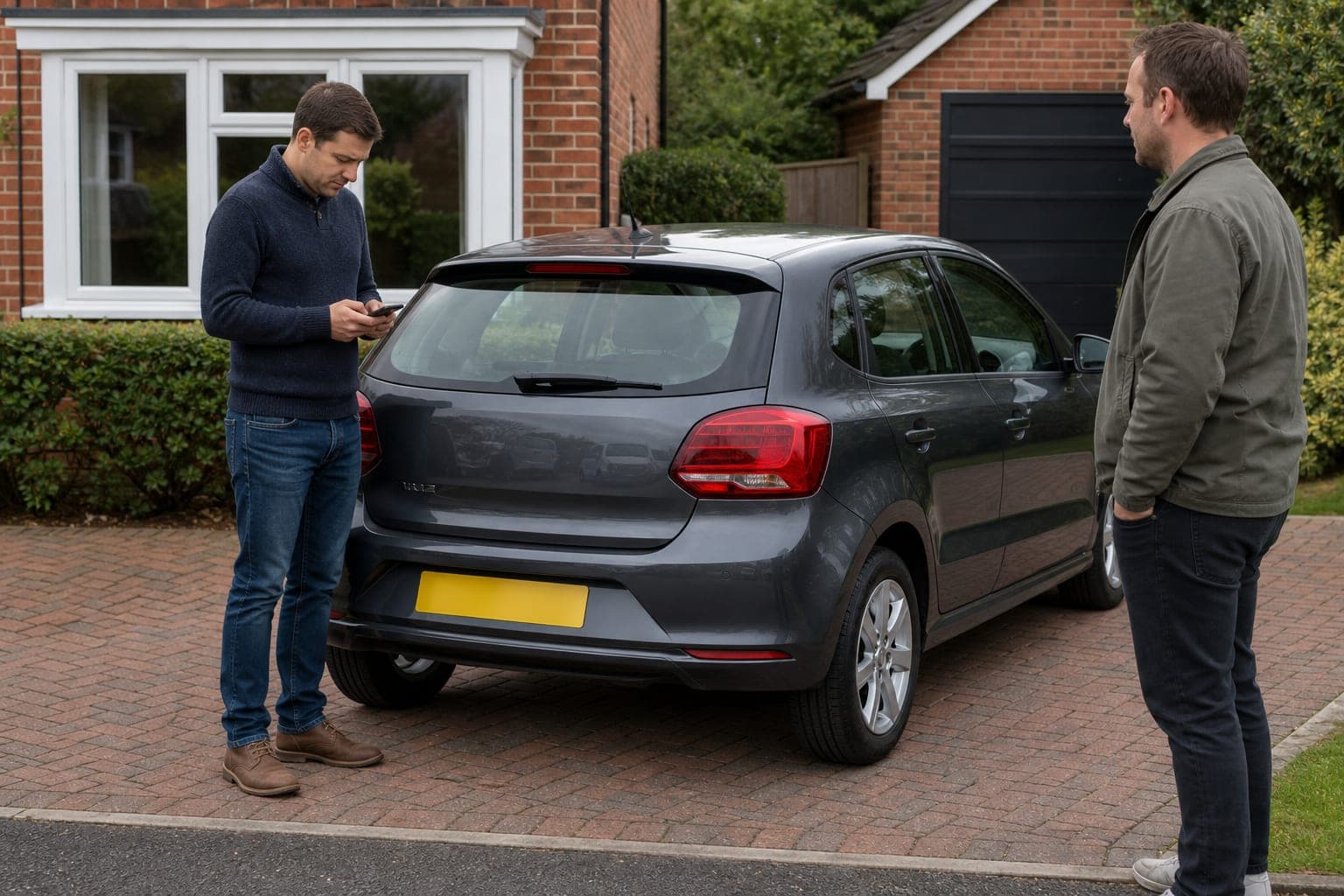
The buyer shows you their banking app with a completed payment to your account. They ask for the keys and the logbook. The screenshot is fake, or the payment was scheduled and then cancelled. By the time you check, they and the car are gone.
Rule: log into your own banking app, on your own phone, and check the money has arrived and is available. Never trust the buyer's screen.
The overpayment trick
The buyer "accidentally" sends more than the price and asks you to refund the difference. The original payment later bounces or is reversed, and you have sent real money back to a scammer.
Rule: never refund an overpayment until the full amount has cleared and stayed in your account. If in doubt, return the whole payment and ask them to pay the correct amount.
The test drive theft
The buyer asks for a test drive, you get out to open the gate, and they drive away. Or a second person distracts you while the first swaps your key for a dummy.
Rule: always go with them. Keep the keys in your hand when the engine is off, and see their driving licence before they get in.
The "my mechanic will collect it" story
A buyer who cannot view the car, sends an agent or courier, and pays in some unusual way is a red flag. Genuine buyers come and look.
Before You Advertise
- Check your own car's history. Buyers will. Knowing what a history check shows before they do means no surprises during negotiation. Our guide on what a car history check shows explains it.
- Settle any finance. You cannot sell a car with outstanding finance as if you own it outright. Our guide on selling a car with finance on it covers how.
- Gather the paperwork: V5C, service history, MOT certificate, spare key and receipts for major work.
- Take clear photos, and blur the plate if you want to reduce the risk of the car being cloned.
Arranging Viewings Safely
- meet at your home or a busy, well lit place during the day
- have someone else with you if you can
- do not leave the buyer alone with the car or the keys
- do not hand over the V5C before payment
Taking Payment
| Method | Risk | What to do | |---|---|---| | Bank transfer | Fake screenshots, reversals | Confirm in your own app before handing over keys | | Cash | Counterfeit notes, carrying large sums | Pay it into your bank before releasing the car | | Banker's draft | Forged drafts | Confirm with the issuing bank using a number you find yourself | | Cheque | Bounces days later | Do not accept for a car sale |
After the Sale
Tell the DVLA
Tell the DVLA you have sold the car, which you can do online in a few minutes. Give the buyer the new keeper slip from the V5C. Until the DVLA knows, speeding tickets and parking fines can still come to you.
Cancel your insurance and tax
Vehicle tax does not transfer to the new owner. Once you tell the DVLA, any full months left are refunded automatically. Cancel or transfer your insurance as well.
Write a simple receipt
Note the date, price, car details and both names, and include "sold as seen" if that reflects the deal. Both sign and keep a copy each.
Being Honest About the Car
As a private seller you must not misdescribe the car. You do not have to list every minor fault unasked, but anything you say must be true. Keep the advert and the message history. Most disputes after private sales come from a description that did not match the car.
FAQ
What is the safest way to get paid when selling a car privately?
A bank transfer that you have confirmed has arrived by logging into your own banking app, not by looking at the buyer's phone. Faster Payments usually arrive within minutes. Do not hand over the keys or the V5C until the money is in your account and showing as available.
Is a cash payment safe?
Cash avoids transfer scams but brings counterfeit notes and the risk of carrying large sums. If you accept cash, count it at your bank and have it paid straight in before handing over the car.
Do I need to let buyers test drive my car?
Not without the right checks. Make sure the buyer is insured to drive it, see their driving licence, go with them, and keep the keys in your hand whenever the engine is off. Never let a stranger test drive alone.
What do I need to tell the DVLA when I sell my car?
You must tell the DVLA you have sold the car, which can be done online, and give the buyer the new keeper slip from the V5C. Until you do, you can remain responsible for fines and offences involving the car.
Do I have to tell the buyer about faults?
As a private seller you must describe the car accurately and must not lie about its condition or history. You are not required to list every fault unasked, but anything you say must be true. Keep the advert and messages in case of a dispute.
Useful Links
- Sold, bought or transferred a vehicle - GOV.UK - How to tell the DVLA you have sold your car.
- Get a vehicle tax refund - GOV.UK - How tax refunds work when you sell.
- Vehicle registration certificate (V5C) - GOV.UK - What to do with the logbook during a sale.
- Report a crime - GOV.UK - Where to report a scam buyer.