The car drives fine on the way round the block. Two months later it will not climb a hill in third and the garage quotes £1,200. Learning the signs of a failing clutch takes five minutes on a test drive and can save you that bill, or at least take it off the asking price.
Clutches are not checked at the MOT, so a car can have a clean test record and a clutch on its last legs.
Why Clutch Wear Is Easy to Hide
Sellers know a clutch is coming to the end of its life long before it fails. The car still drives. It just bites a little higher, slips a little on hills and feels heavier in traffic. On a short gentle test drive, most of those signs stay hidden unless you look for them.
Five Signs of a Failing Clutch
1. The biting point is at the very top
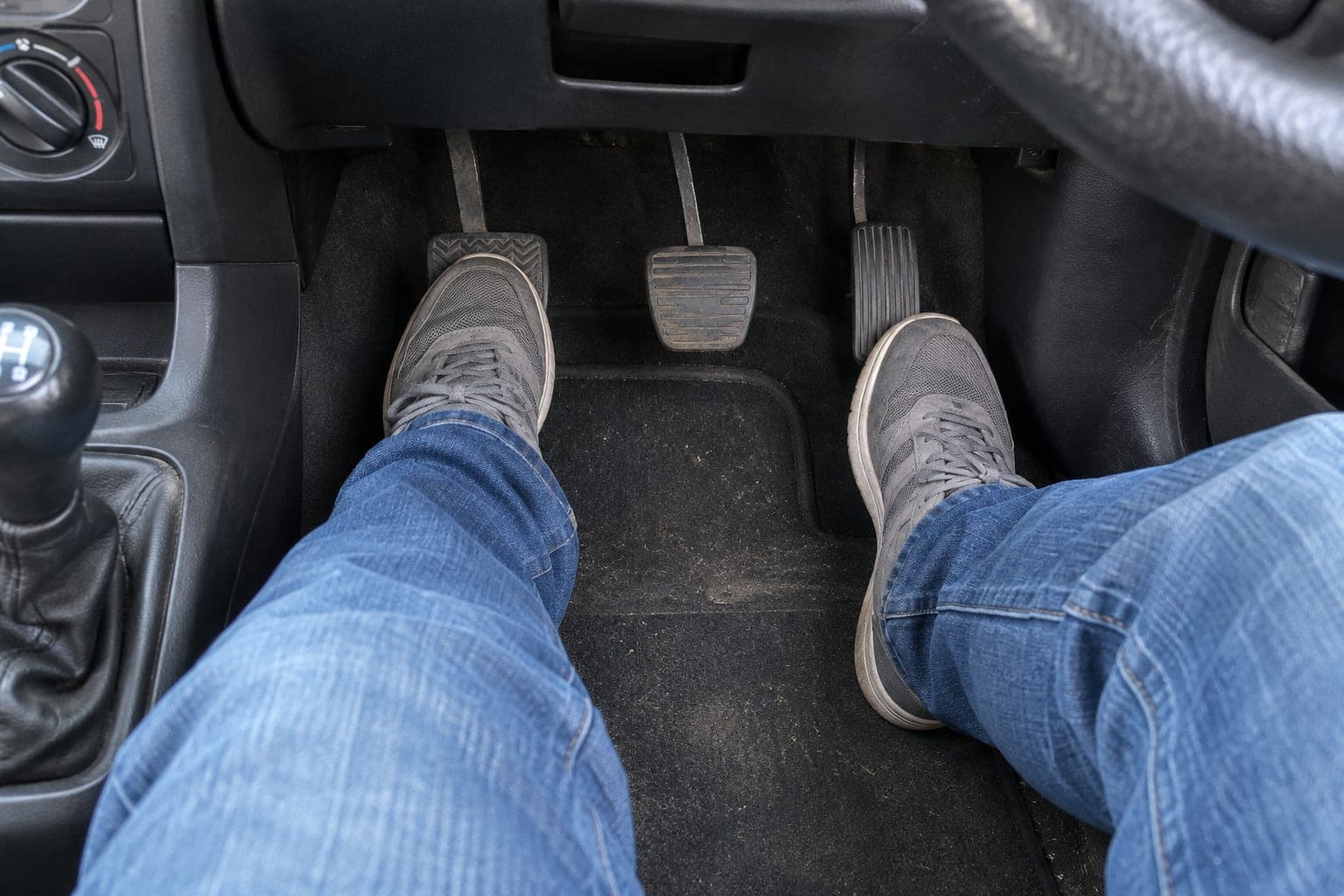
With the engine running and the handbrake on, select first and slowly lift the pedal. Notice where the car starts to pull. A healthy clutch usually bites somewhere in the middle of the pedal travel. If it only bites right at the top, the friction material is thin.
2. The clutch slips under load
This is the clearest test. On a quiet road, drive at around 30 mph in fourth or fifth gear, then press the accelerator firmly. The revs and the speed should rise together. If the revs jump and the car barely accelerates, the clutch is slipping. It will only get worse.
3. Juddering when pulling away
A shudder through the car as you pull away from a standstill can mean a worn clutch, contamination from an oil leak, or a failing dual mass flywheel. None are cheap.
4. Noise at idle or when pressing the pedal
Listen at idle in neutral with the clutch pedal up. A rattle or knocking that changes when you press the pedal can point to a worn release bearing or flywheel. A rattle when you switch the engine off is a common dual mass flywheel symptom.
5. A heavy or spongy pedal
A pedal that feels heavy, stiff or inconsistent can mean a worn clutch mechanism or a hydraulic problem. A pedal that sinks to the floor and stays there needs attention before the car is driven anywhere.
The Dual Mass Flywheel Problem
Many diesel cars and plenty of modern petrol cars use a dual mass flywheel. It smooths out engine vibration, wears alongside the clutch, and costs far more than a standard flywheel. When a clutch on these cars is replaced, the flywheel often needs replacing too, which is why bills pass £1,000 so easily.
Ask the seller whether the car has one and whether it has ever been replaced. Check the service history for clutch work, as our guide on checking car service history explains.
What Mileage Tells You
There is no fixed lifespan. A car that spent its life on the motorway can keep its first clutch past 100,000 miles. A car used for short town trips, school runs and hill starts can need one at 40,000.
The MOT mileage pattern gives you a clue. Low annual mileage over many years often means short, stop start trips, which are hard on clutches. Ex-driving school cars are an extreme example, covered in our guide to buying an ex-driving school car.
Using It to Negotiate
If you find signs of a worn clutch:
- get a quote for the model from a local garage, including the flywheel if fitted
- show the seller the specific symptom you found
- ask for the cost off the price, or walk away
A worn clutch is not a reason to reject an otherwise good car. It is a reason to pay less for it.
Other Checks Before You Buy
A clutch is one part. The Full Report shows outstanding finance, write-off records and mileage cross-checks, the problems that cost far more than a clutch. Our checklist on what to check before buying a used car covers the rest.
FAQ
How can I tell if a clutch is worn on a test drive?
Check where the clutch bites. A biting point right at the top of the pedal travel points to wear. Then, in a high gear at low speed, press the accelerator firmly. If the revs rise without the car picking up speed to match, the clutch is slipping.
What is a dual mass flywheel and why does it matter?
It is a two piece flywheel fitted to many diesel and some petrol cars to smooth out vibration. It wears alongside the clutch and is expensive, so a clutch job on a car with one often costs much more than on a car without.
How much does a clutch replacement cost?
On a small petrol car with a single mass flywheel it is often a few hundred pounds. On a diesel with a dual mass flywheel the total commonly passes £1,000. Prices vary by model and garage.
Does the MOT check the clutch?
No. The MOT does not test the clutch, so a car can pass with a badly worn one. The test drive and service history are your main sources of information.
How long should a clutch last?
There is no fixed figure. Gentle motorway driving can see a clutch past 100,000 miles. Town driving, towing, hill starts and riding the pedal can wear one out in a fraction of that.
Useful Links
- Getting an MOT - GOV.UK - What the MOT does and does not check.
- Consumer protection rights - GOV.UK - Your rights if a dealer sold you a car with a fault.