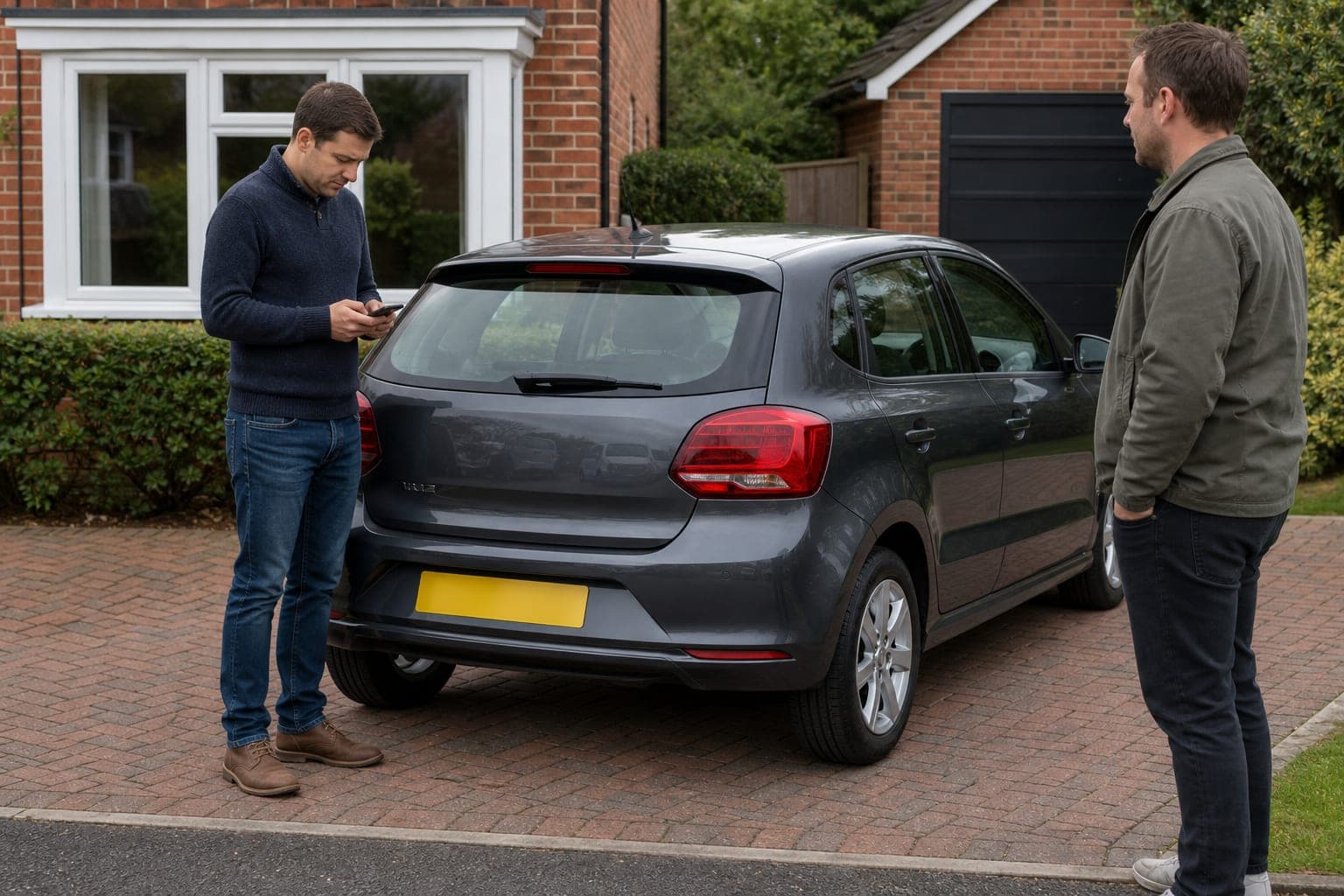

A car two hundred miles north is a thousand pounds cheaper and the photographs look clean. Before you book the train, understand what buying a used car from Scotland or the north of England actually exposes you to, because it is not the paintwork and it will not show in the pictures.
We analysed all 42.2 million MOT tests recorded in Great Britain in 2023. The regional gap is far wider than most buyers assume, and it is not explained by the thing everyone assumes explains it.
The Numbers
Comparing only cars aged 10 to 13, so fleet age cannot skew the comparison, the failure rate in Kirkcaldy is 47.31%. In East London it is 15.63%. An identical age car is close to three times more likely to fail.
The obvious explanation is that poorer or more remote areas run older cars. That is not what is happening. The average car tested in Kirkcaldy is 9.2 years old. In East London it is 9.8. Northern cars in the worst areas are slightly newer.
Narrow it to the actual defects and the cause is unmistakable. Corrosion related failures run at 88.7 per 1,000 tests in Scotland against 20.8 in England. Corroded brake pipes alone appear roughly eighty times more often in the nine worst areas than the nine best. Every postcode area is listed in our MOT failure study.
It Is Salt, Not Weather
Rain does not rot cars. Salt does.
Gritting runs from roughly October to April, and the further north and the higher you go, the longer and heavier it runs. Every journey throws a fine brine spray into the underside of the car, where it settles in box sections and seams that never fully dry. It works on bare steel for months at a time.
That is why the damage shows up in a very specific list of places: brake pipes running along the floor, subframes, suspension mounting points, inner sills, spring seats and handbrake cables. All steel, all underneath, all in the spray. It does not show up as bubbling wings, which is the only rust most buyers ever look for.
It also explains a pattern that confuses people. A northern car can look immaculate on top, because the owner washed it, and be structurally tired underneath.
This Is Not a Reason to Avoid Northern Cars
Worth being clear, because averages get misused.
A well kept, garaged, regularly washed car from Aberdeen can easily be in better condition than a neglected one from Surrey. Plenty of northern owners jet wash the underside through winter precisely because they know what salt does. The regional figures tell you what is likely across hundreds of thousands of cars, not what is true of the one you are looking at.
Use the geography as a reason to inspect harder and to price properly. Not as a reason to dismiss half the country.
How to Tell Where a Car Has Actually Lived
The MOT record gives you this free, and almost nobody uses it.
Every test entry carries the postcode area of the testing station. A car tested in DD, AB or KY for eight consecutive years has lived in Scotland for eight years, whatever the advert says about it being a southern car.
More usefully, watch for a change. A car tested in Inverness for a decade that suddenly takes its most recent test in Birmingham was moved south shortly before sale. That is not automatically dishonest, people relocate, but it is worth asking about, because trade buyers move cars south for exactly this reason.
How to read a car MOT history covers reading the record properly.
What to Check Before You Travel
Do this from your kitchen table, before you spend a day and a train fare.
Pull the MOT history. Read every advisory across every year, not just the last test. Corrosion wording appears years before a failure, so a trail of corrosion advisories tells you where the car is heading. Look at the test postcode areas to establish where it has lived.
Then decide whether it is worth the journey. If the record already shows corroded brake pipes advised twice and a subframe noted as corroded, you have your answer without leaving the house.
If you do go, take a torch and get underneath. Where rust hides on a used car lists the six places that matter and how to tell structural corrosion from cosmetic.
Pricing the Risk
A northern car at a northern price can be a very good buy. The mistake is paying a southern price for a car carrying northern corrosion.
Brake pipes are a set of lines and a day of labour. A corroded subframe is a bigger job. Sill welding runs into four figures on some cars and exceeds the value of others. None of that is a disaster if it is in the price. All of it is a disaster if you paid as though the car were clean.
Condition is only half of it. What a car history check shows covers what the Full Report at £9.99 adds, including outstanding finance, write-off category and a mileage cross-reference, which decide whether the car is legally yours to keep rather than what it will cost to run.
FAQ
Does it matter where a used car has lived?
More than most buyers realise. Comparing cars of identical age, corrosion related MOT failures run at 88.7 per 1,000 tests in Scotland against 20.8 in England. The difference is road salt, and it attacks brake pipes, subframes and structural areas rather than paintwork.
Are cars from Scotland always rustier?
On average they carry far more corrosion at the same age, but averages are not individual cars. A garaged, washed car from Aberdeen can be sounder than a neglected one from Kent. Use the region as a reason to inspect harder, not as a verdict.
How do I tell where a car has spent its life?
The MOT history records the postcode area of every test. A car tested in the same northern area for ten years has lived there. A recent change of test area often means it was moved south shortly before sale, which is worth asking about.
Is a cheaper car up north worth travelling for?
Sometimes, but price the corrosion risk in before you go. A few hundred pounds saved is quickly lost to brake pipes, a subframe or sill welding, and you will have driven several hundred miles to view it.
What should I check on a car from a heavily gritted area?
Brake pipes along the floor, subframes and suspension mounting points, inner sills and jacking points, and the boot floor. Then read the MOT history for corrosion advisories across earlier years, which appear long before anything fails.
Do coastal cars suffer the same problem?
Salt air is a factor but it is milder than road salt. Coastal areas in the south west sit mid table in our figures, well above London and well below the worst Scottish areas, which fits salt spray from the road being the dominant cause.
Useful Links
- Getting an MOT - GOV.UK - What the annual test covers and how structural corrosion is assessed.
- MOT test results - GOV.UK - How results and advisories are recorded against a vehicle over time.
- Vehicle registration certificate (V5C) - GOV.UK - What the logbook records about keepers and addresses, and its limits.
- Driver and Vehicle Standards Agency - GOV.UK - The agency responsible for MOT standards and published test data.