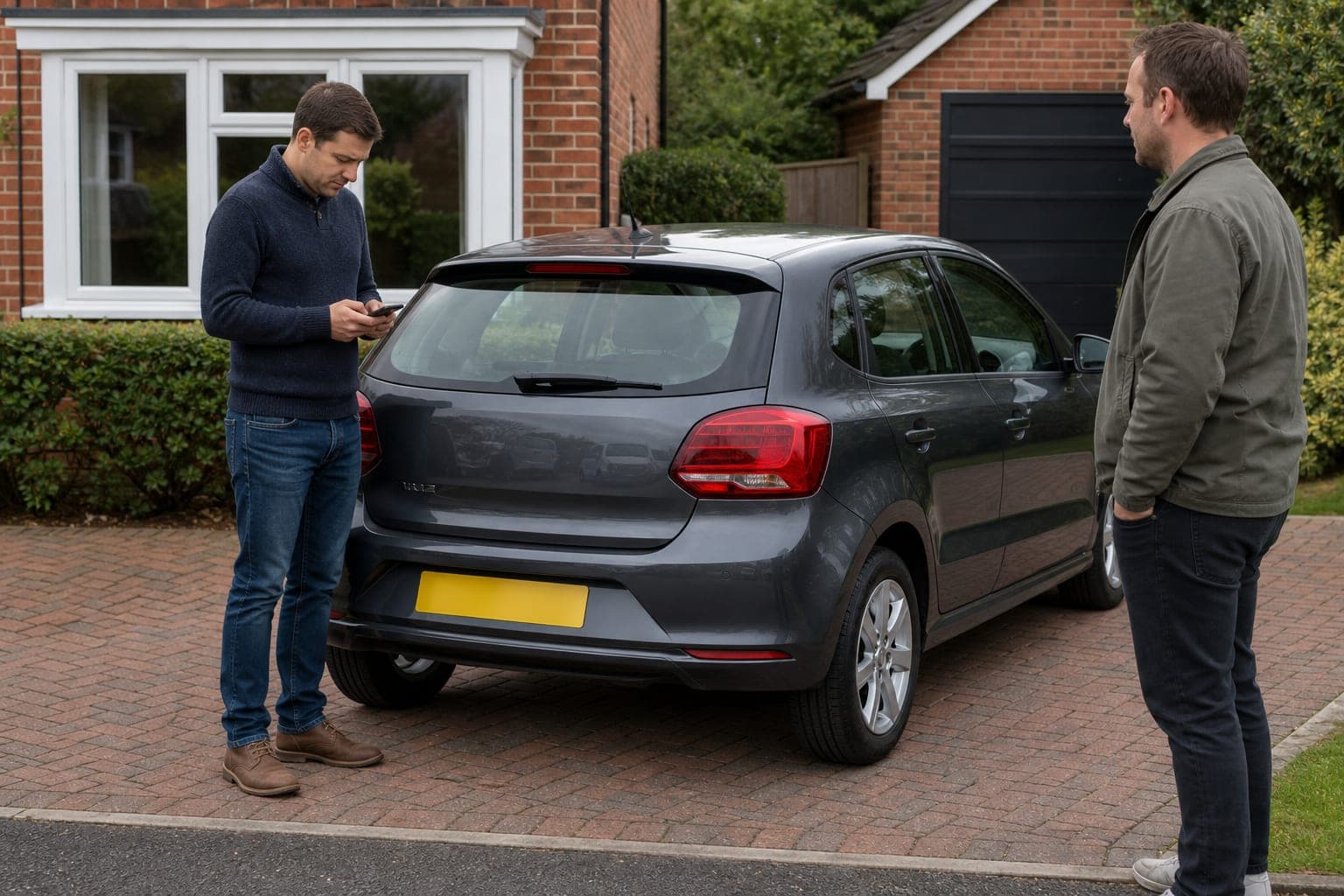

The gearbox starts whining eleven days after you drove it off the forecourt. What happens next depends almost entirely on one thing: whether you bought from a dealer or a private seller. Your rights buying a used car from a dealer are far stronger than most people realise, and they run on a clock that most people miss entirely.
What the Law Requires
The Consumer Rights Act 2015 applies whenever you buy from a trader. That includes franchised dealers, independent garages, and anyone selling cars in the course of a business, whether or not they have a forecourt.
The car must be:
Of satisfactory quality. Judged by what a reasonable person would expect given the age, mileage, price and description. This is the one that does most of the work.
Fit for purpose. It must do what a car is supposed to do, and anything specific you told the dealer you needed it for.
As described. The advert, the specification, the service history claimed, the mileage stated.
Satisfactory quality is not perfection. Nobody expects a fourteen year old car at £1,500 to be faultless, and worn consumables are not a legal defect. The test is whether the fault is one a reasonable buyer would have accepted at that price for that car.
The Thirty Day Clock
This is the part worth committing to memory.
For the first 30 days after taking ownership, you have the short term right to reject. If the car is not of satisfactory quality, not fit for purpose, or not as described, you can reject it and get a full refund. Not a repair, not a credit note, not a replacement unless you want one. Your money back.
Thirty days is short, and it runs from when you took the car. Anyone who spends three weeks hoping a noise will settle down has spent most of it.
Reject in writing. Email is fine and far better than a phone call, because you need a dated record of when you notified them. State the fault, state that you are exercising your short term right to reject under the Consumer Rights Act 2015, and ask for a full refund.
Stop using the car once you have rejected it, beyond what is unavoidable.
After Thirty Days
The rights do not vanish, they change shape.
Between 30 days and six months you must normally give the dealer one opportunity to repair or replace. They get one go. If the repair fails, or they refuse, or they take an unreasonable time, you can then reject the car.
The crucial point in this window: for the first six months, any fault that appears is presumed to have been present when you bought it, unless the dealer can prove otherwise. The burden is on them, not you. Dealers do not always volunteer this.
If you reject after six months, the refund may be reduced to reflect the use you have had.
After Six Months
The burden of proof reverses and lands on you. You now have to show the fault was present or developing at the point of sale, which in practice means an independent inspection or a mechanic's report.
It is harder, but not hopeless, particularly for a fault that is clearly not sudden. Rights under the Act can run for up to six years in England and Wales and five in Scotland, though the evidential hurdle rises steeply with time.
Private Sales Are a Different World
This is the single biggest misunderstanding in used car buying.
The Consumer Rights Act protects consumers buying from traders. It does not apply to a private sale. Buy from a private individual and the only real obligation is that the car is as described.
So a private seller who says nothing about a failing clutch has generally done nothing unlawful. A private seller who says "full service history" when there is none, or states a mileage they know to be false, has misdescribed the car, and that is a different matter.
"Sold as seen" is close to the truth in a private sale. From a dealer it is largely meaningless, because a trader cannot contract out of your statutory rights with a line on an invoice.
That gap is exactly why checking matters more on a private purchase. What to check before buying a used car covers the process, and how to read a car MOT history covers reading the record before you commit.
Watch for Trade Sellers Posing as Private
Some traders advertise as private individuals precisely to avoid the obligations above. It is unlawful, and it is common.
Signs: the same phone number on several adverts, a meeting point that is not a home address, no paperwork in the seller's name, a reluctance to let you visit where the car is kept, several cars available.
If they are trading, your full statutory rights apply whatever the advert said. Keep the advert, screenshots and messages.
Checking who the registered keeper is helps here. What a car keeper is covers the distinction, and the keeper history in the paid Full Report at £9.99 shows how long the current keeper has actually held the car, alongside outstanding finance, stolen markers, write-off category and a mileage cross-reference.
FAQ
What rights do I have buying a used car from a dealer?
Under the Consumer Rights Act 2015 the car must be of satisfactory quality, fit for purpose and as described. If it is not, you have a short term right to reject it for a full refund within 30 days of purchase, and further remedies after that.
How long do I have to reject a faulty used car?
Thirty days from taking ownership for the short term right to reject and a full refund. After that you must normally allow the dealer one attempt to repair or replace. If that attempt fails you can still reject, though a deduction for use may apply after six months.
Does satisfactory quality mean the car must be perfect?
No. Satisfactory quality is judged against age, mileage, price and description. Worn brake pads on a twelve year old car at £1,200 are fair wear. A gearbox that fails a fortnight after purchase is not, whatever the age.
Do I get the same rights buying privately?
No, and this is the biggest gap buyers miss. The Consumer Rights Act applies to traders, not private sellers. In a private sale the car only has to be as described. Sold as seen is broadly true privately and largely meaningless from a dealer.
What happens after six months?
The burden of proof reverses. For the first six months a fault is presumed to have been present at purchase unless the dealer proves otherwise. After six months you have to show it was present or developing when you bought the car, usually with an independent report.
Can a dealer refuse a refund because I signed something?
No. A trader cannot remove your statutory rights with wording on an invoice or a disclaimer on the wall. Terms attempting to do so are unenforceable, whatever you signed at the time.
Useful Links
- Consumer protection rights - GOV.UK - Official guidance on the rights that apply when buying goods from a trader.
- Accepting returns and giving refunds: the law - GOV.UK - What traders are legally required to do when goods are faulty or misdescribed.
- Vehicle registration certificate (V5C) - GOV.UK - What the logbook records about the keeper, and why it is not proof of ownership.
- Getting an MOT - GOV.UK - What the annual test covers and how results are recorded against a vehicle.