A cambelt gives you nothing. No warning light, no squeal, no gradual loss of performance to tell you it is tired. It runs perfectly right up until it snaps, and on most engines built in the last twenty years the belt is the cheap part of what happens next. Knowing when a cambelt is due, and whether the one in front of you has been done, is one of the highest value checks in used car buying.
What It Does
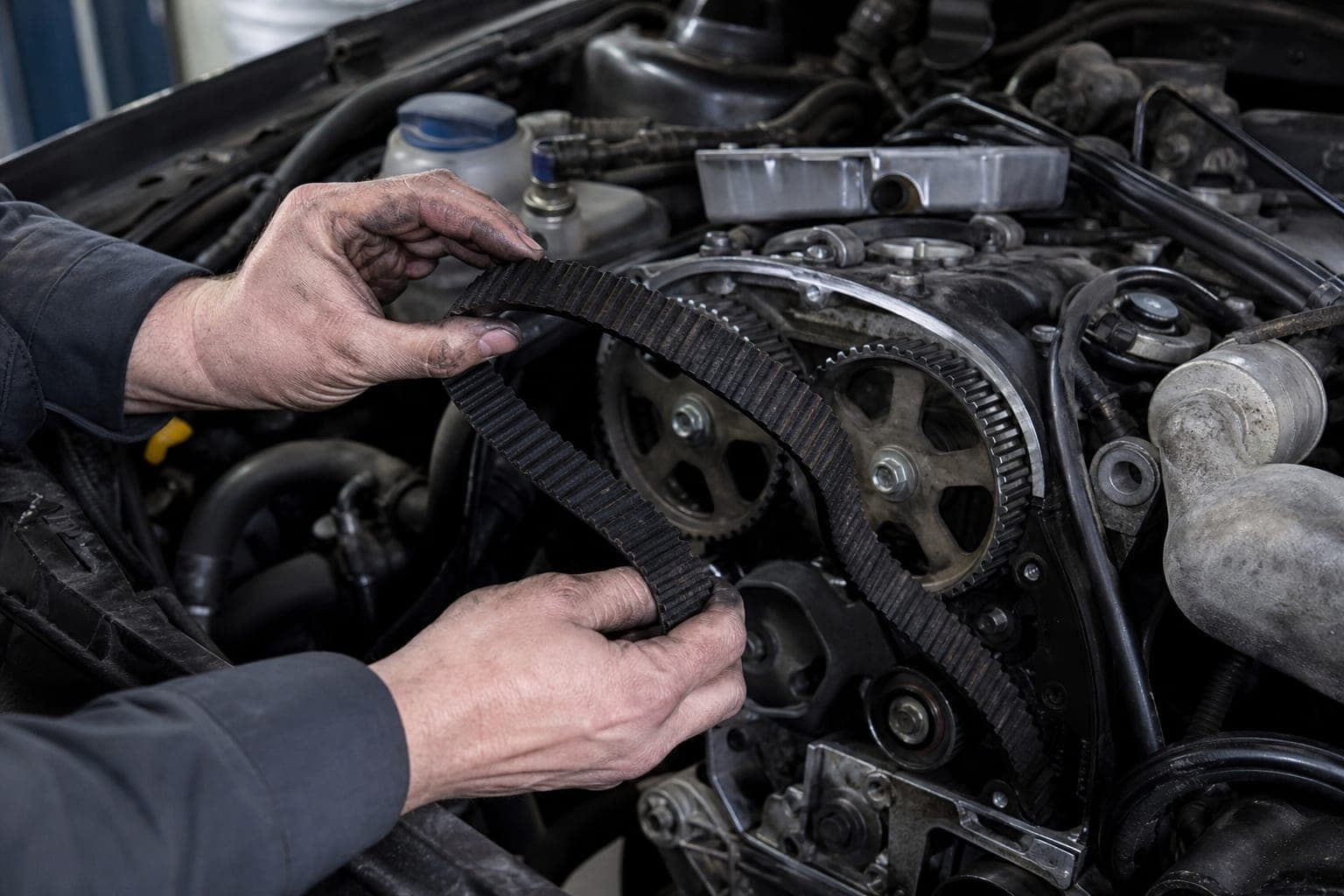
The cambelt, or timing belt, is a toothed rubber belt that keeps the crankshaft and the camshaft turning in exact synchronisation. The crankshaft moves the pistons. The camshaft opens and closes the valves. The belt guarantees that a valve is never open when a piston arrives.
Some engines use a timing chain instead, which is metal, runs in oil and is generally designed to last the life of the engine. A chain is not maintenance free, it can stretch and its tensioner can fail, but it is a different proposition to a rubber belt with a fixed replacement interval.
Find out which your car has before anything else. Plenty of buyers worry about a cambelt on an engine that does not have one.
Why a Snapped Belt Ends the Engine
Most modern engines are what is called an interference design. The valves and the pistons pass through the same physical space, just never at the same moment, because the belt keeps them in step.
When the belt breaks, the camshaft stops and the crankshaft keeps spinning under the car's own momentum. Pistons come up to meet valves that are still open. Valves bend. Pistons get damaged. Frequently the cylinder head needs removing, skimming or replacing, and sometimes the engine is beyond economic repair.
The belt itself might be £30 of rubber. The failure is a four figure bill, and on a car worth £2,000 it is the end of the car.
Non interference engines exist, where a broken belt simply stops the engine without contact. They are increasingly rare. Do not assume you have one.
When It Is Due
There is no universal figure, and anyone who gives you one is guessing.
Intervals commonly sit somewhere between 60,000 and 100,000 miles, and between four and ten years. Manufacturers publish the figure for each specific engine, and the same model can have different intervals depending on which engine it was fitted with.
Both limits apply, and the age one catches people out. Rubber degrades over time whether the car is driven or not. A ten year old car with 38,000 miles on the clock can be well past its belt interval on age alone. Low mileage is not a reprieve, and a car that has sat unused for long periods is arguably worse off, because the belt has been sitting under tension in one position.
Heat, oil contamination and a failing tensioner all shorten the life further.
Nothing Checks It For You
Worth stating plainly because it surprises people.
The MOT does not inspect the cambelt. It is not on the test at all, and on most engines it sits behind a plastic cover a tester would have no reason to remove. A car can pass its MOT comfortably on the morning its belt lets go on the way home.
No dashboard warning light monitors it either. There is no sensor watching belt condition.
This is entirely a service schedule item, which means it depends on a previous owner having bothered. How to check car service history covers verifying what has actually been done.
Checking It on a Used Car
Look for the invoice. A cambelt change is a significant job and it generates paperwork. You want an invoice or service entry that names the belt specifically, with the date and the mileage at the time. "Serviced" is not evidence of a belt change.
Look under the bonnet for a sticker. Many garages fit one showing the date and mileage of the change. Not proof on its own, but a good sign.
Work out the interval for that engine. Then compare it against the current mileage and the registration date, and remember whichever limit comes first applies.
If there is no evidence, assume it has not been done. Sellers who have had it done will tell you, because it is money spent that adds value. Silence usually means silence for a reason.
Price it in. A belt, tensioner and water pump on a common engine is typically a several hundred pound job, more on engines where access is poor or where the belt runs in oil. Knock it off your offer or get the seller to do it before you buy.
The Water Pump Question
On many engines the water pump is driven by the cambelt, which means reaching it requires exactly the same strip down.
Replacing the belt and leaving a pump that is the same age is a false economy. If the pump fails a year later it takes the new belt with it, and you pay the entire labour bill a second time. Any competent garage will quote belt, tensioner, idlers and pump as one job.
Where It Fits in a Wider Check
A cambelt is a maintenance liability rather than a history problem, but it belongs in the same conversation. A car with a documented belt change, a full service record and a clean MOT history has been owned by someone who spent money on it. A car with none of those has not.
How to read a car MOT history covers reading the record, and what a car history check shows covers what the Full Report at £9.99 adds, including finance, write-off category and a mileage cross-reference, which decide whether the car is legally yours rather than what it will cost to run.
FAQ
When is a cambelt due for replacement?
It depends entirely on the engine. Intervals commonly fall between 60,000 and 100,000 miles, or between four and ten years, whichever comes first. The age limit matters as much as the mileage because rubber perishes whether the car is driven or not.
What happens if a cambelt snaps?
On an interference engine, which covers most modern cars, the valves and pistons occupy the same space at different moments. Lose synchronisation and they collide, bending valves and often damaging pistons and the cylinder head. The repair frequently exceeds the value of an older car.
Does the MOT check the cambelt?
No. The cambelt is not part of the MOT at all, and it is usually hidden behind a cover where a tester would not see it. A car can pass its MOT on the morning its belt is about to fail.
How do I know if a used car's cambelt has been changed?
Look for an invoice or a service record entry naming the belt, ideally with the mileage and date. Some garages fit a sticker under the bonnet. If there is no evidence at all, assume it has not been done and price the job into your offer.
Should the water pump be changed at the same time?
On most engines yes, because it is driven by the same belt and reaching it is the bulk of the labour. Replacing the belt and leaving an old pump risks having to pay for the whole job again when the pump fails.
Does a timing chain need replacing too?
Chains are designed to last the life of the engine and have no fixed interval, but they are not maintenance free. Tensioners fail and chains stretch, particularly on engines with a known weakness or where oil changes were neglected. A rattle on start up is the usual warning.
Useful Links
- Getting an MOT - GOV.UK - What the annual test does and does not inspect on a vehicle.
- MOT test results - GOV.UK - How results and advisories are recorded, and what falls outside the test.
- Driver and Vehicle Standards Agency - GOV.UK - The agency responsible for MOT testing standards and scope.
- Vehicle tax, MOT and insurance - GOV.UK - The legal obligations that come with keeping a vehicle on the road.